Works
Installation Views
Press Release
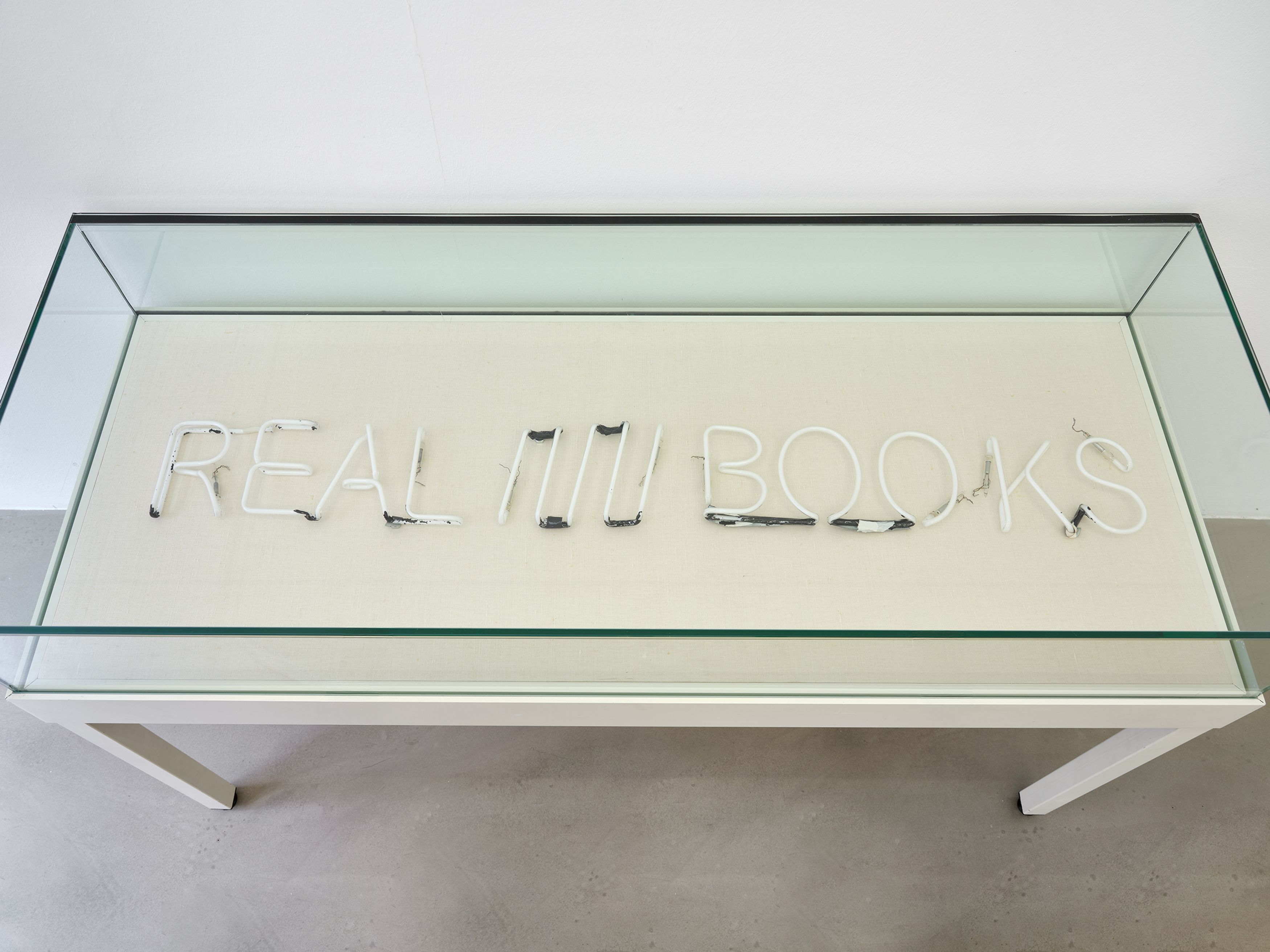
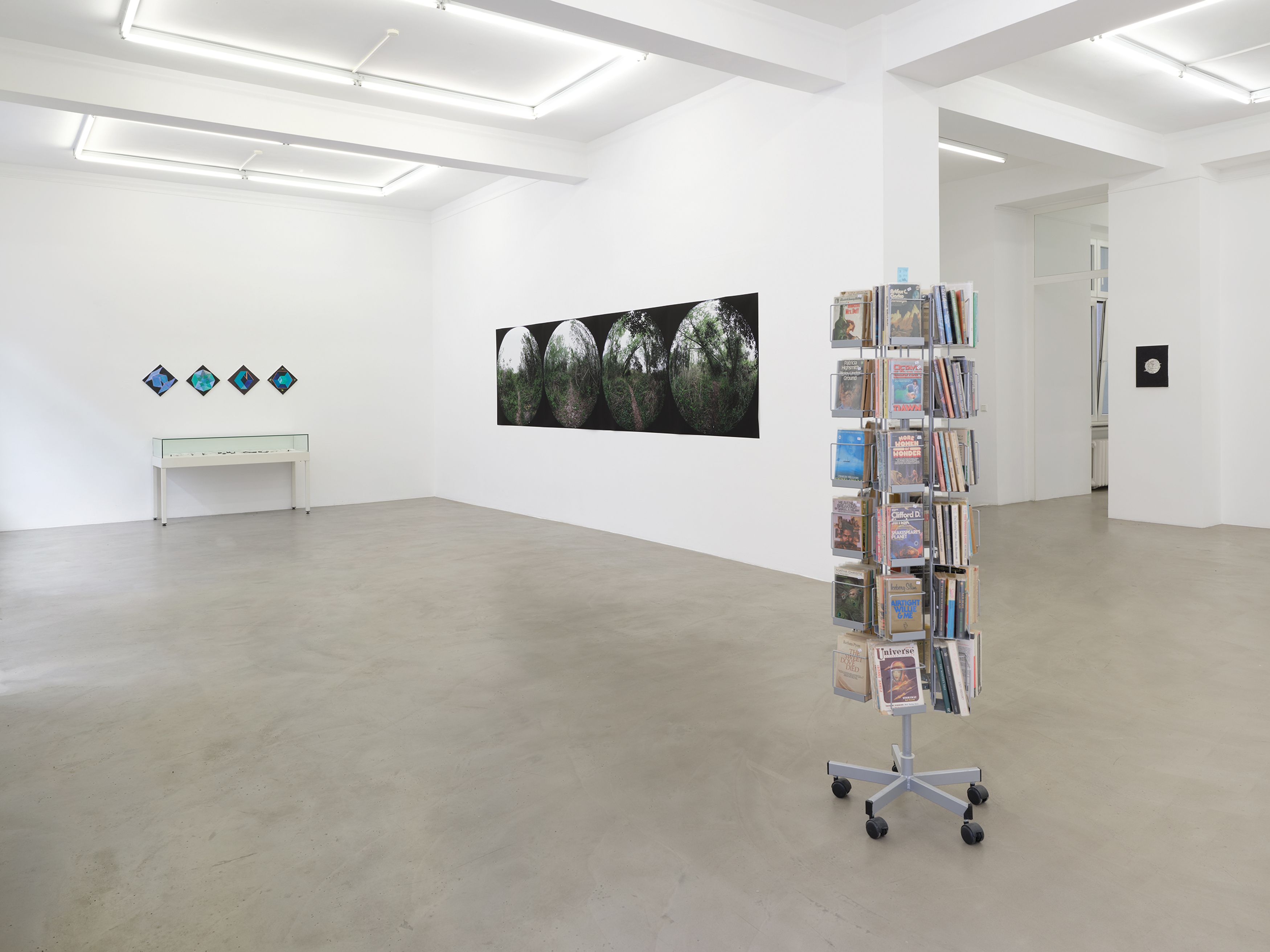
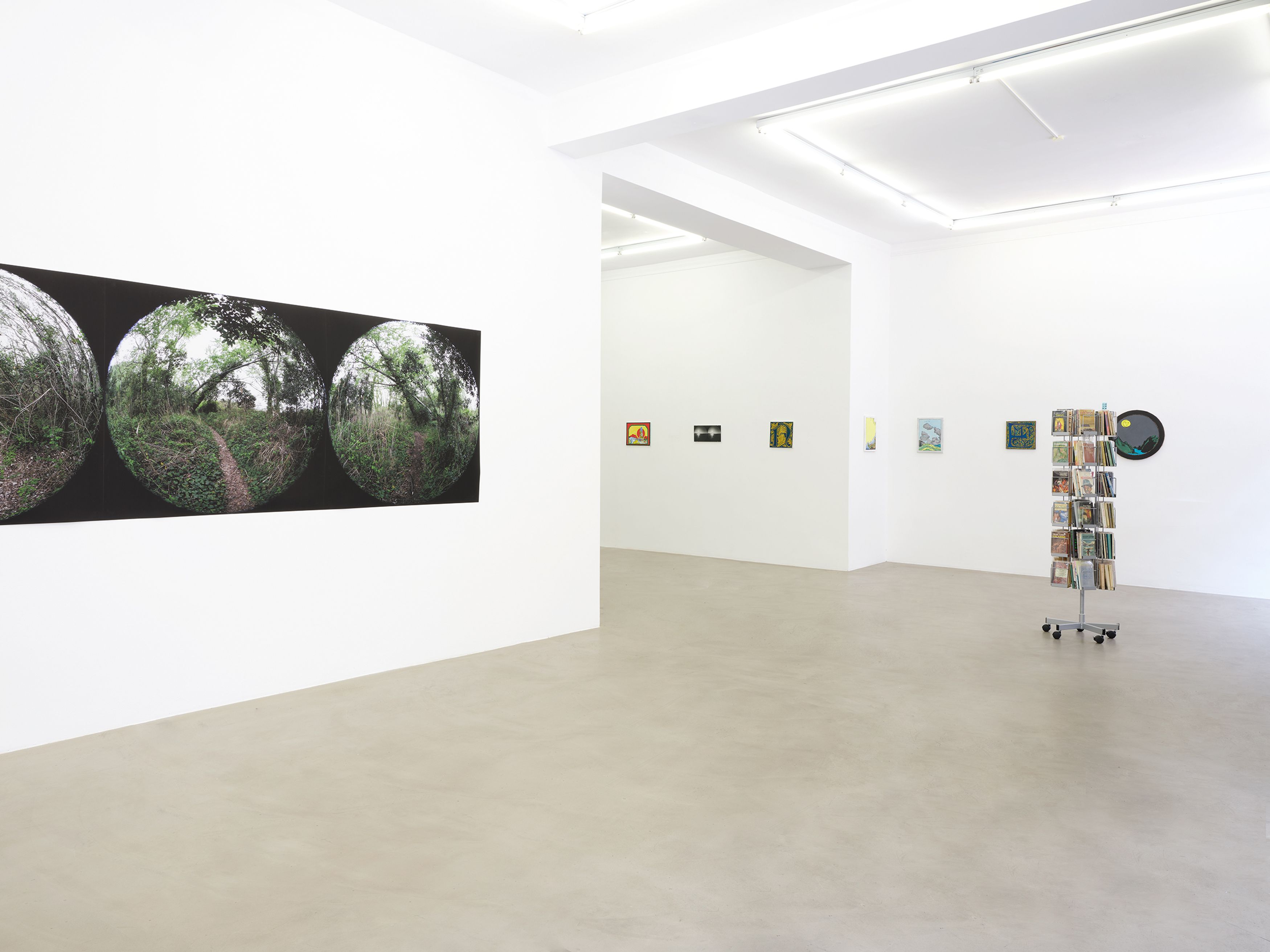
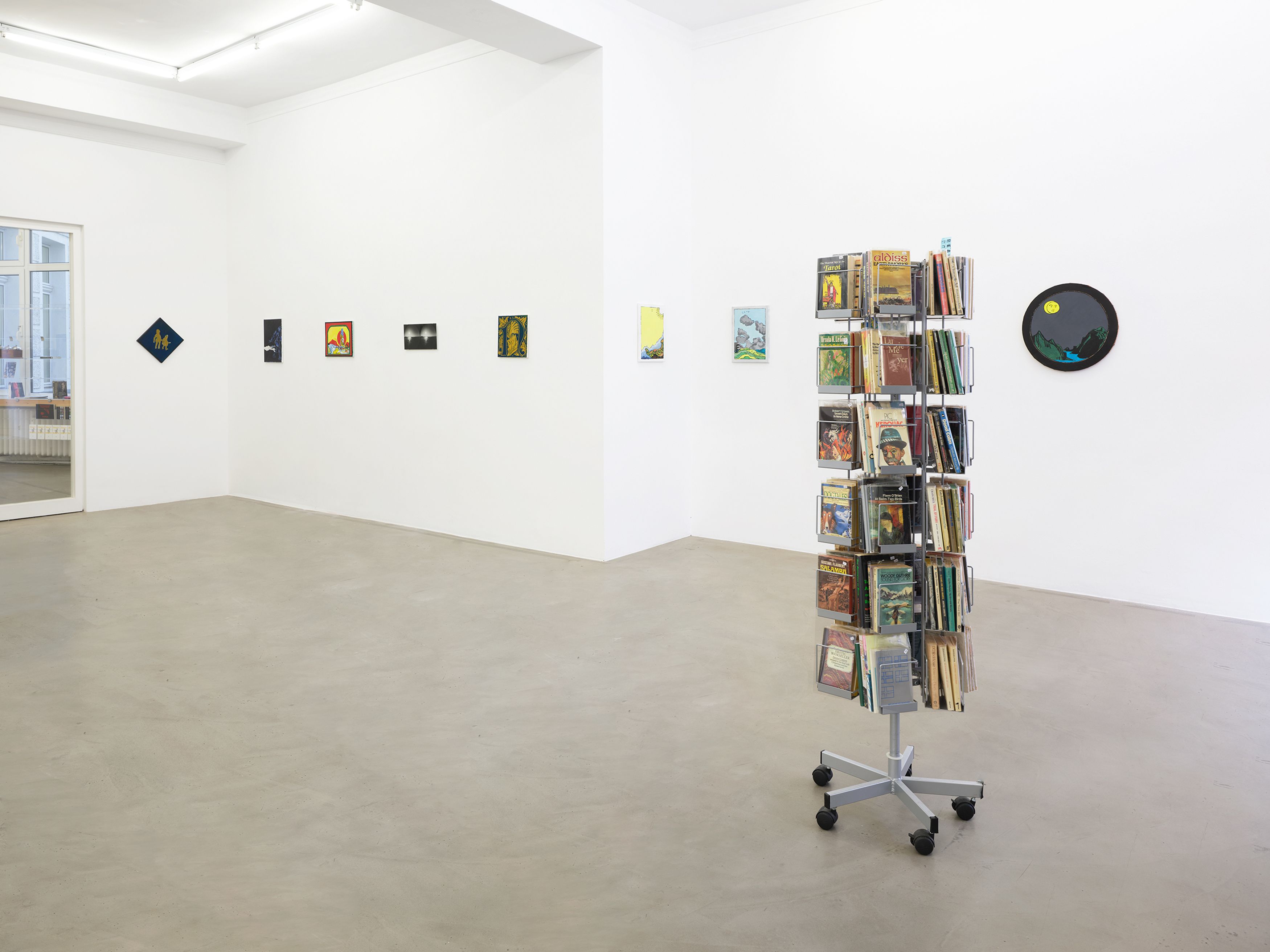
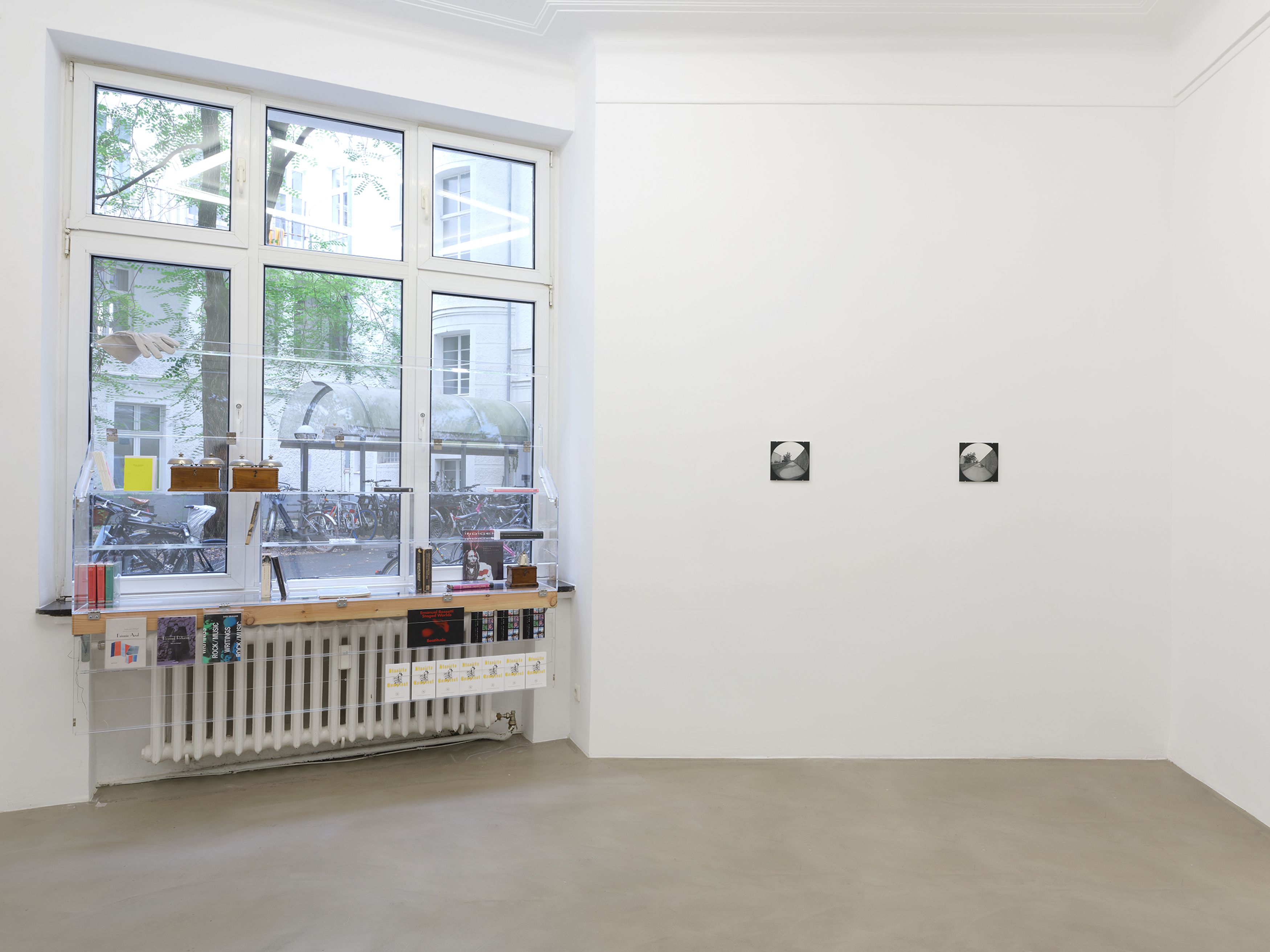
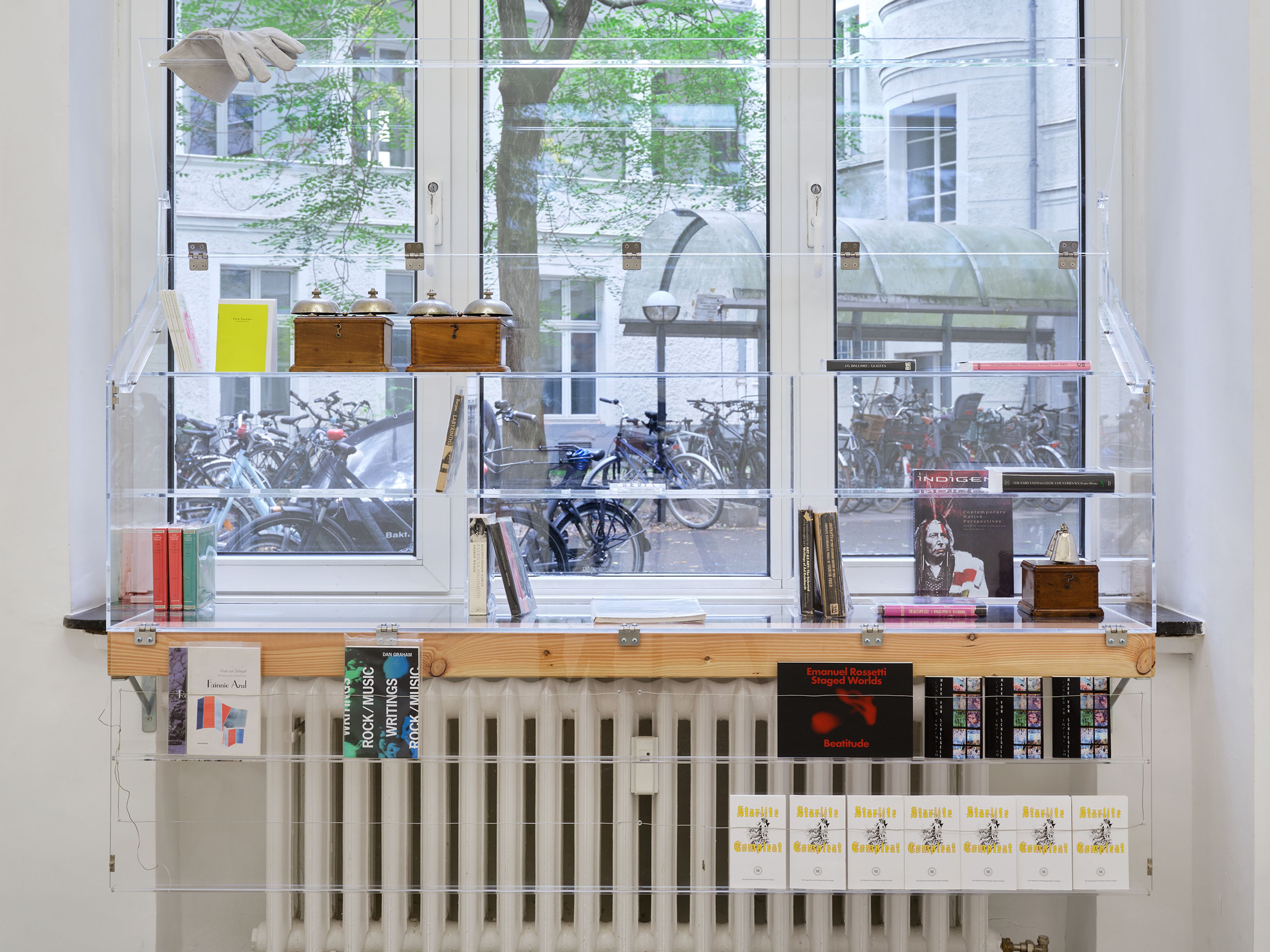
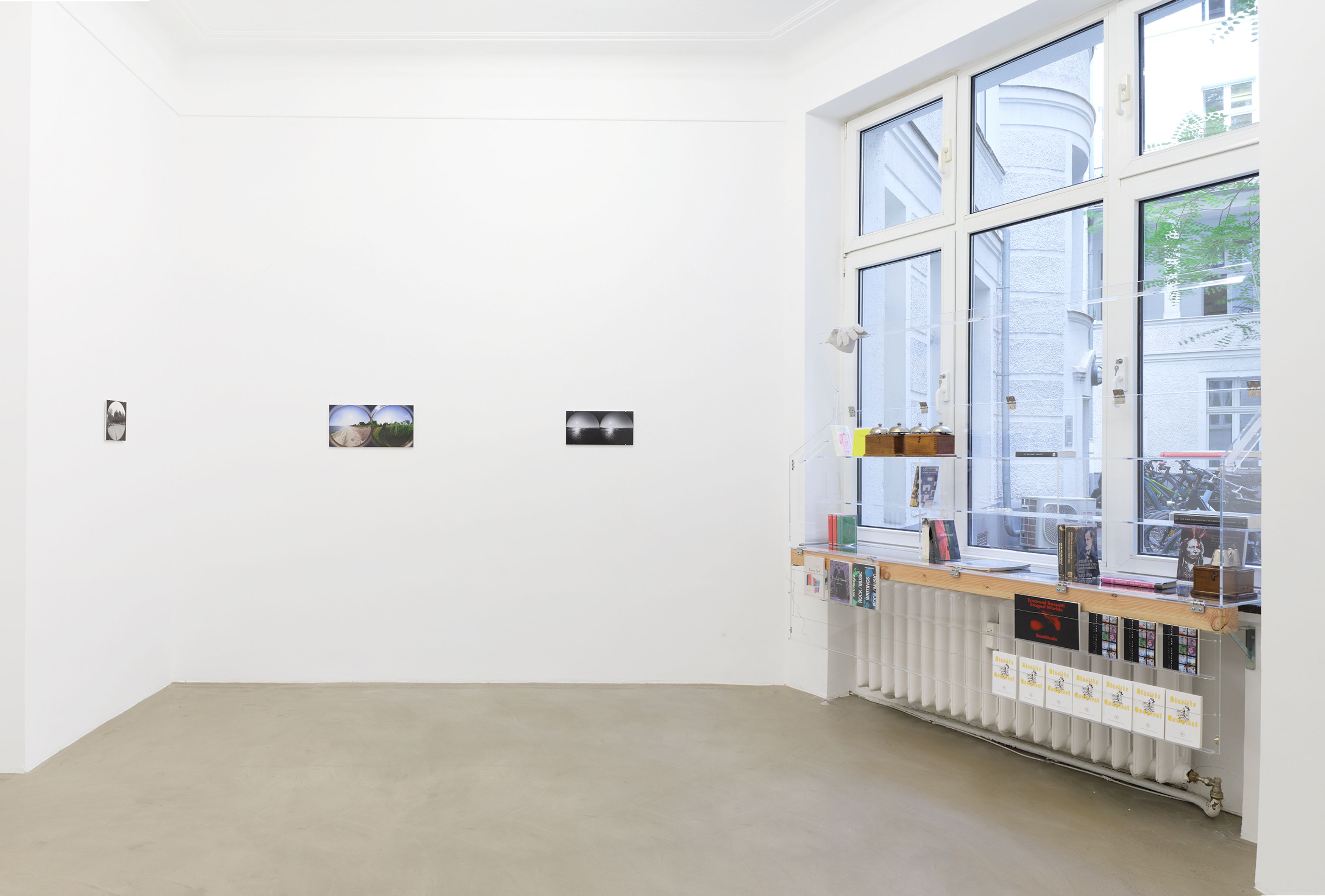
Emanuel Rossetti, Mark von Schlegell RARE EARTHS, REAL BOOKS July 25 – August 29, 2026 Jan Kaps, Cologne
Out of this world, we cannot fall.[1]
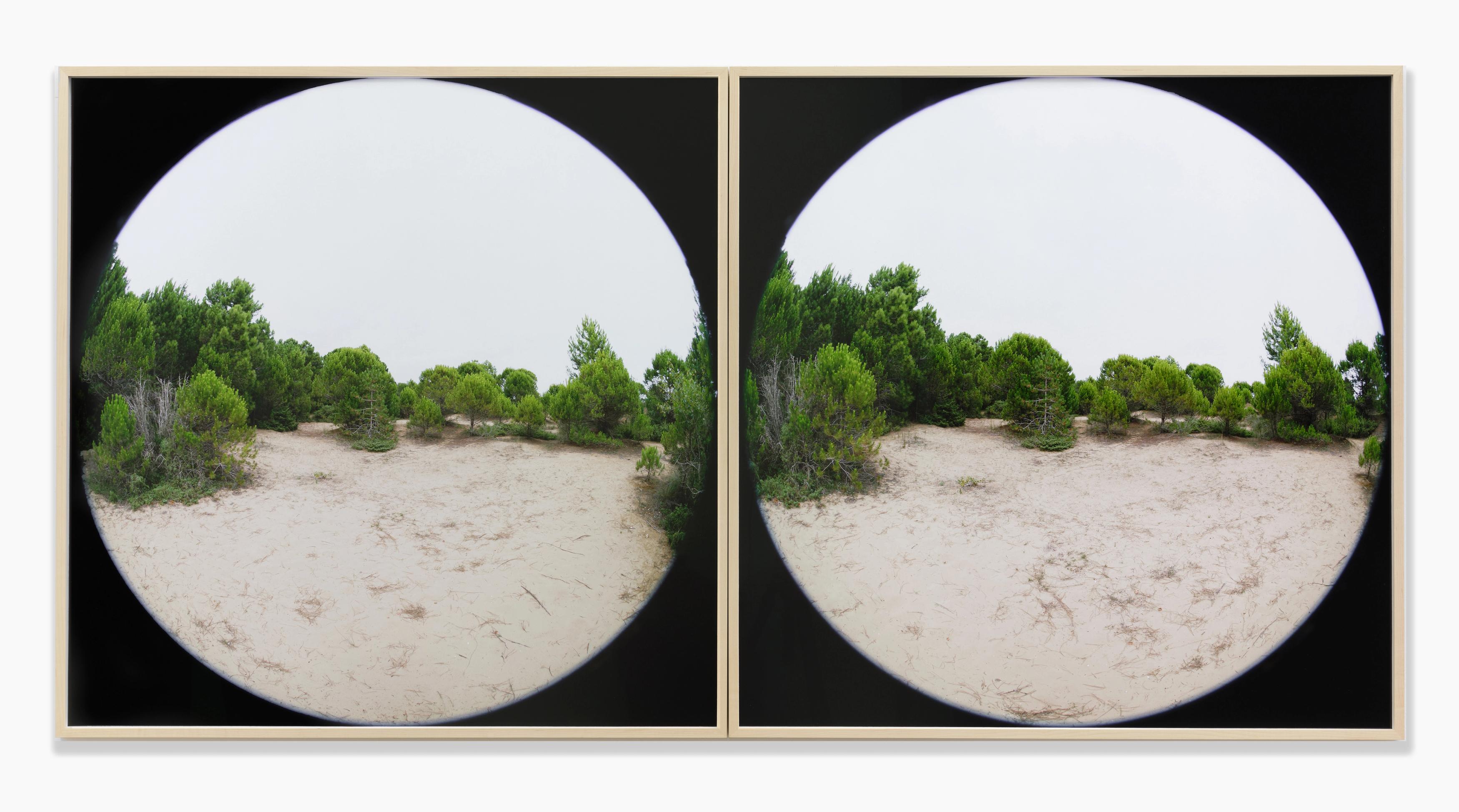
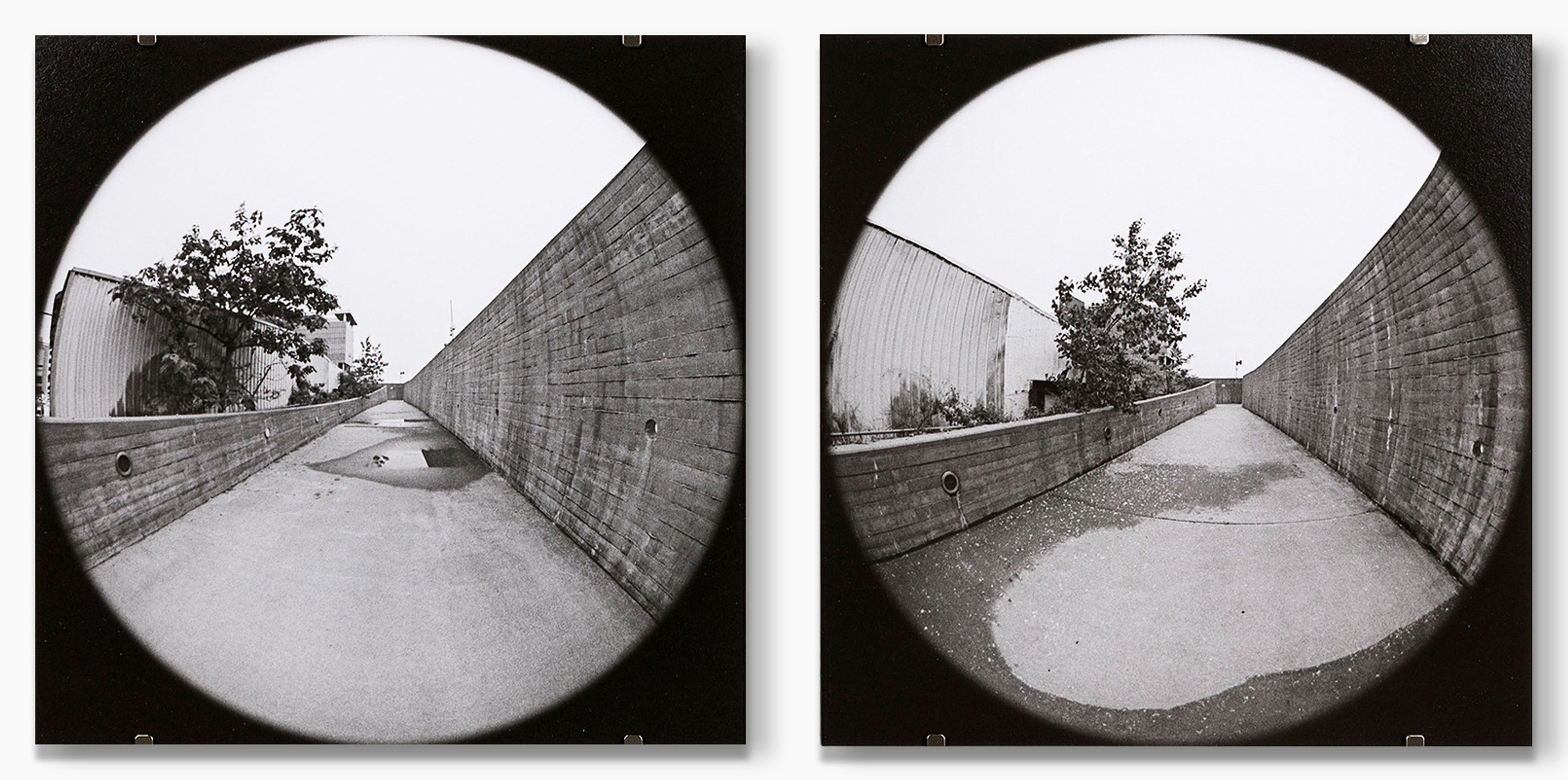
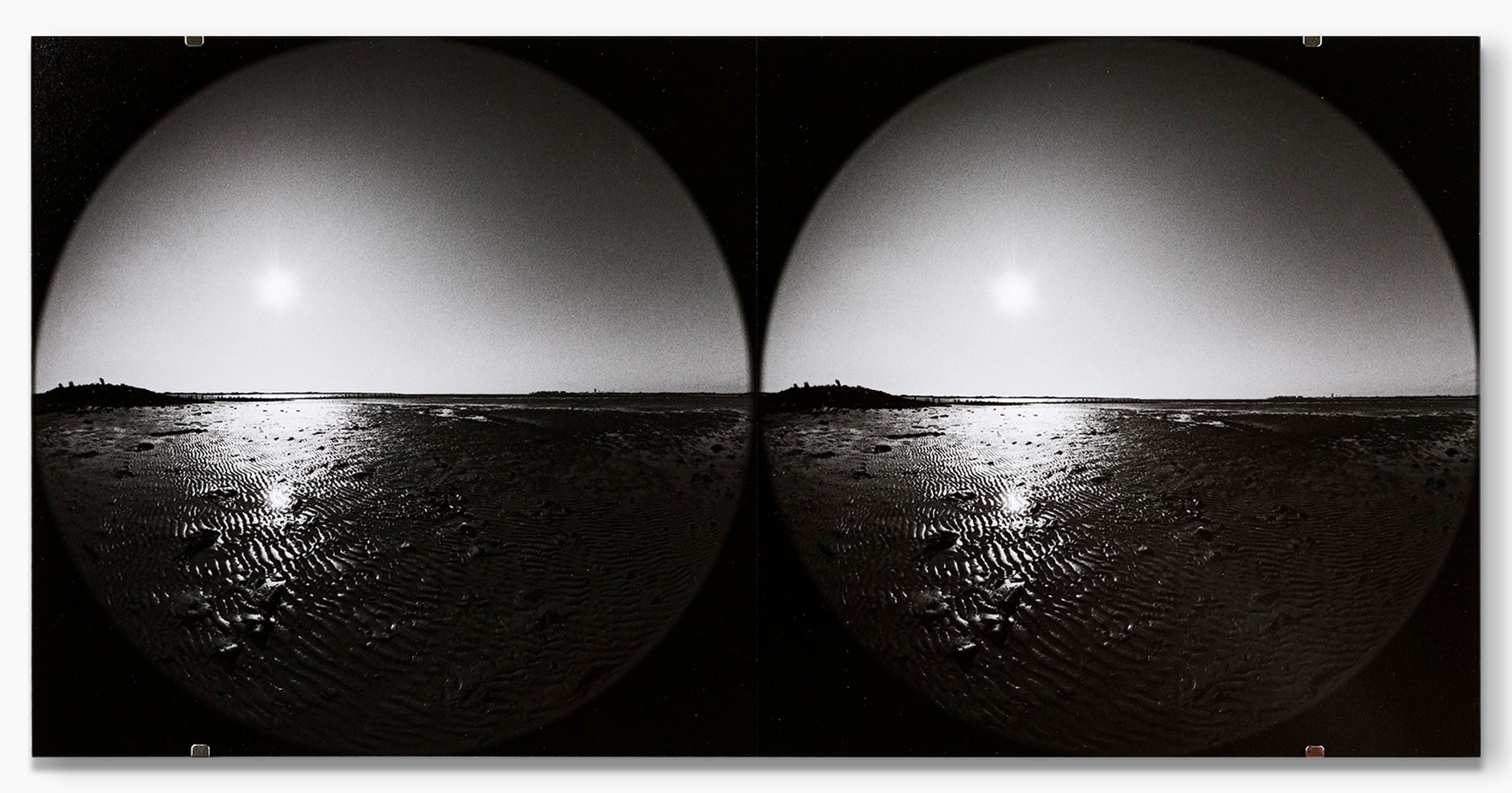
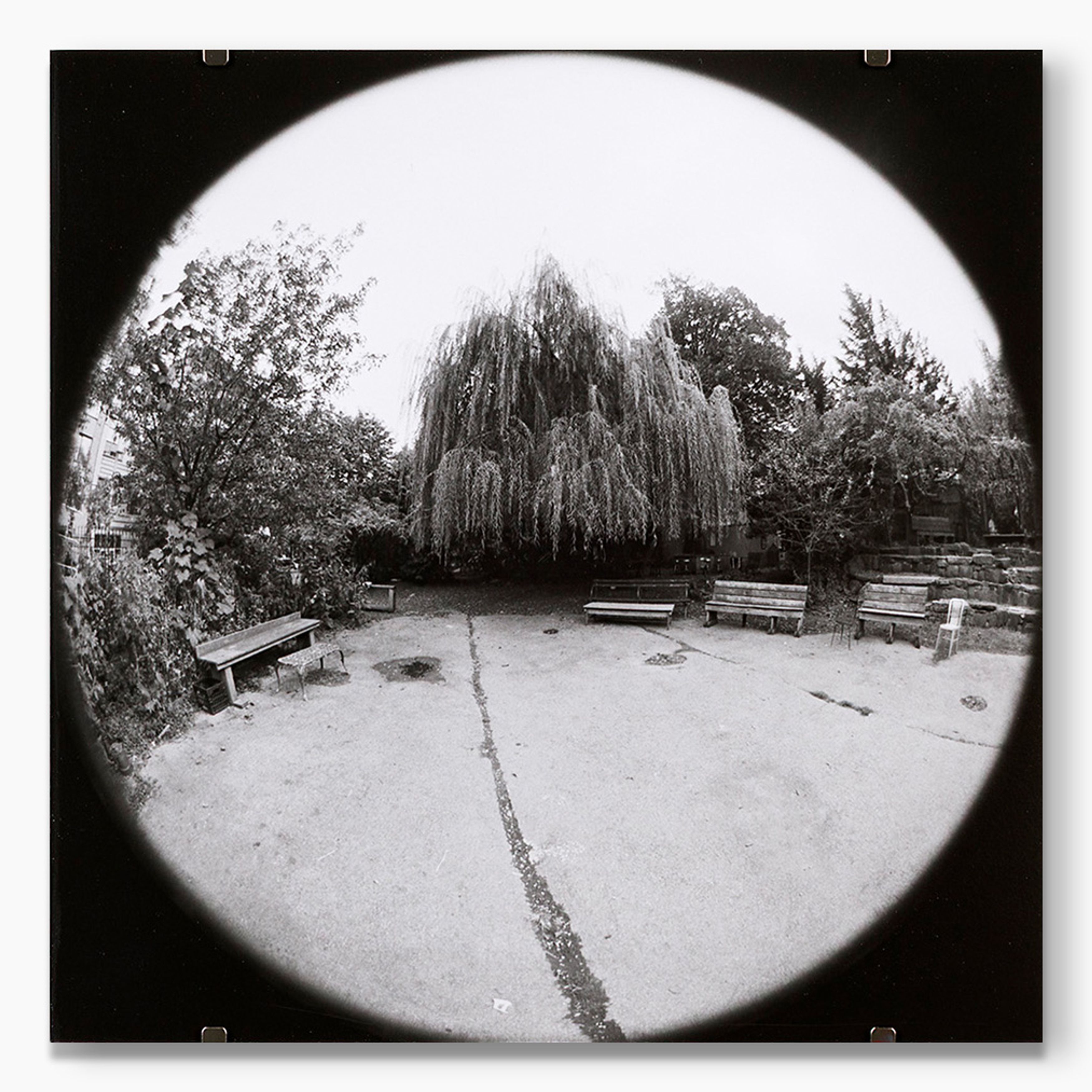
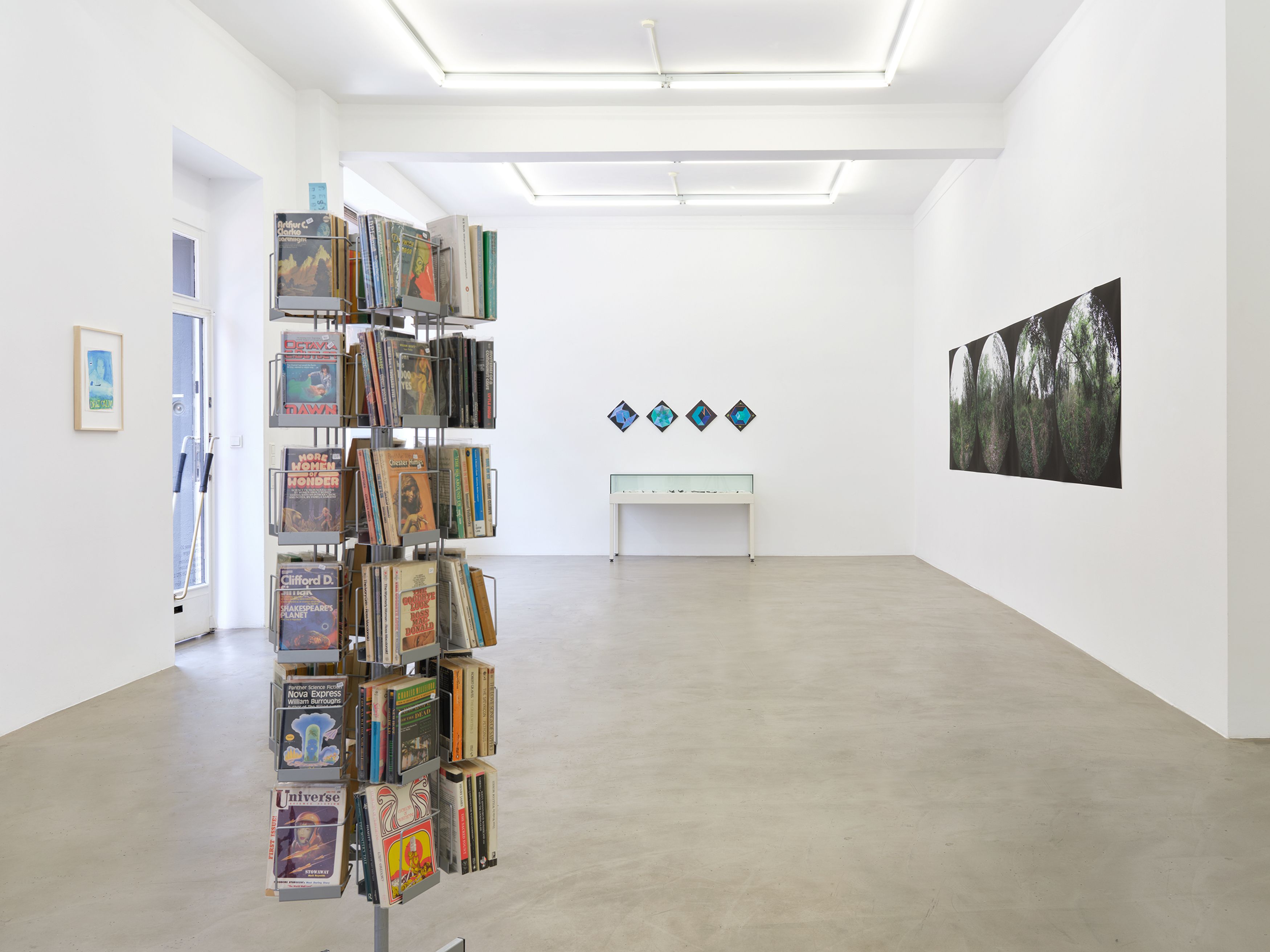
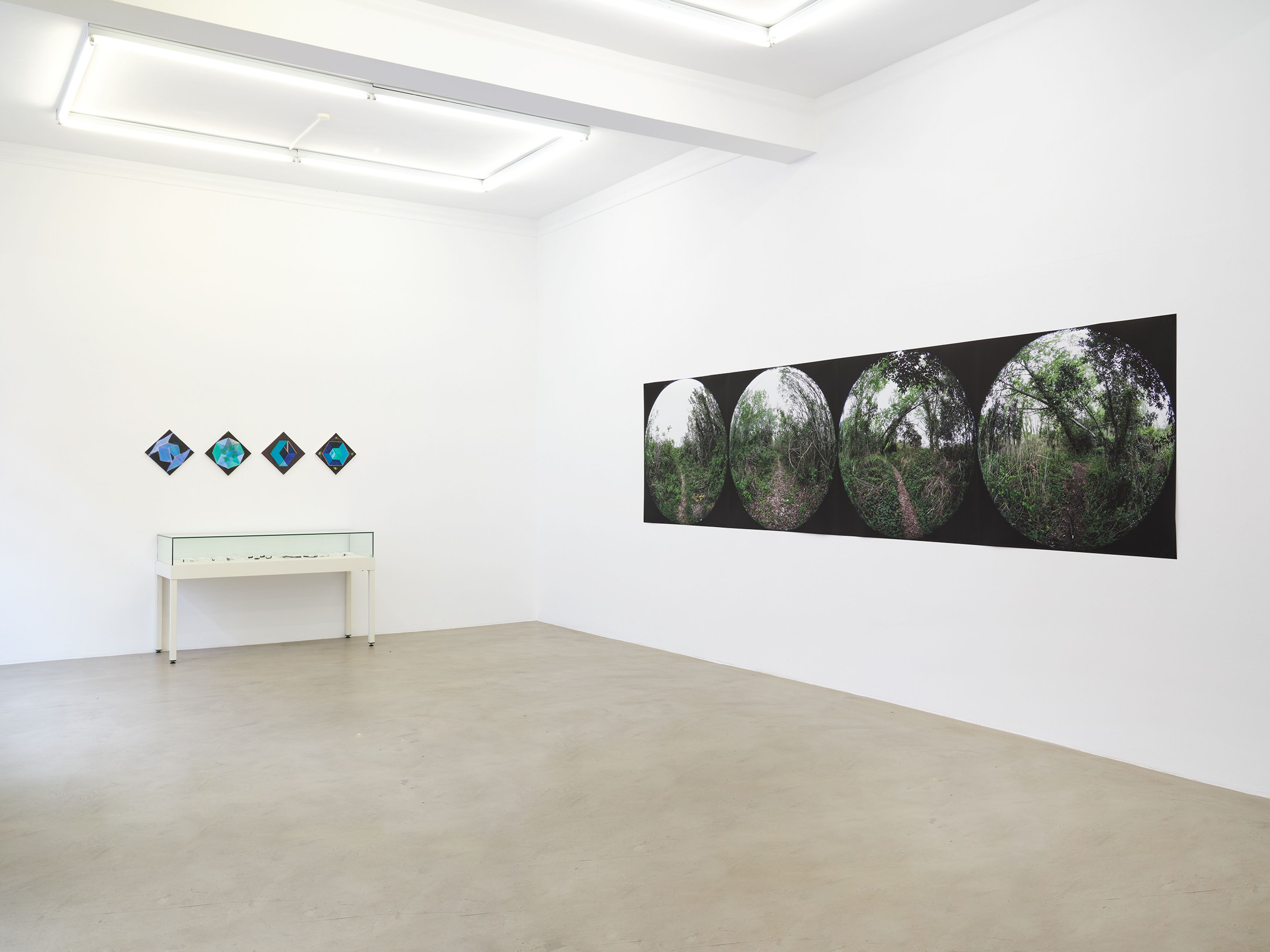
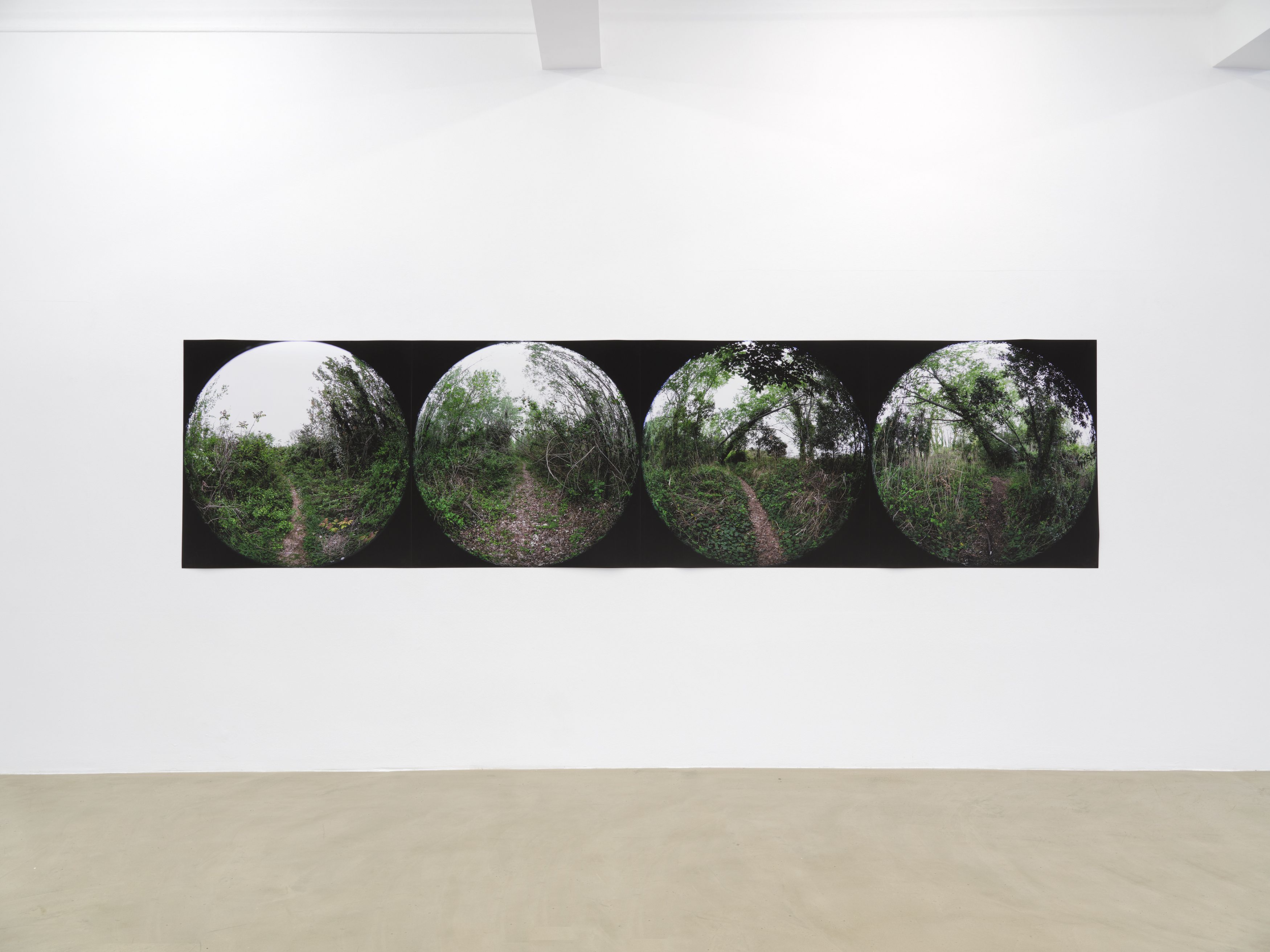
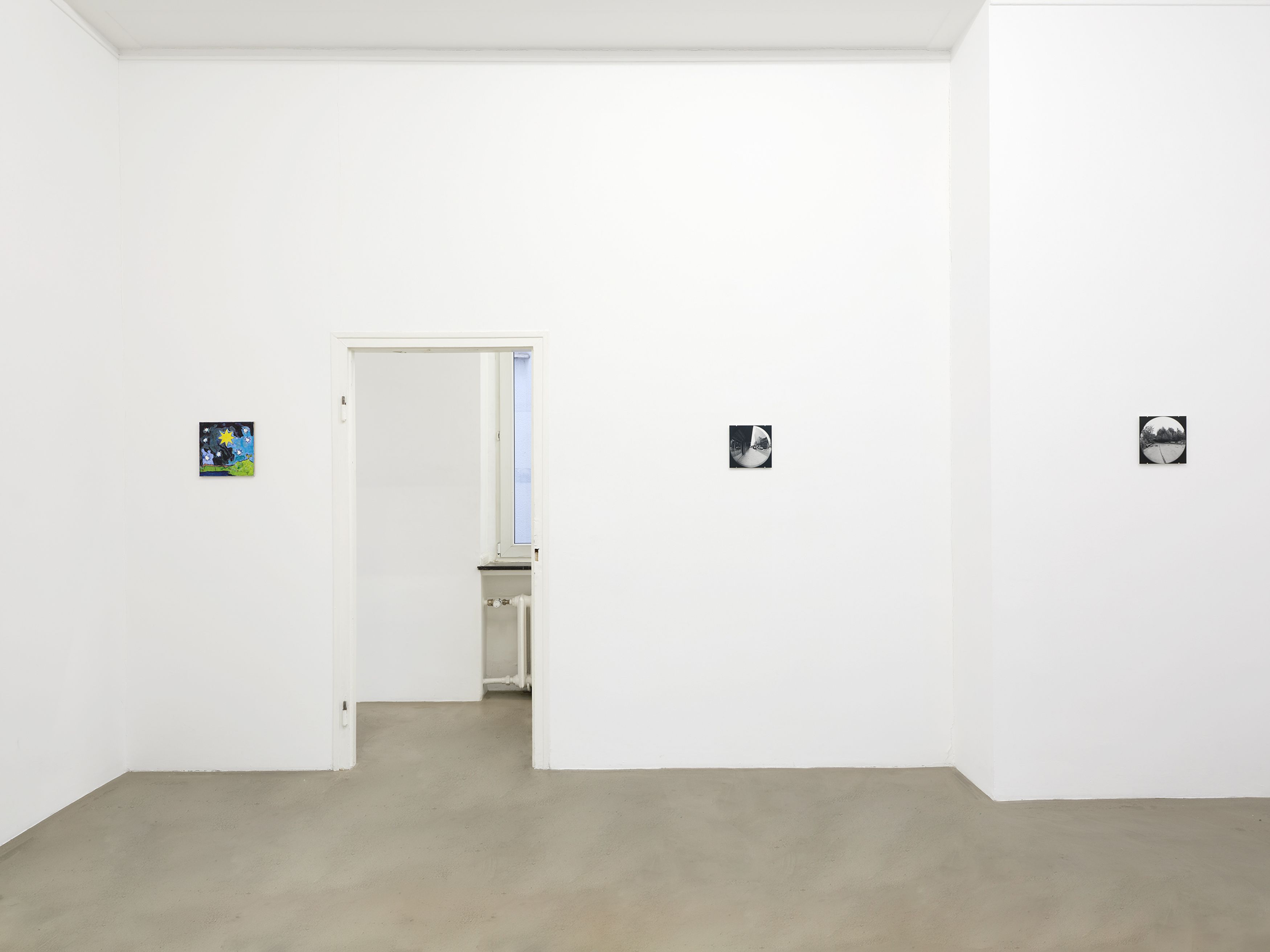
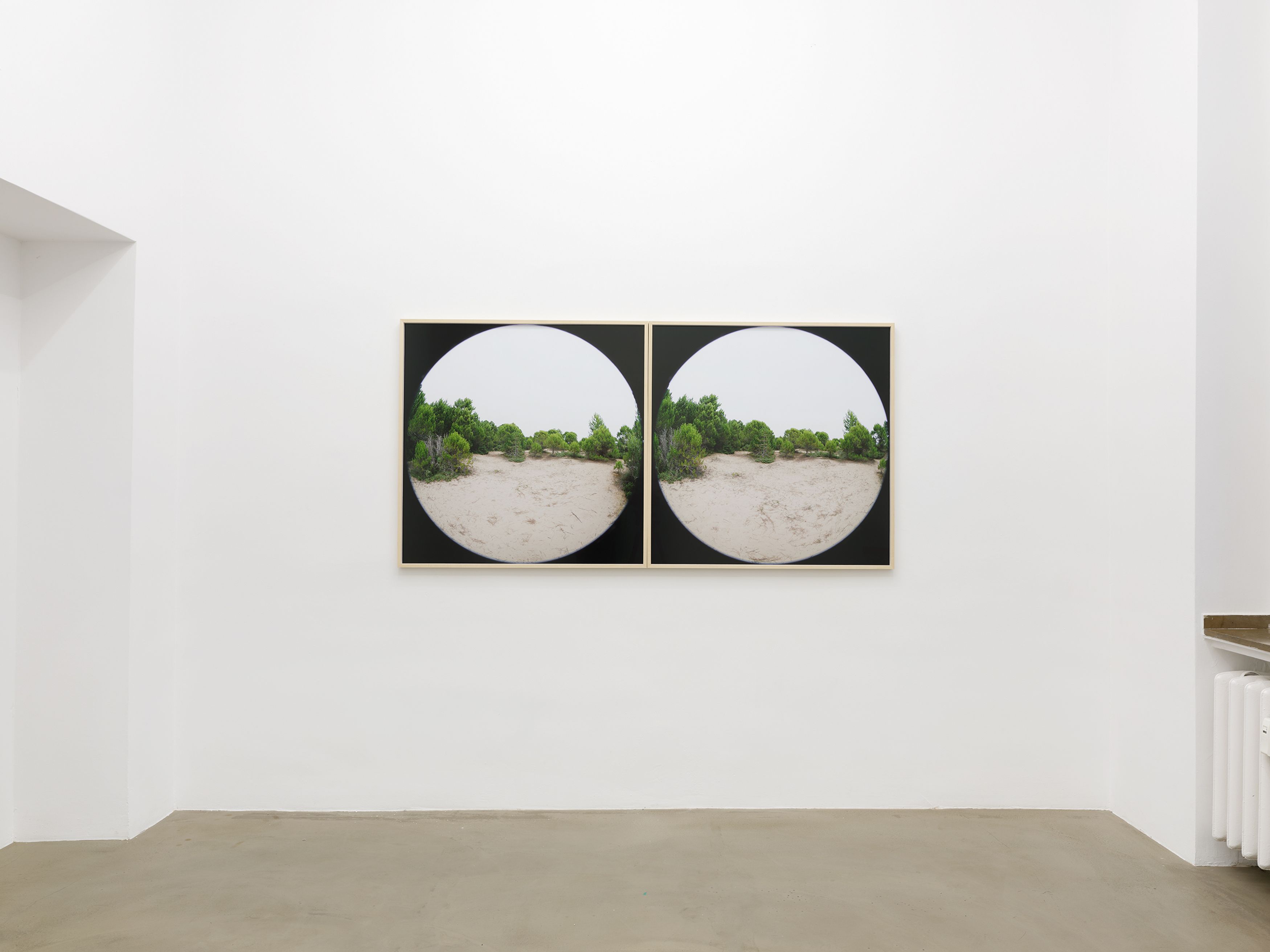
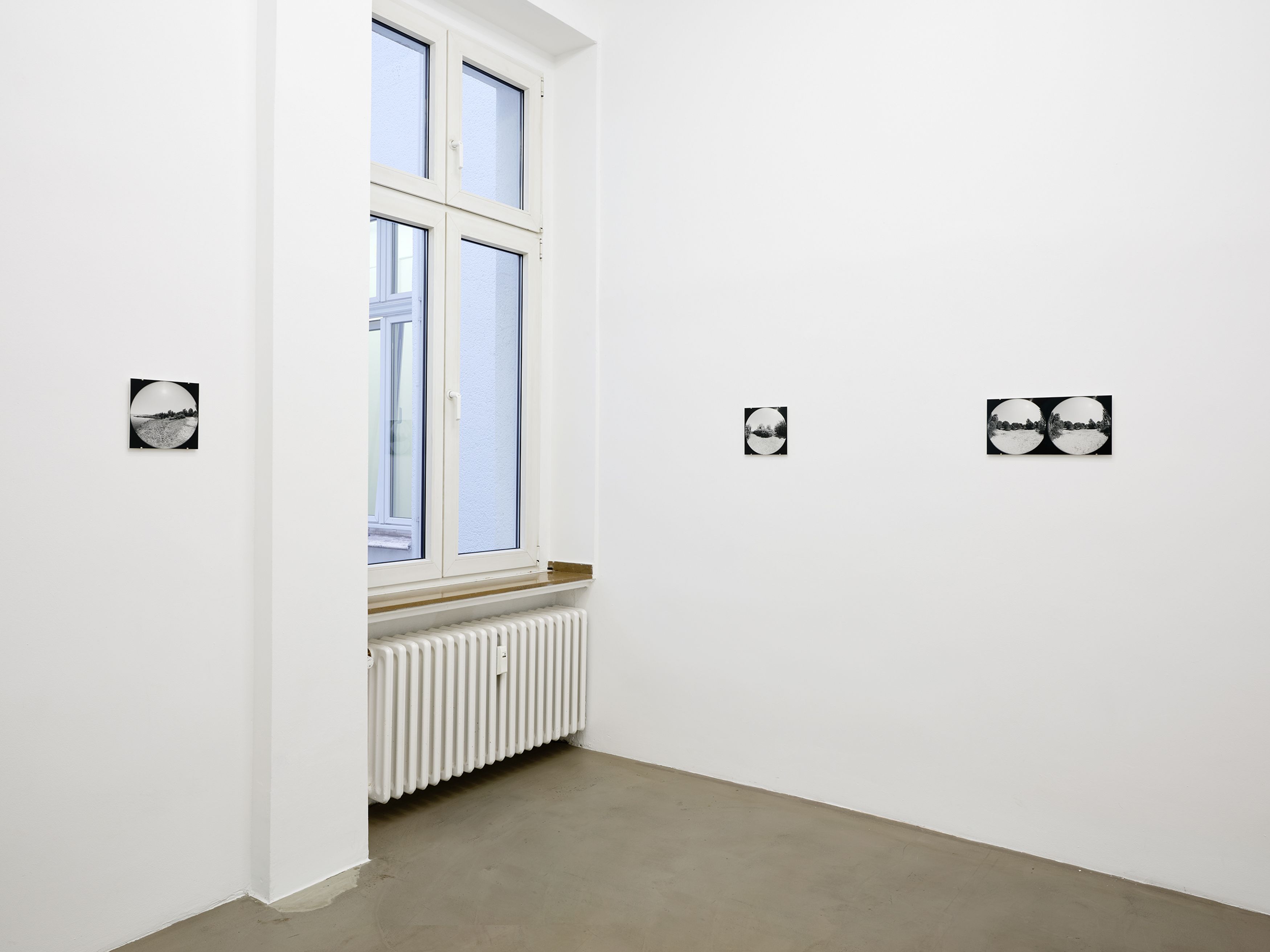
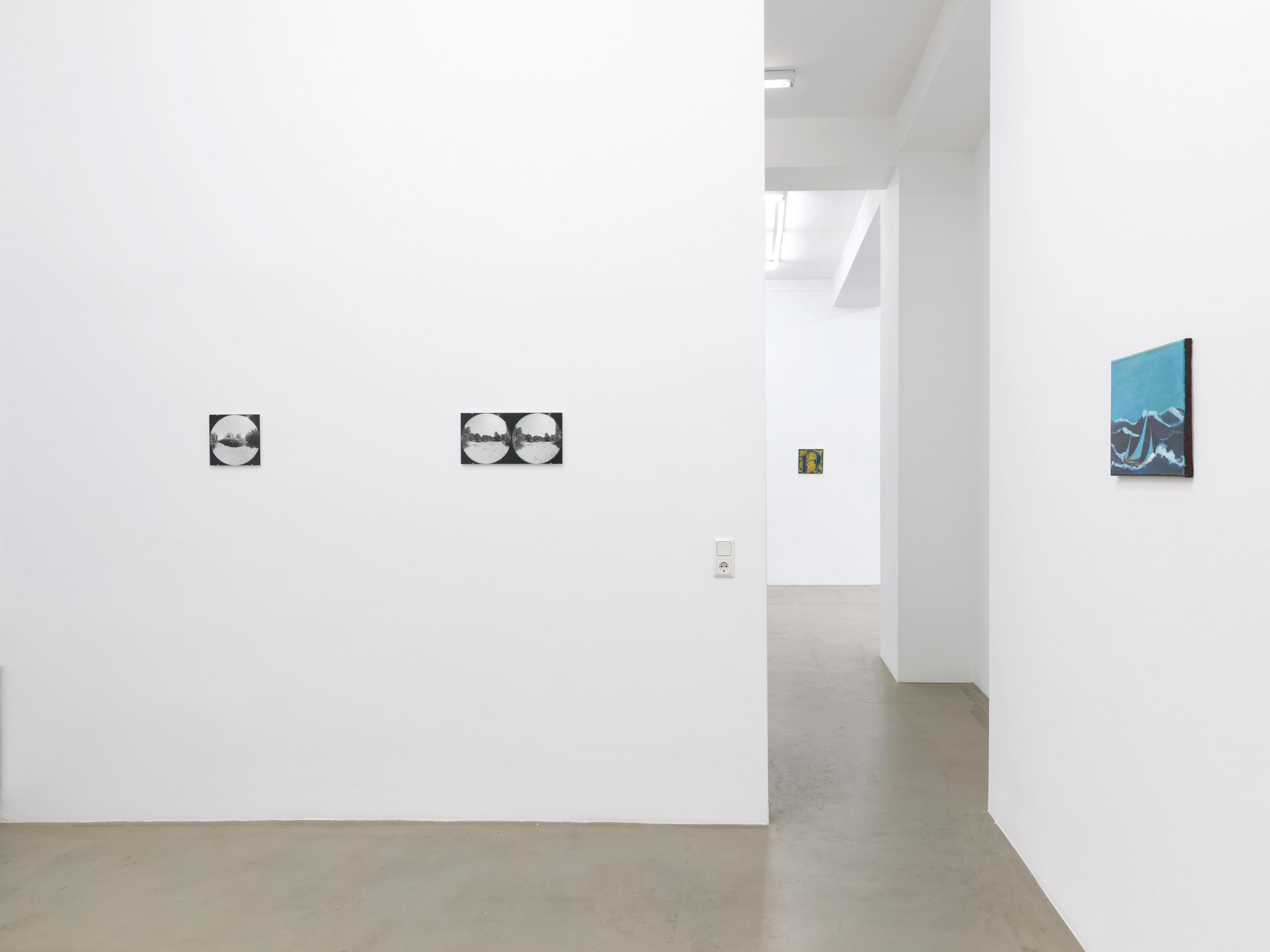
On solitary walks, sometimes in the company of a friend, Emanuel Rossetti photographs peripheral urban environments through a fisheye lens. The distortion of the lens, resembling that of a peephole in a door, suggests that the photographer is located in a separate space from that which is viewed. If a photographer slips into a pool of water, do they not get wet? A fiction contaminates the inventorying of the landscape: to photograph is to be home alone, outside one’s home.
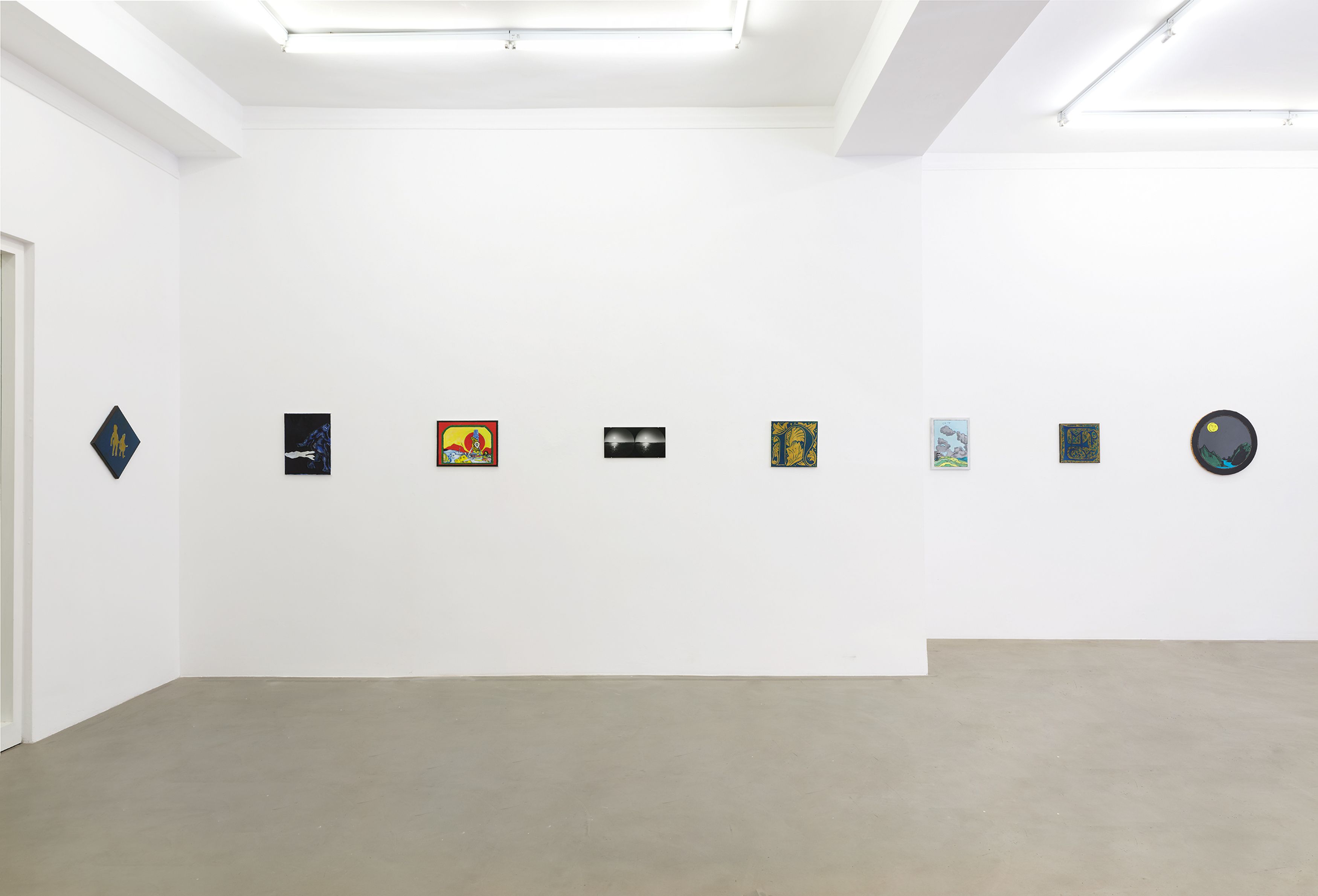
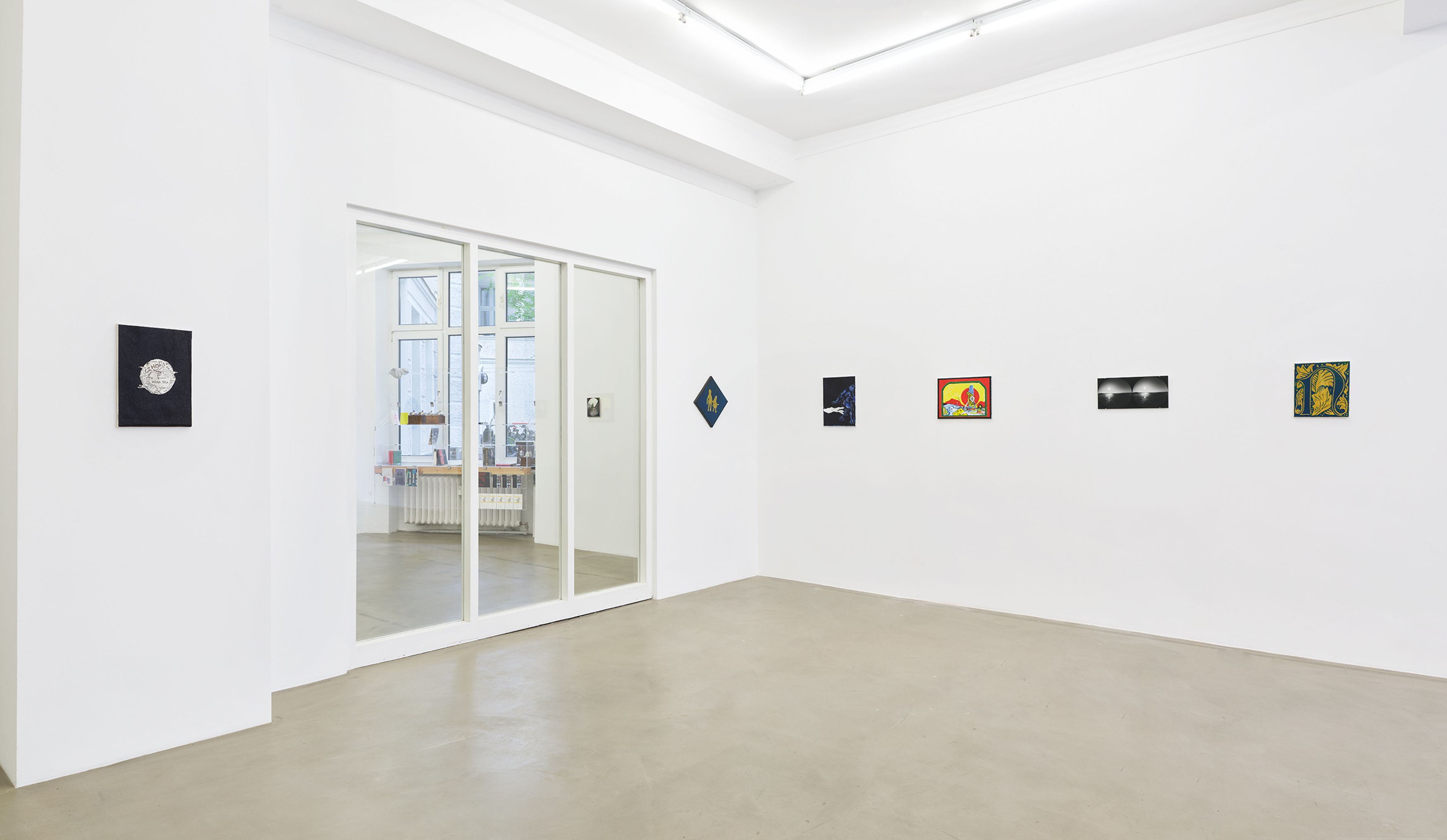
For RARE EARTHS, REAL BOOKS, Rossetti presents a selection of prints of photos taken at coastlines, beaches, and lagunas in combination with views of puddles in industrial zones and reflective facades. Fixed behind glass, the cool and slippery surfaces of these prints appear to mirror the brief arrest between wet and dry in the gradual evolution of an analogue photograph. Like Narcissus’s pond, the fisheye lens reveals itself as tool for immersion, bending the world into an idealized and eternal whole with the perceiving subject at its center.
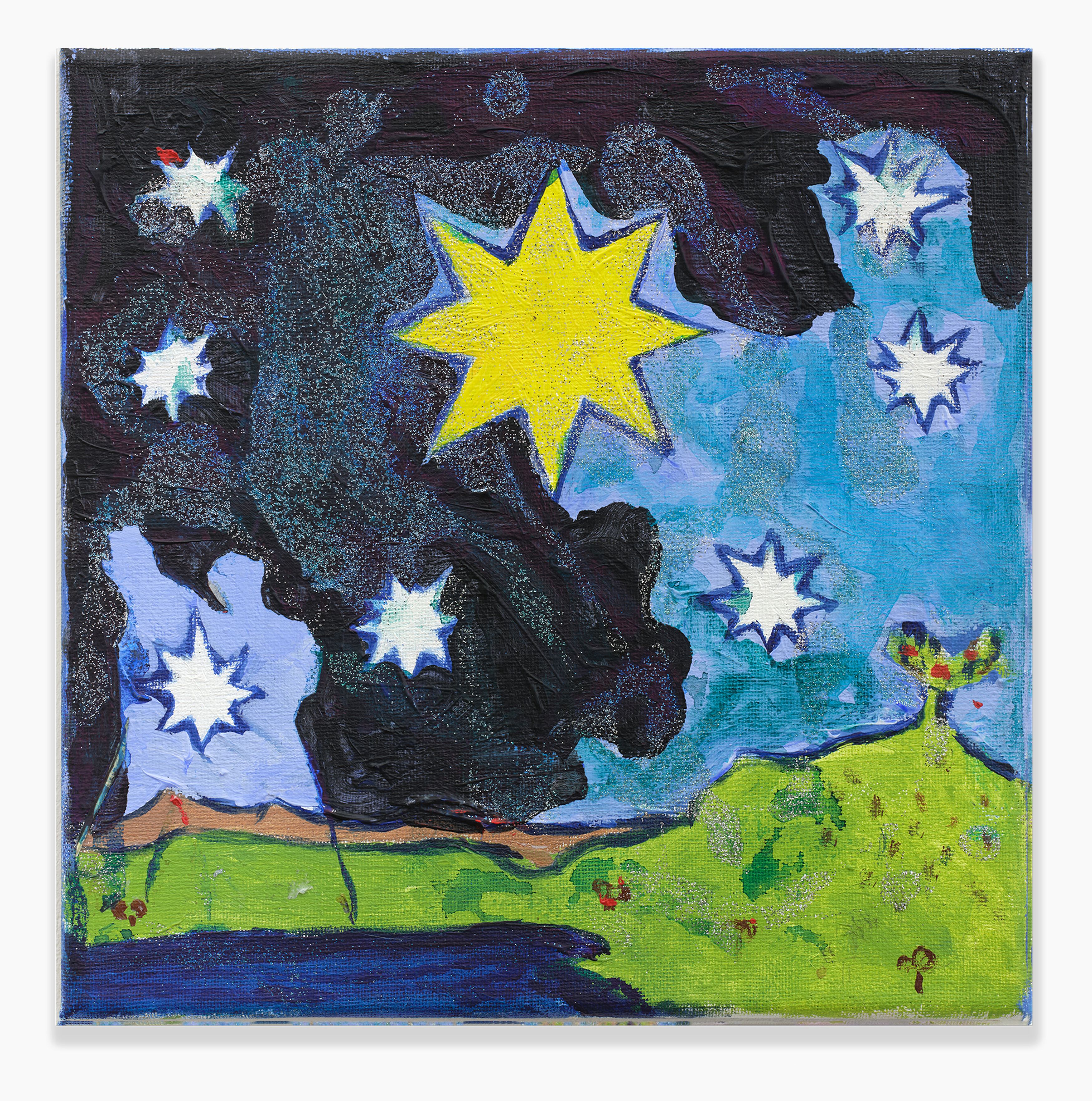
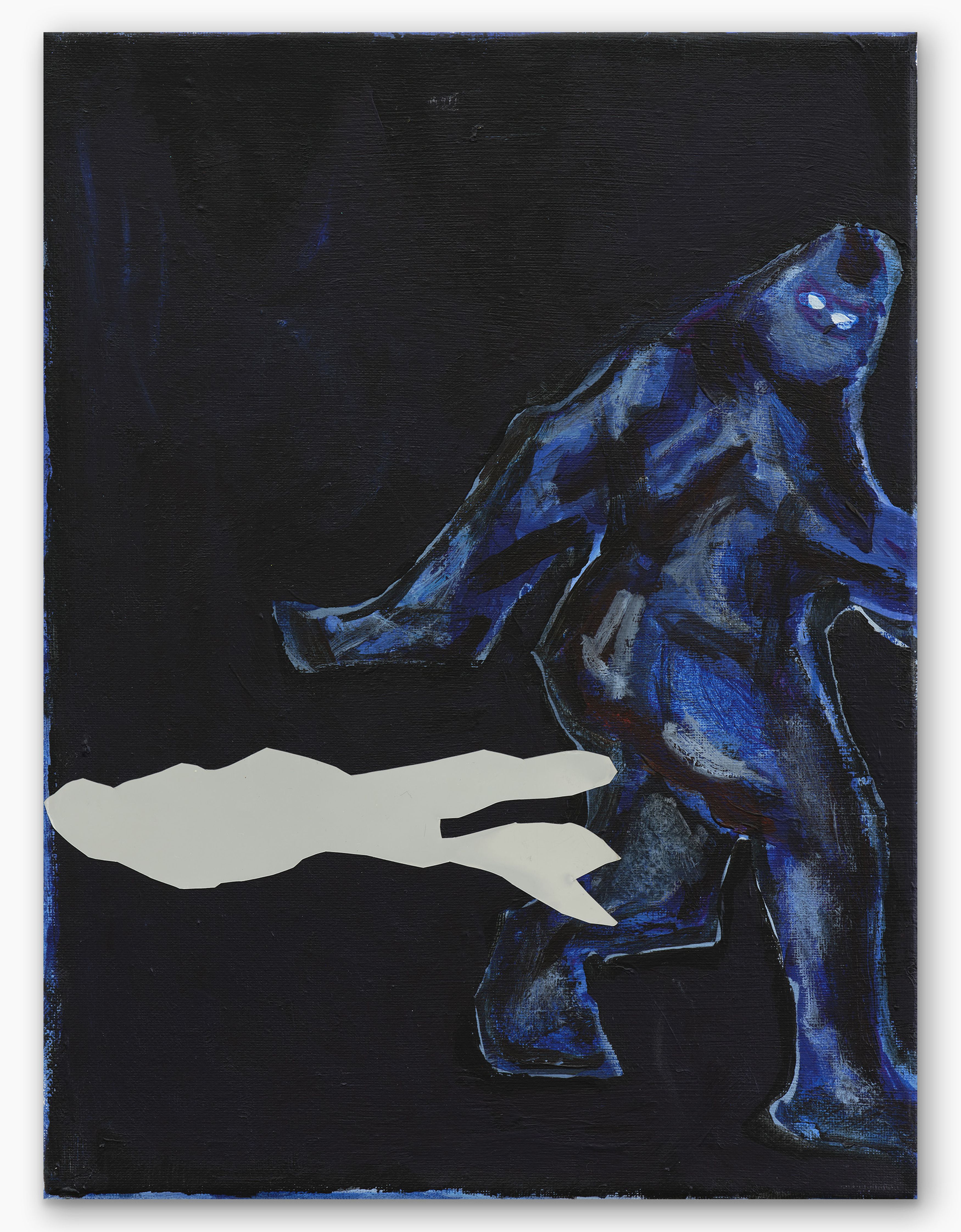
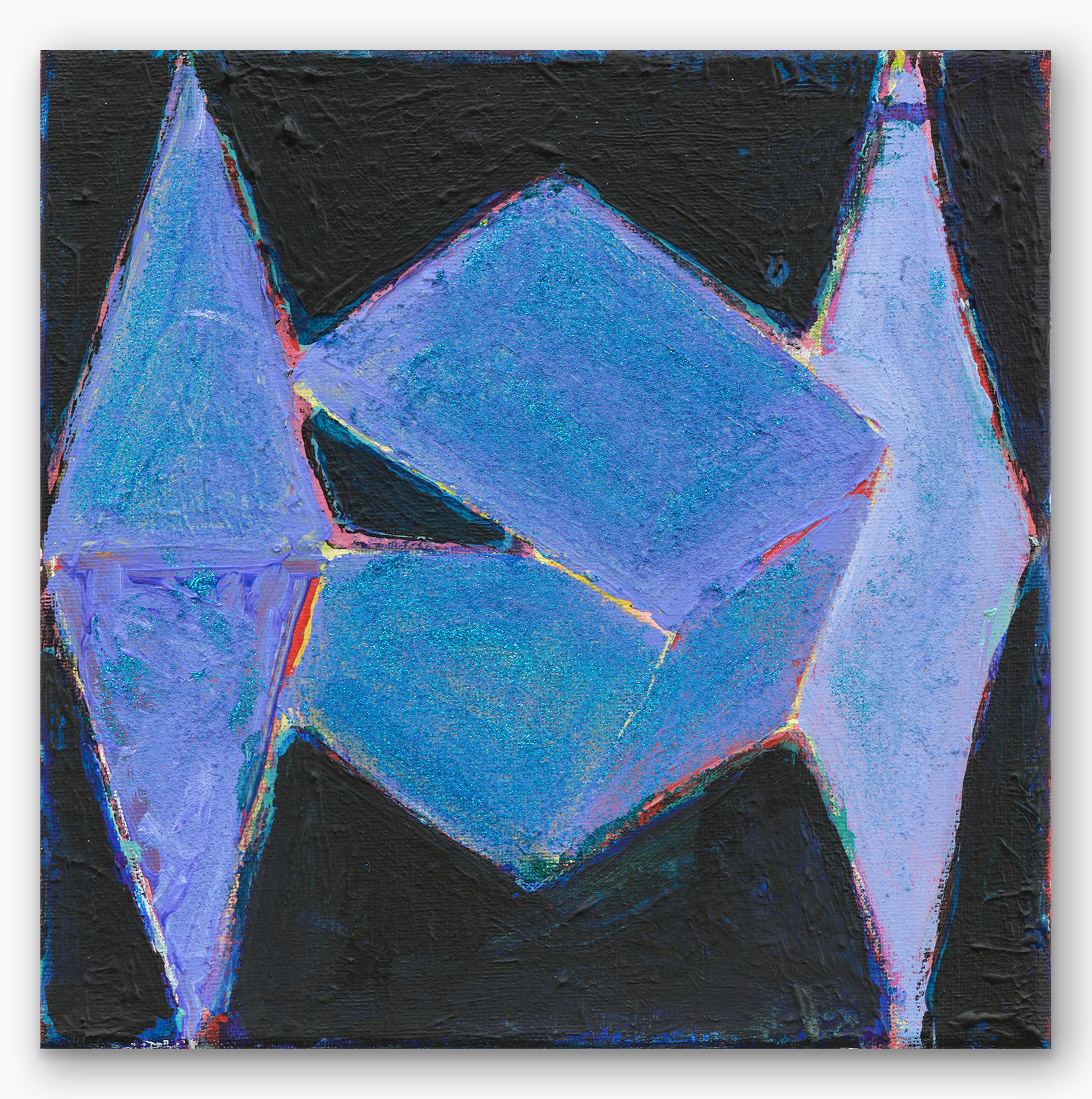
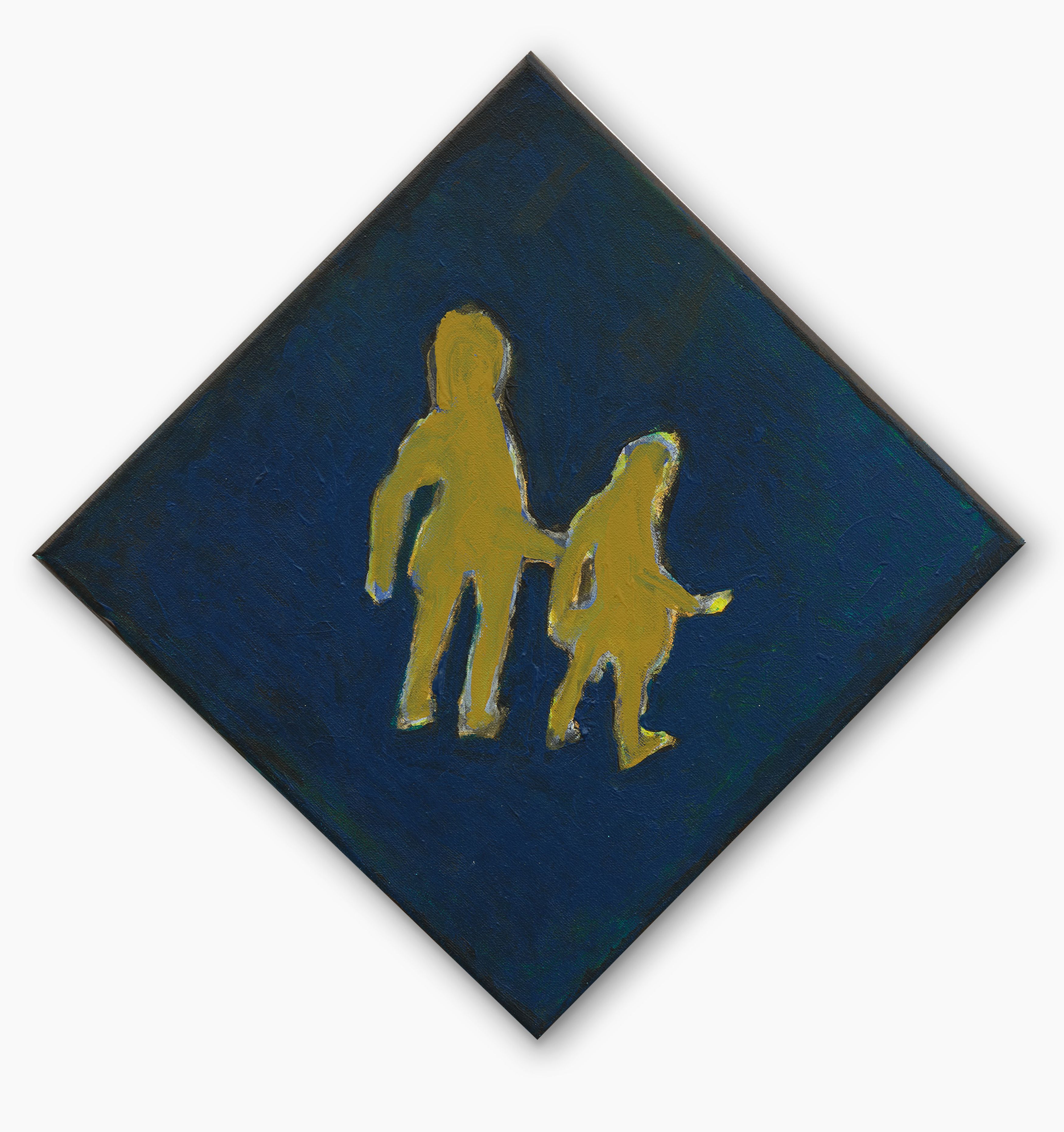
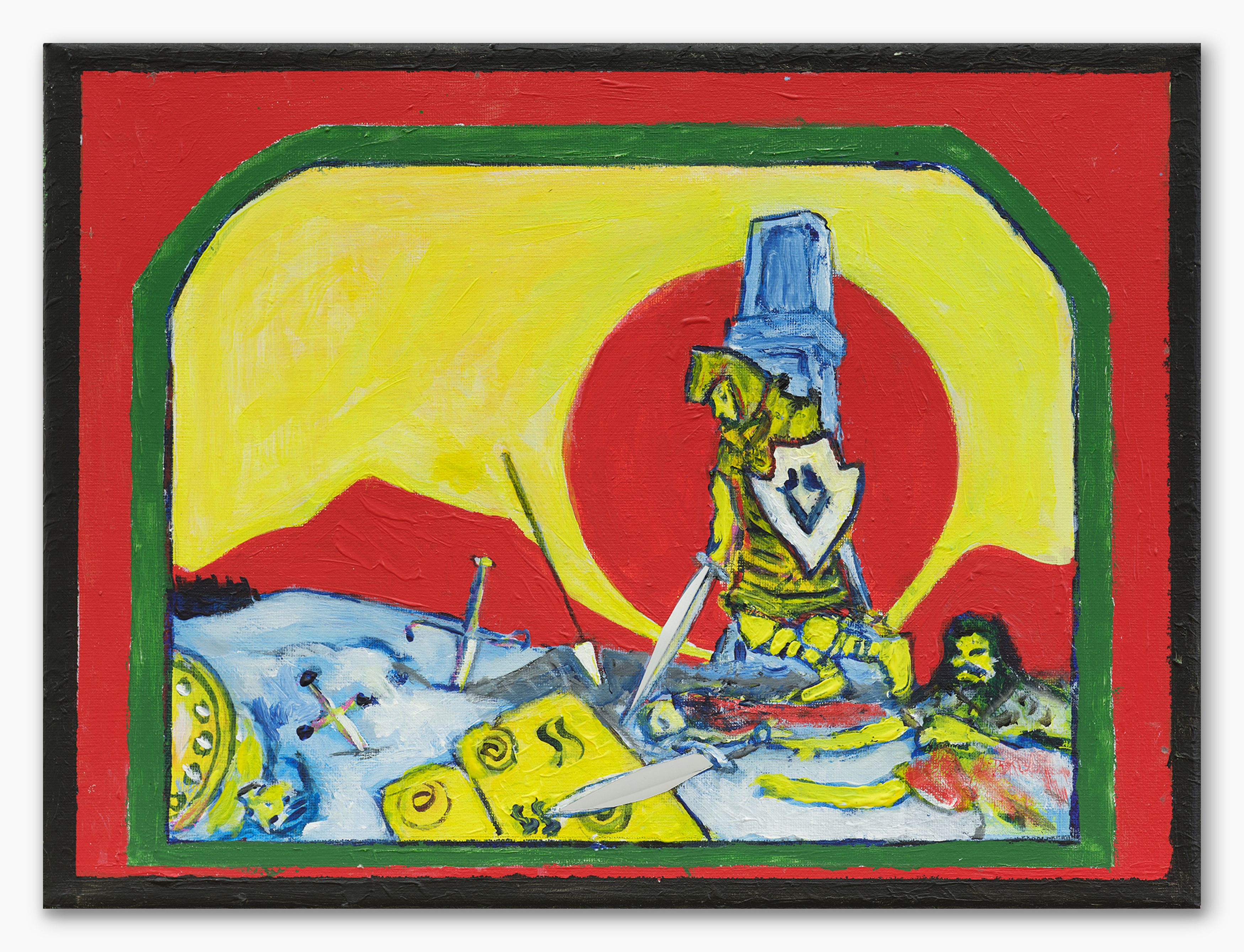
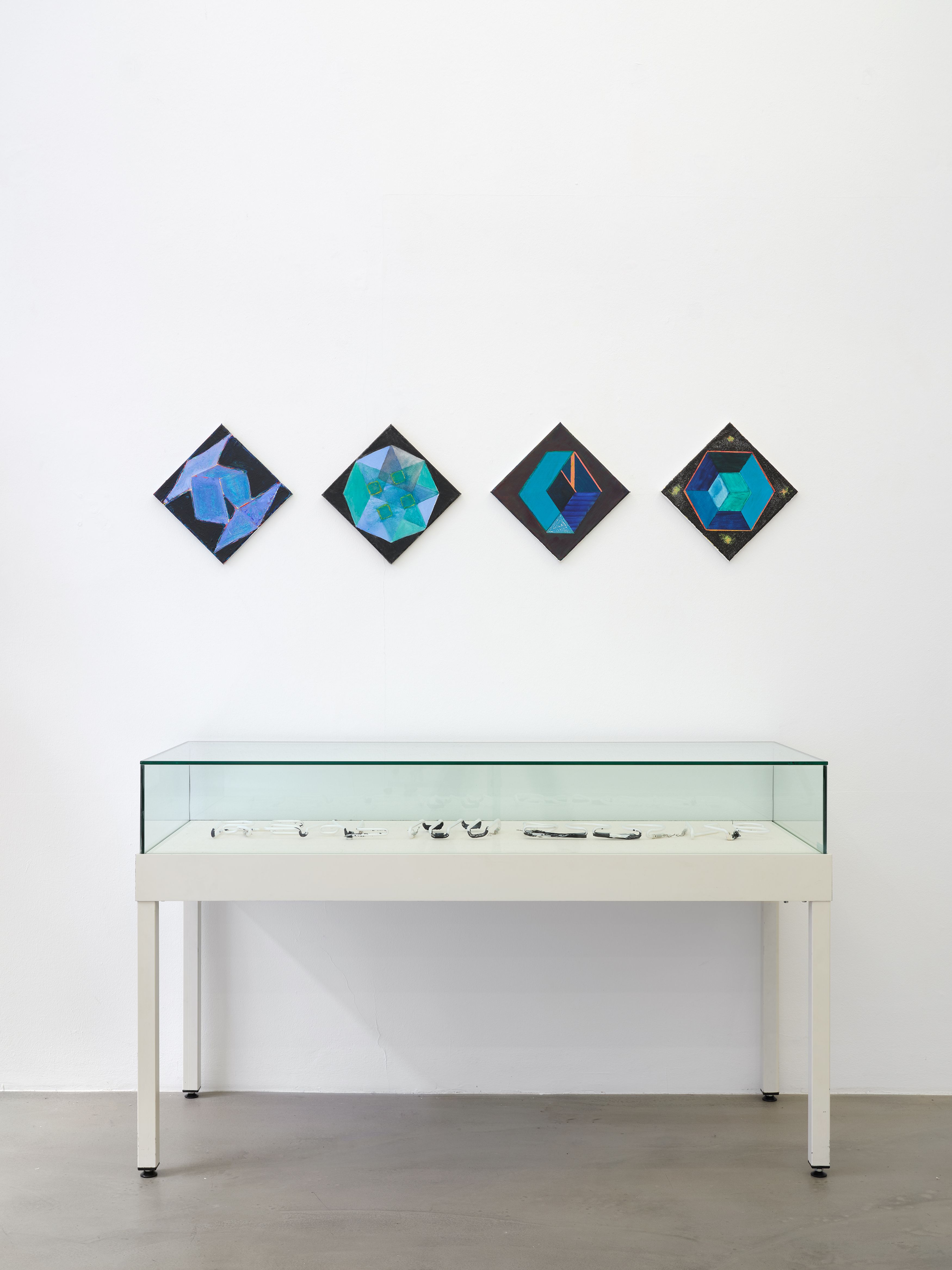
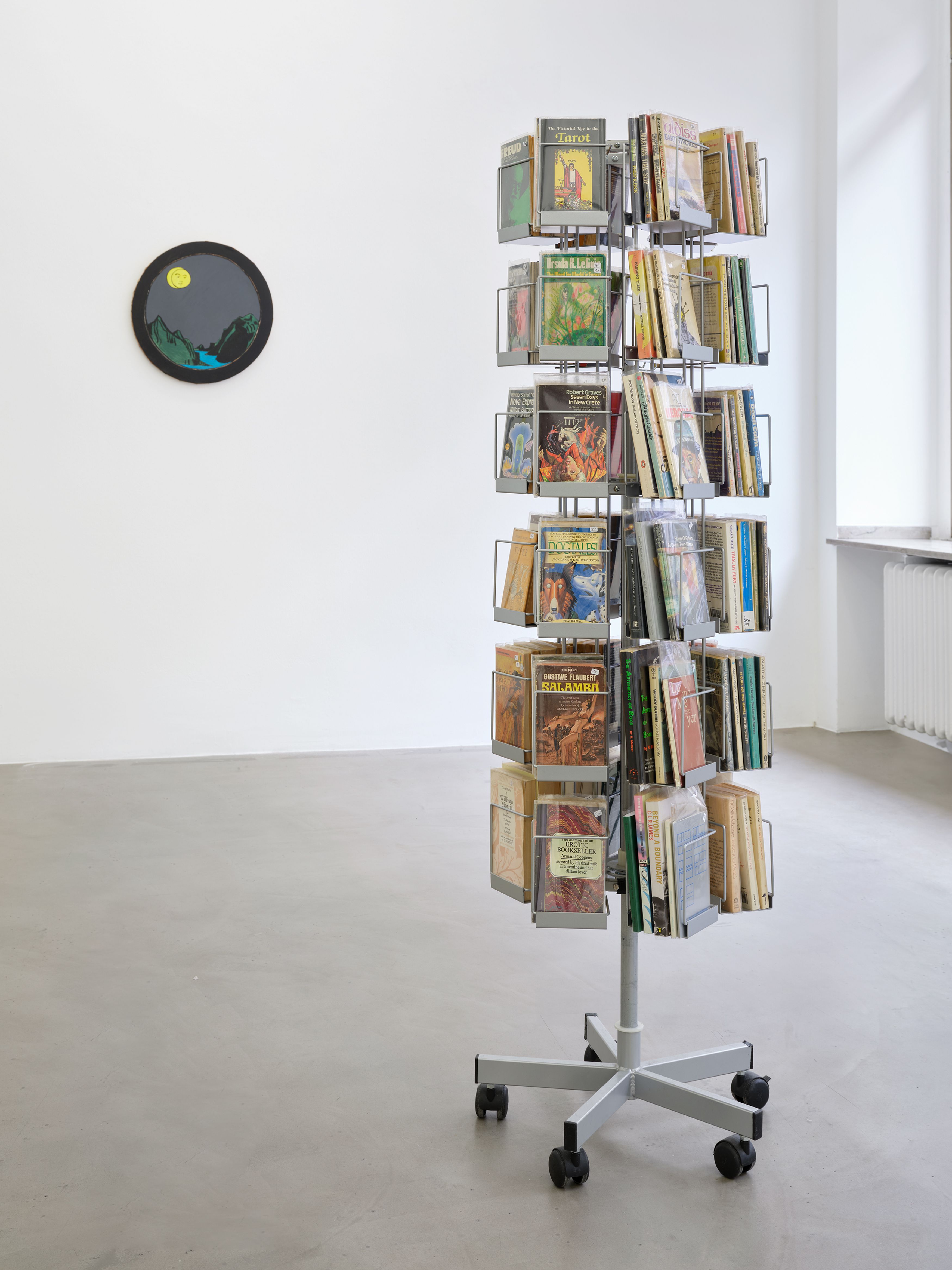
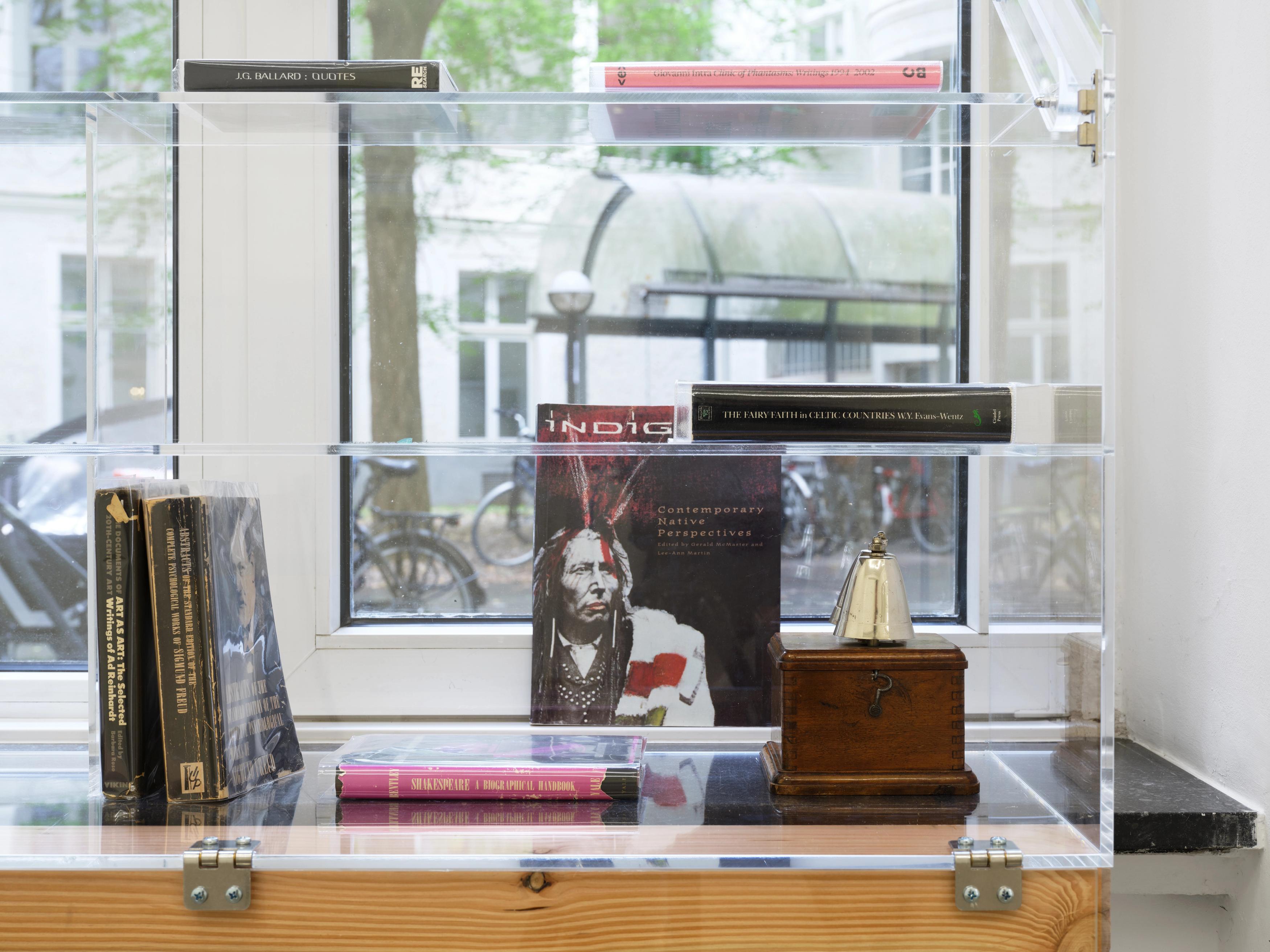
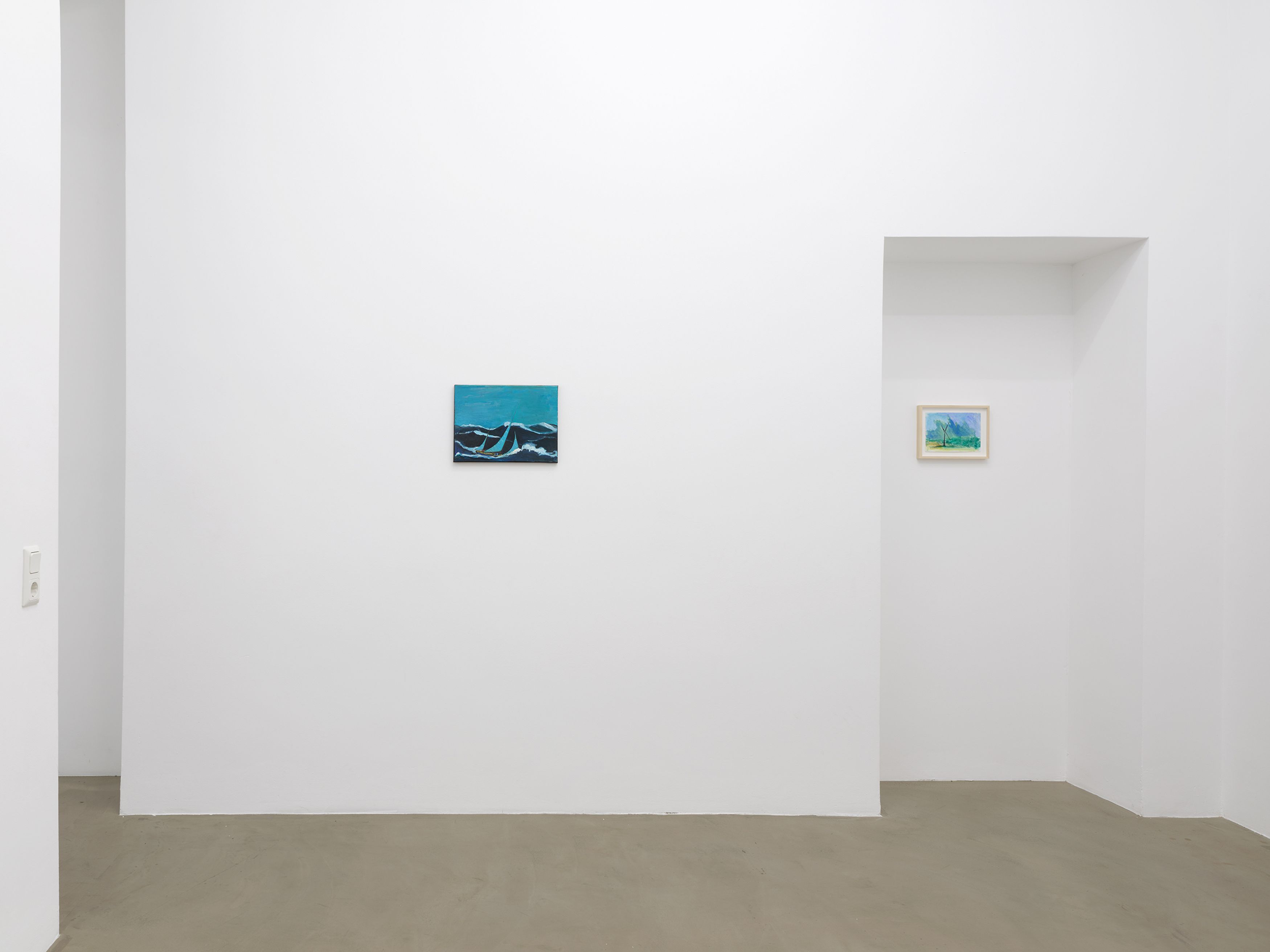
Mark von Schlegell’s fieldwork takes place in the interior. Here, solitude is the prerequisite for writing. Surrounded by used books, rare paperback covers, Victorian tapestry, Shakespeare, our collective unconscious, and the Tarot, he encodes his findings into an open-ended series of paintings. Made with cheap materials from Tedi or Creativmarkt, their scale reflects the modest size of the writer’s office turned studio at night.
In Tarot, meaning cannot be extracted from a pictorial reading alone. The first-time reader is lost without a pictorial key in the form of a manual—a supplement that simultaneously completes something supposedly whole and replaces it. In singular form, von Schlegell’s paintings appear as private icons of worship, emblems, or initials of absent illuminations. In series, supplemented by the current catalogue of REAL / BOOKS, they slip out, like a sentence, punctuating the Symbolic from within.
Made after a painting by von Schlegell’s father, #20. (Family Tradition), depicts two sailors close to overwhelm. More at home on land, I have rarely asked myself why boat windows are round. Evidently, without corners, they seal more tightly. Still, the oceanic feeling passes through.
– Erika Landström
_______
[1] „Aus dieser Welt können wir nicht fallen.“ Sigmund Freud, Das Unbehagen in der Kultur (Wien: Internationaler Psychoanalytischer Verlag, 1930), 11. Freud uses this line, originally from Christian Dietrich Grabbe's 1835 play Hannibal, to secularize Romain Rolland's mystical "oceanic feeling," reinterpreting it as an infantile psychological regression rather than divine oneness.