Works
Installation Views
Press Release
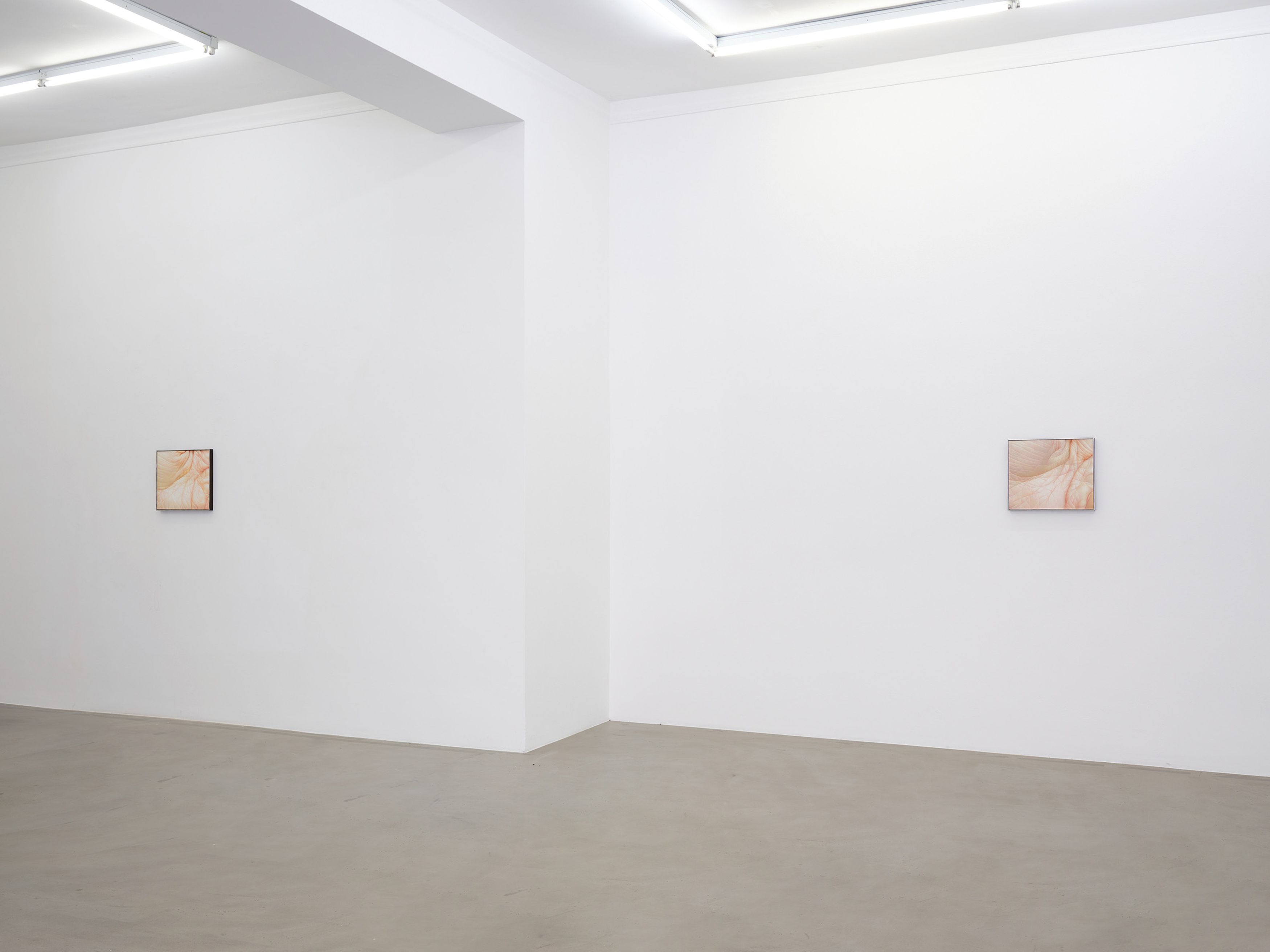
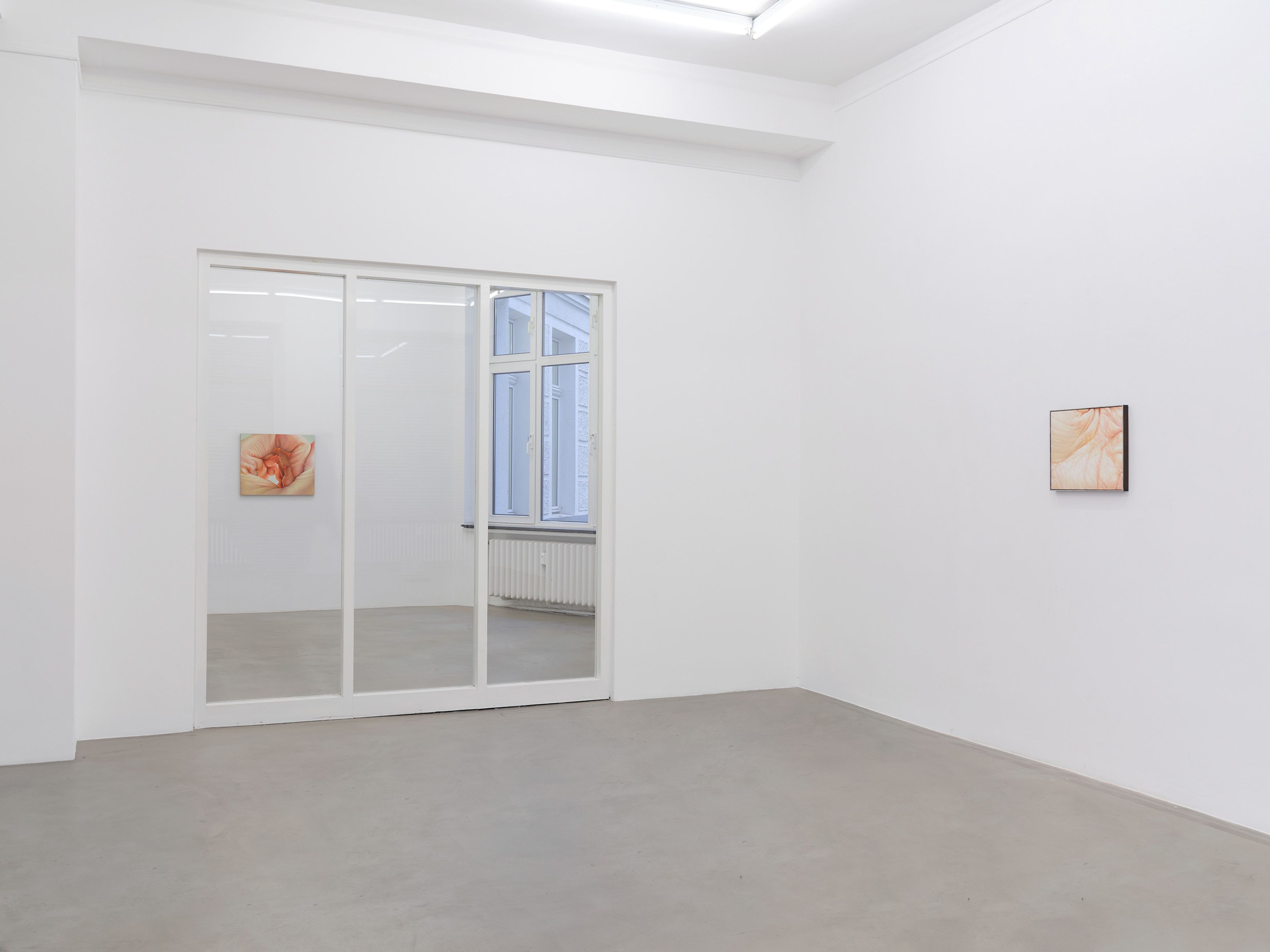
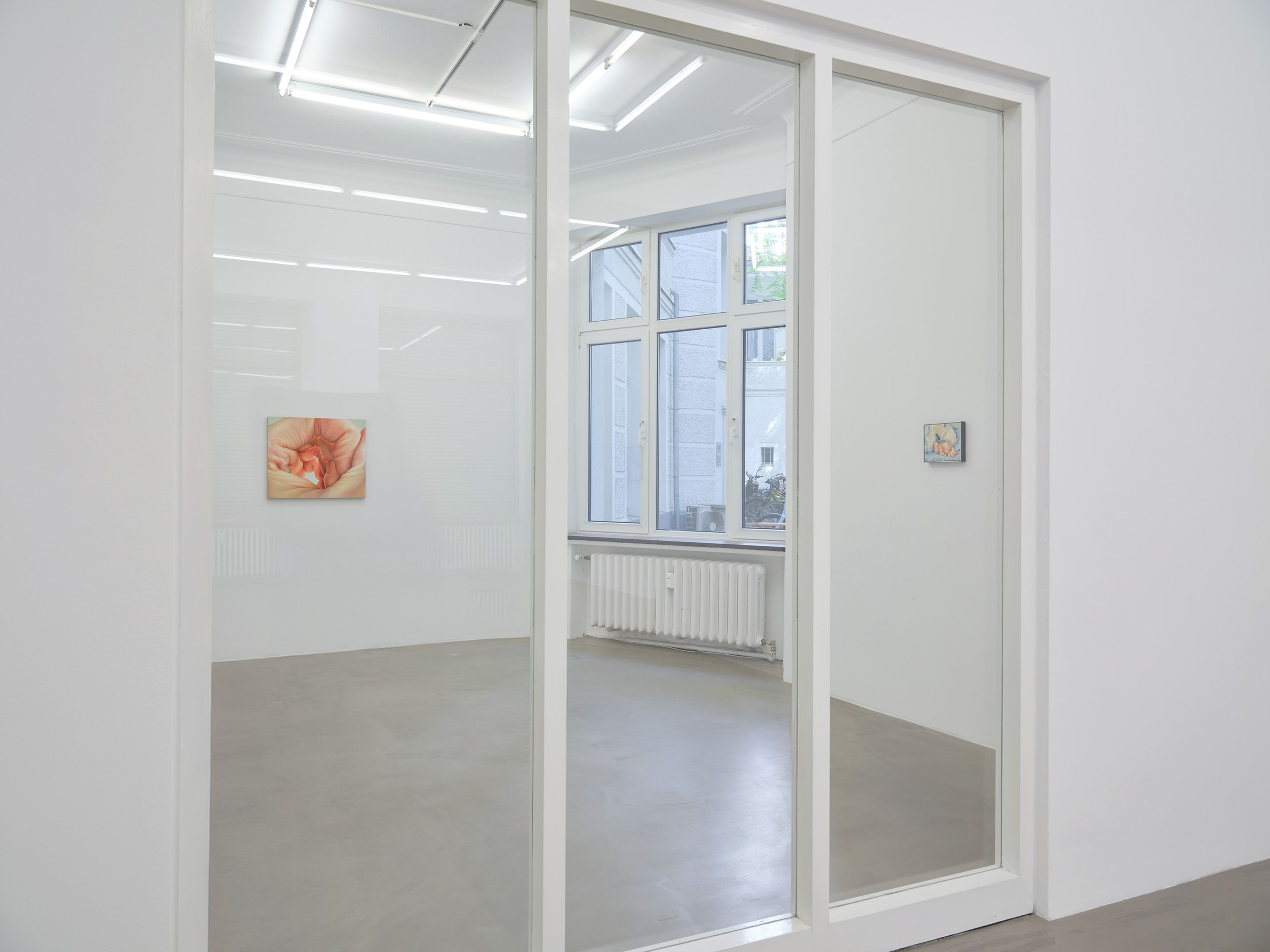
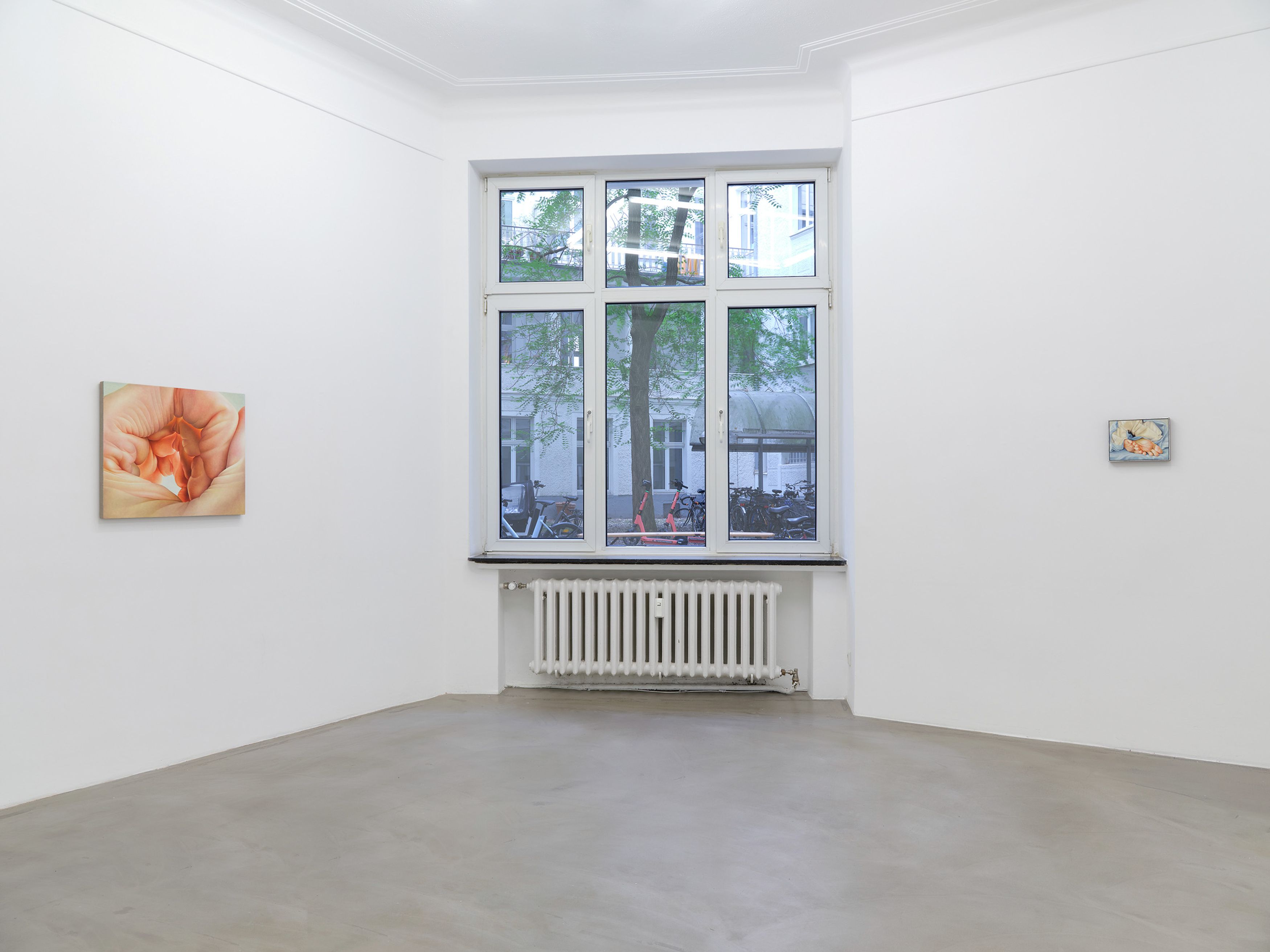
Lukas Luzius Leichtle Schwellen Jan Kaps, Cologne June 11 – July 18, 2026
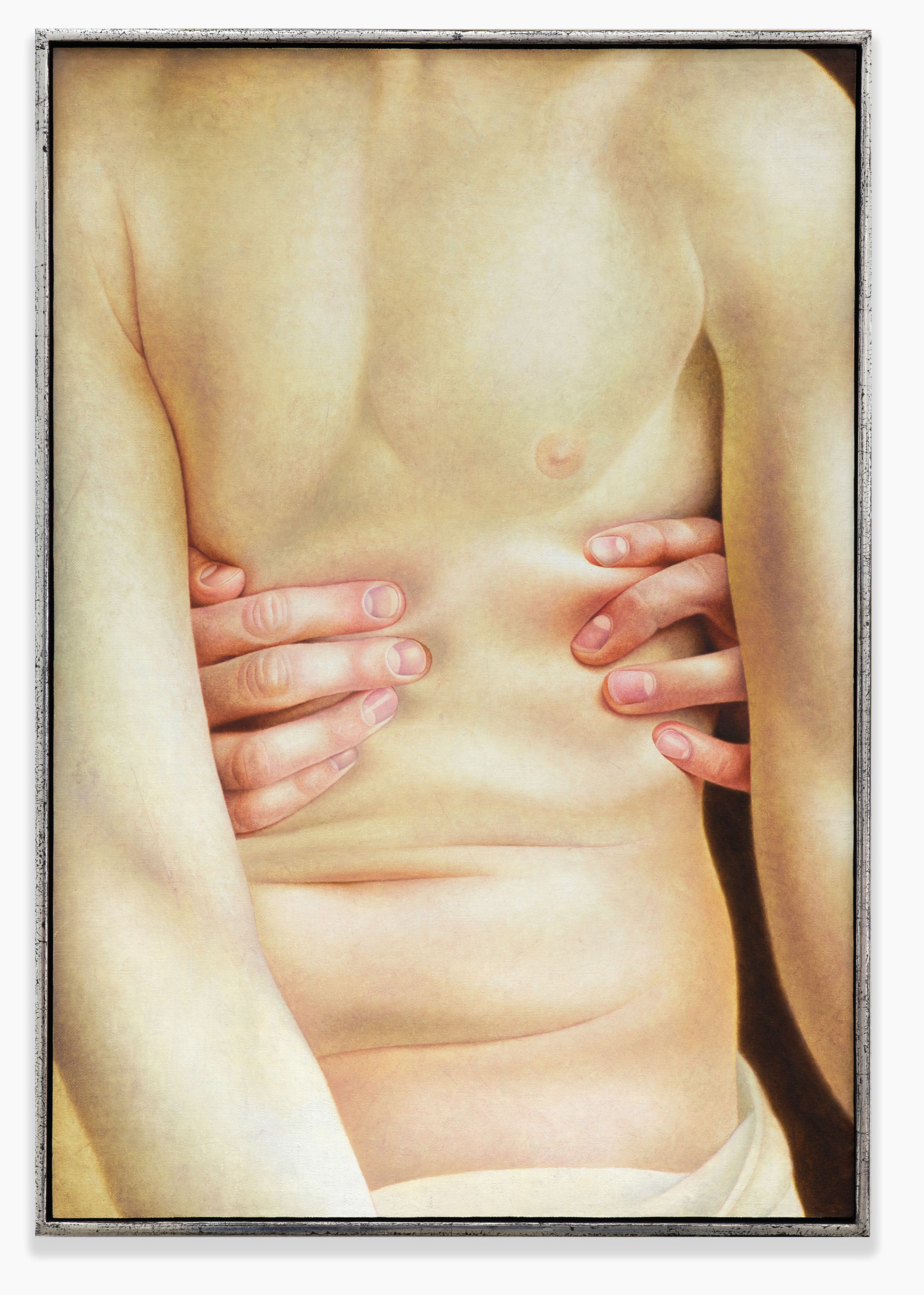
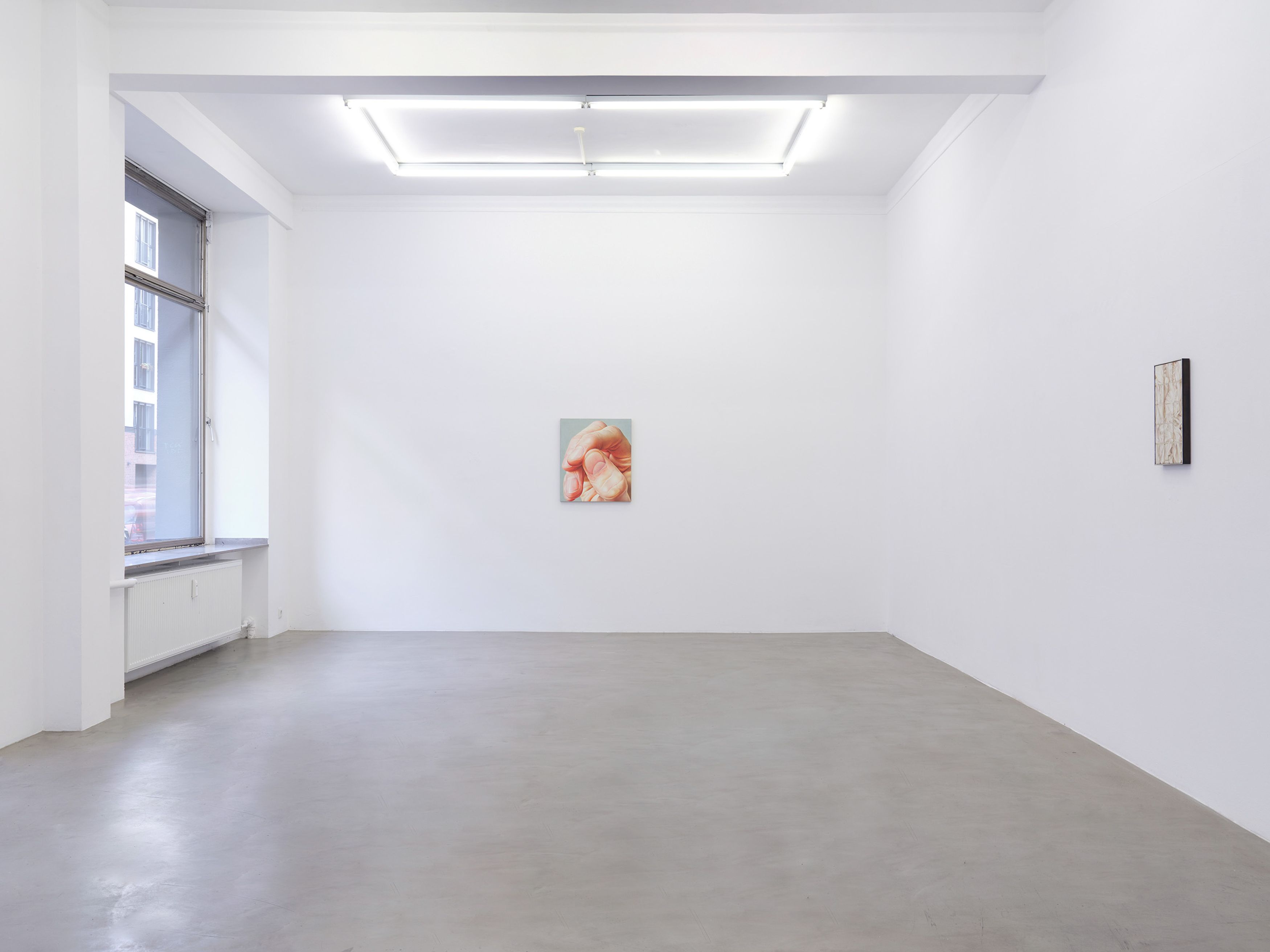
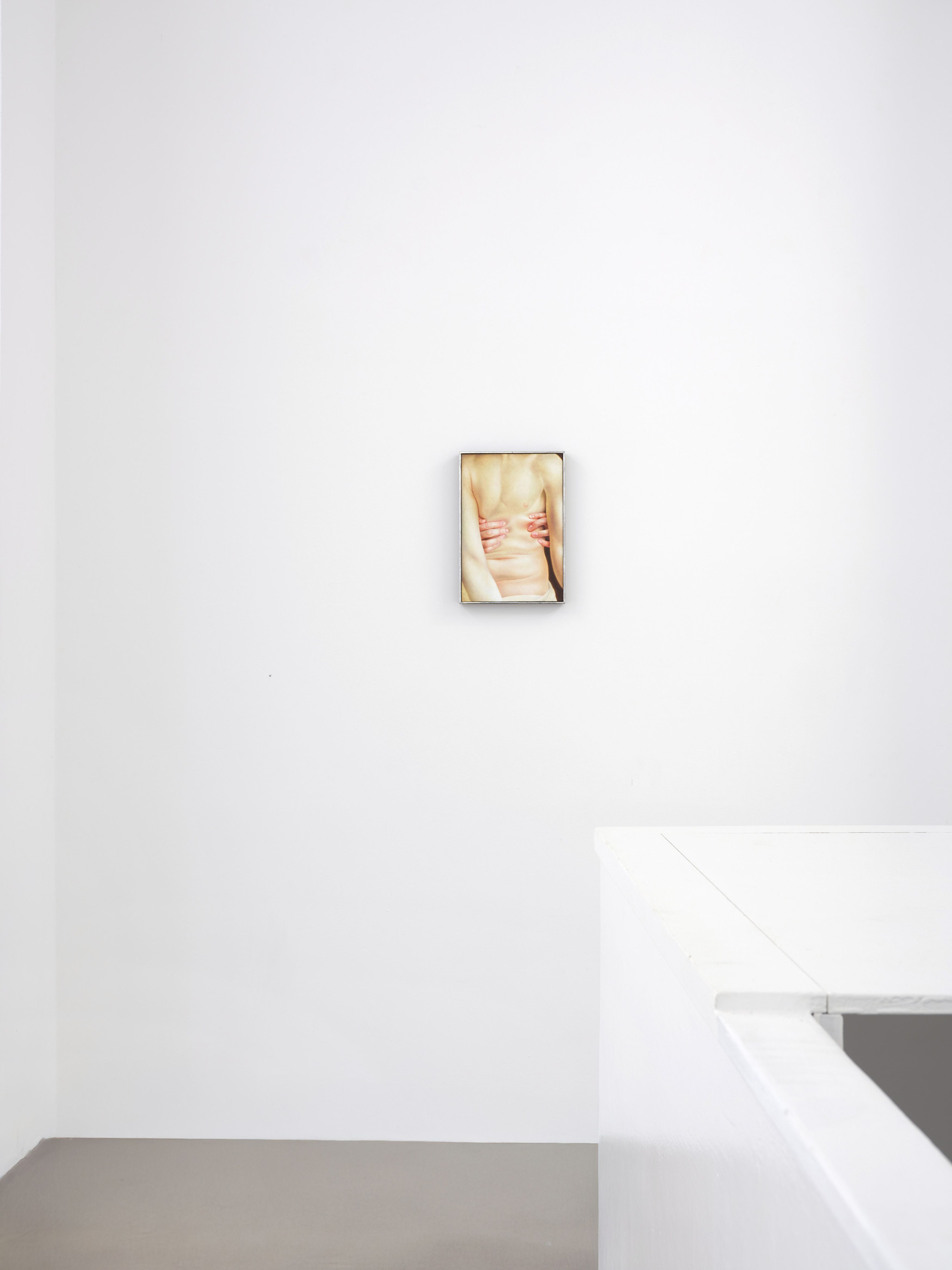
A hand presses into a torso from behind, fingers splayed and somewhat invasive, until they read as a second rib cage, as if the body were being rebuilt from the outside in. The source is a Pietà by the Ferrarese painter Ortolano, but the artist has cropped it until the figure the hands belong to has disappeared, and repositioned the hands them- selves, pressing harder than the original ever did. What remains refuses to resolve: who holds and who is held, what is active and what passive, where one body ends and another begins. The artist wants it that way.
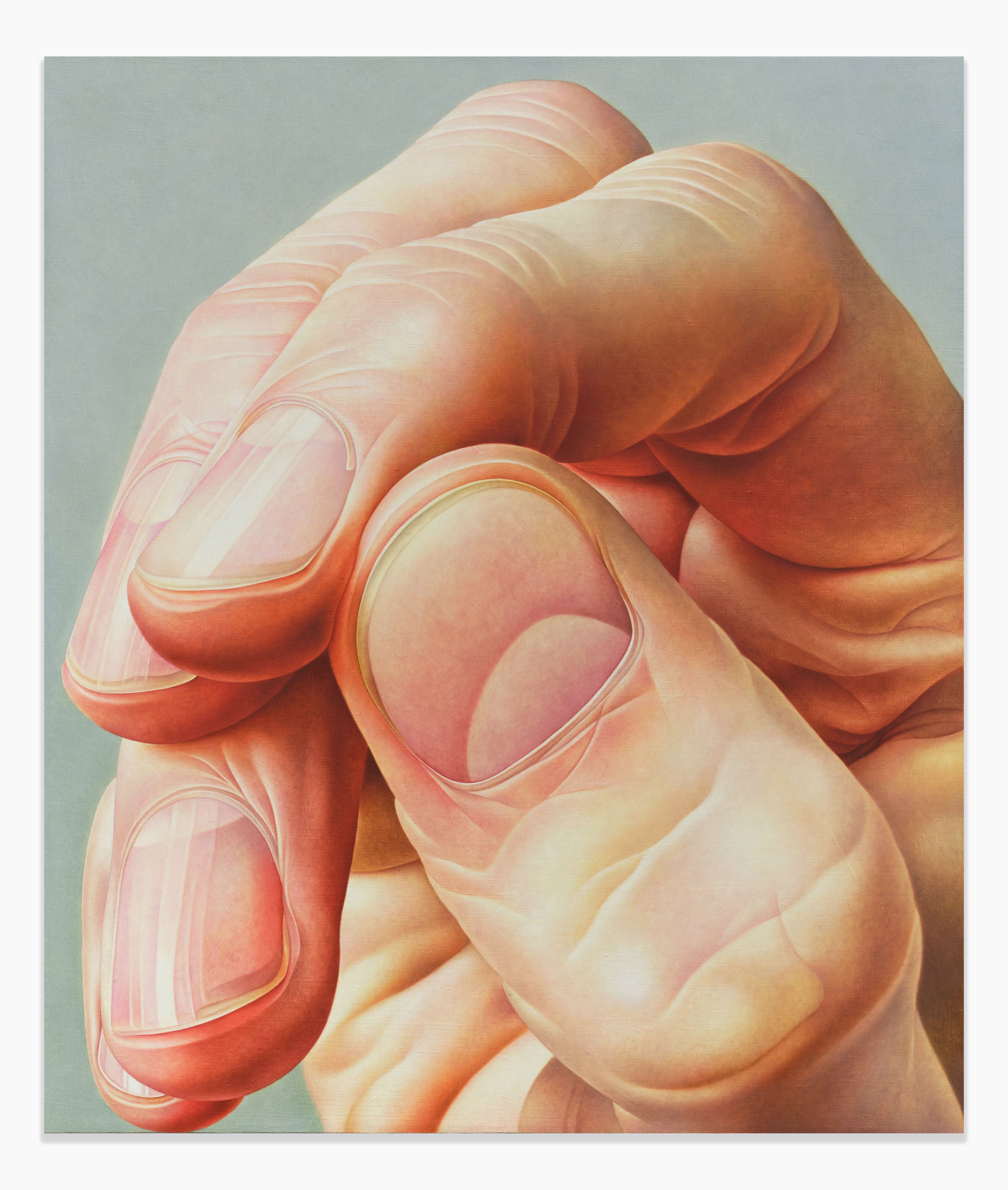
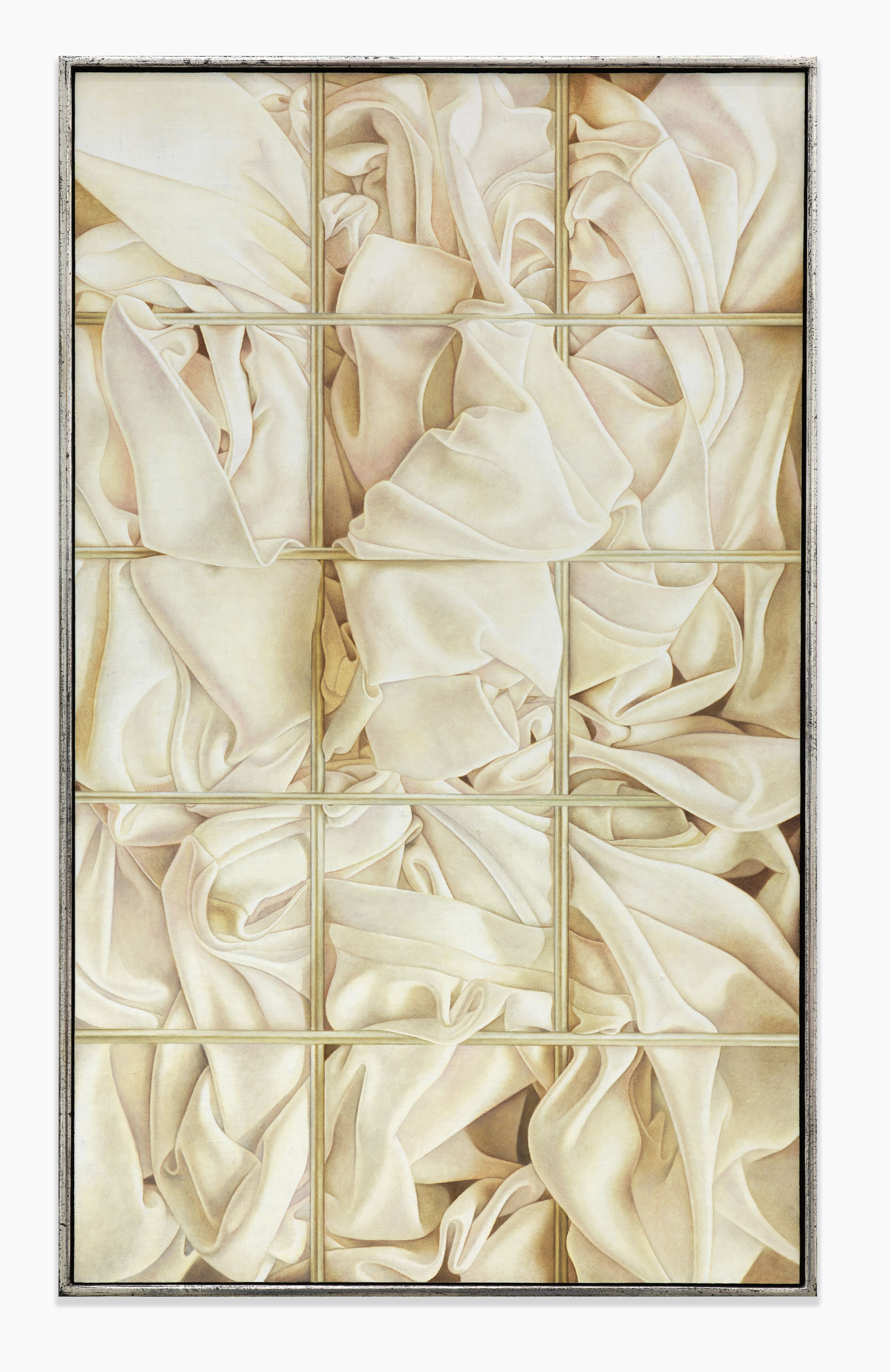
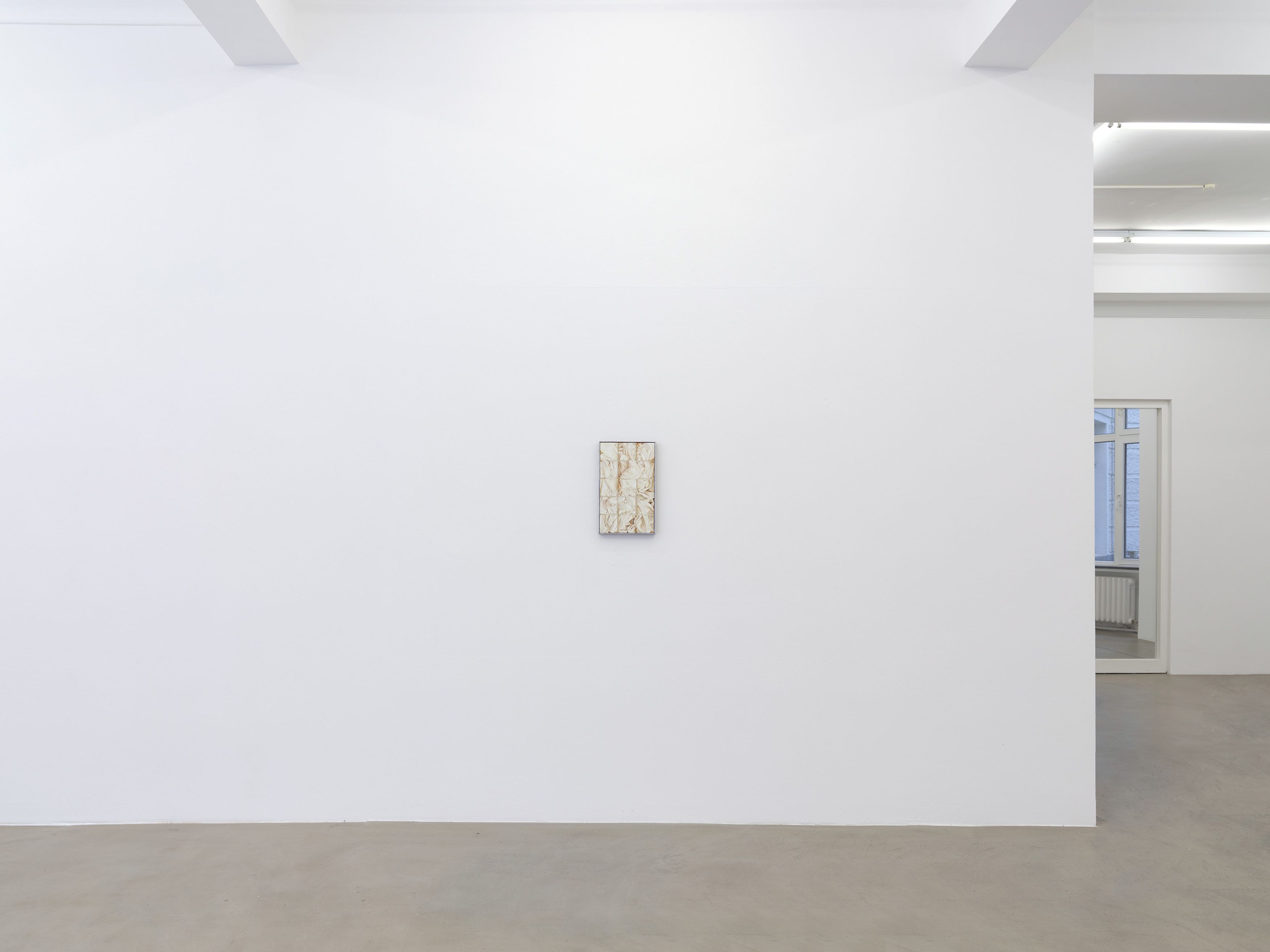
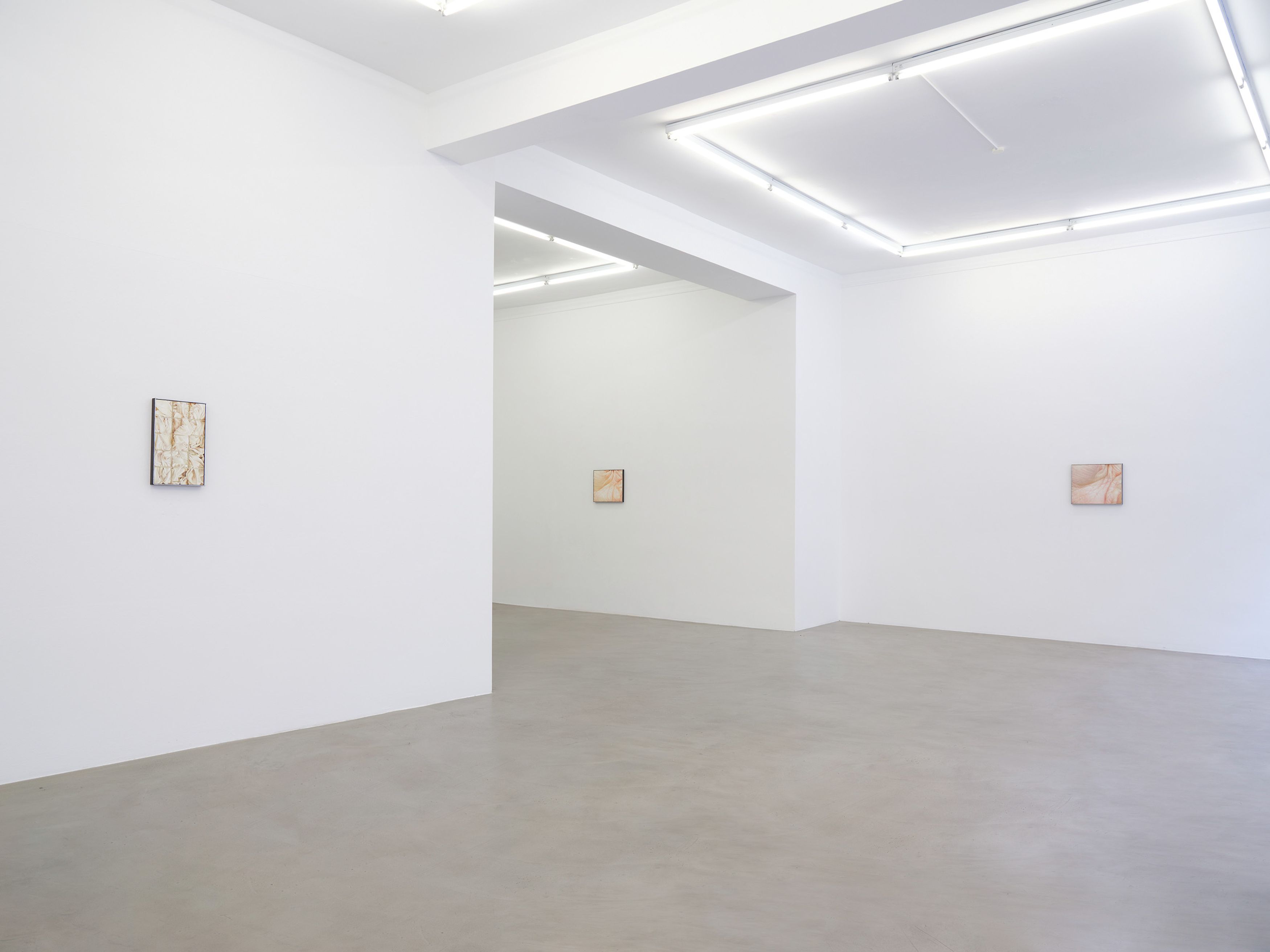
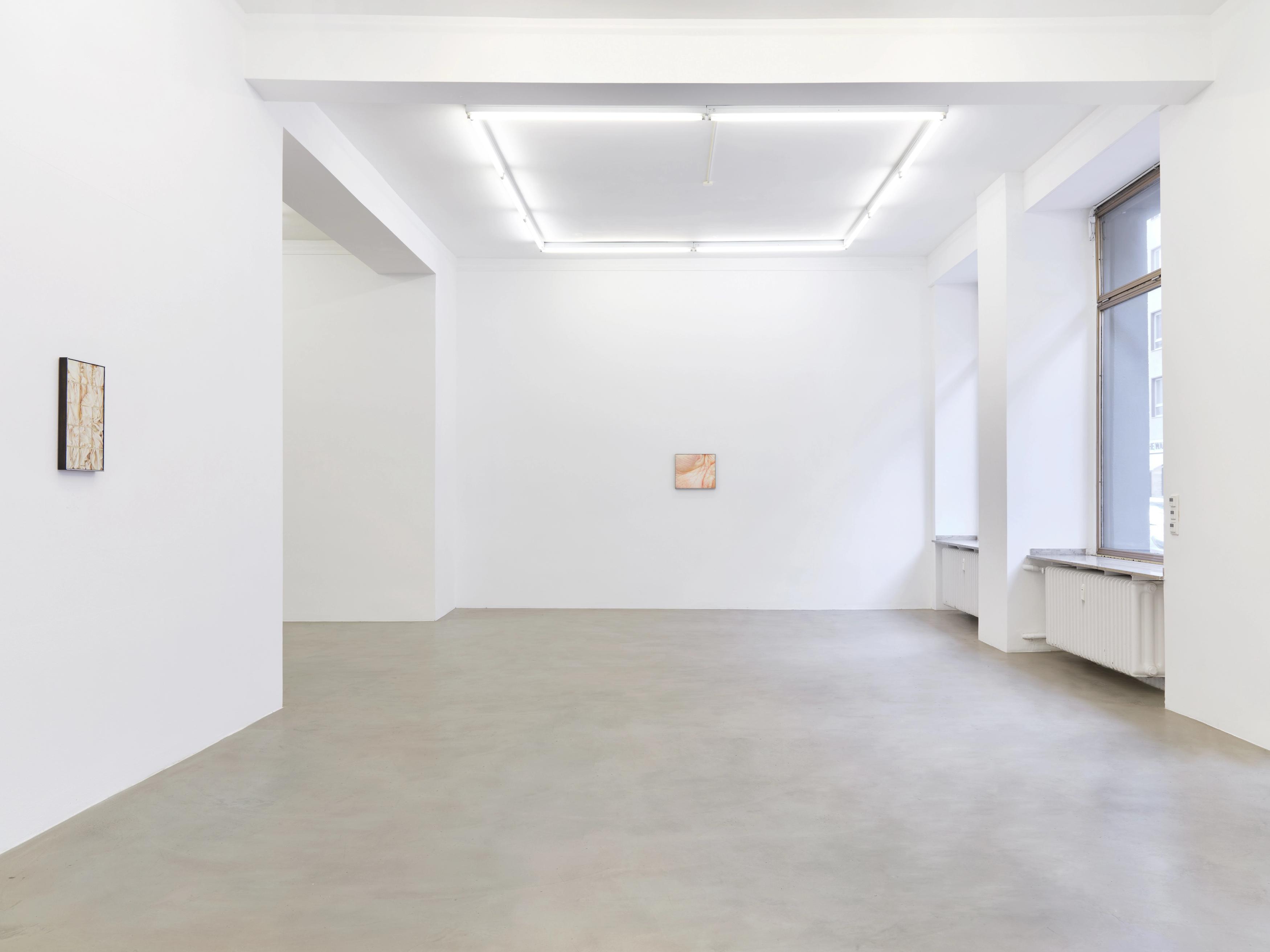
Lukas Luzius Leichtle (b. 1995, Aachen) paints the meeting point of seeing and touching. Across the exhibition, skin is where the two senses press against each other: the thin membrane where the border between self and other dissolves. Schwellen — thresholds — names that meeting point: the borders, openings and transitions where something becomes visible because it has not yet been crossed. He is drawn to friction, to the instant a body held too still trembles. In one recent work, fabric presses and bunches against a metal grid; only where the cloth is held back, forced to pile against its limit, does it give up what it is. Restriction, here, is less obstacle than instrument.
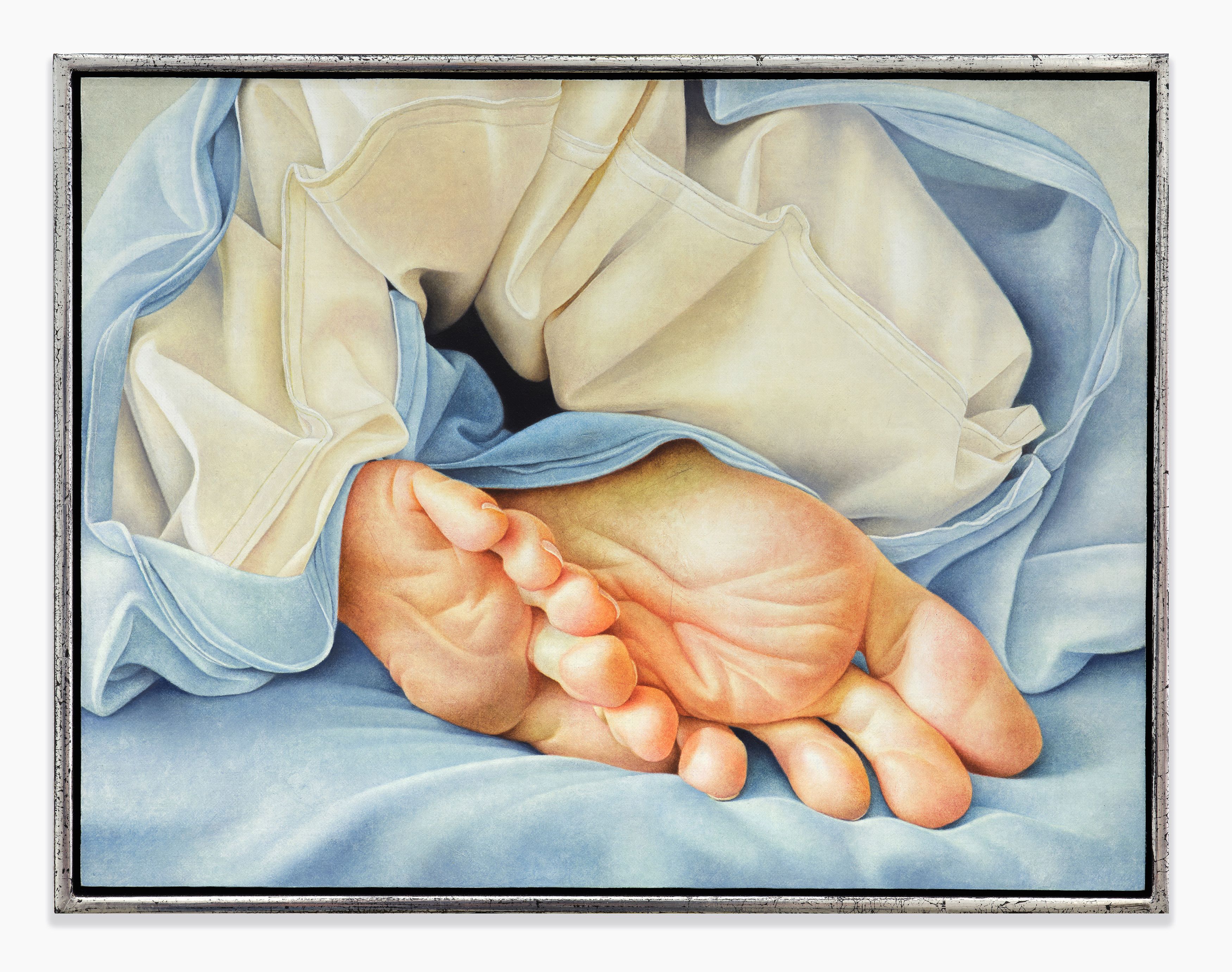
Leichtle paints the way a sculptor kneads, pushing, pressing, testing where material gives, and his colour follows contact rather than appearance. Skin reddens where it has been touched, and the painting keeps the flush as evidence of pressure already applied. “A contact needs to have a consequence,” he says. The surfaces are exacting, but precision is not the point. So much information is withheld, the colour so heightened, that these are not images of the body as it is, but as it is remembered: subjective, coloured, a little exaggerated. Up close, the missing brushstroke gives way to a fine grain, like analogue film — less real, and more believable for it.
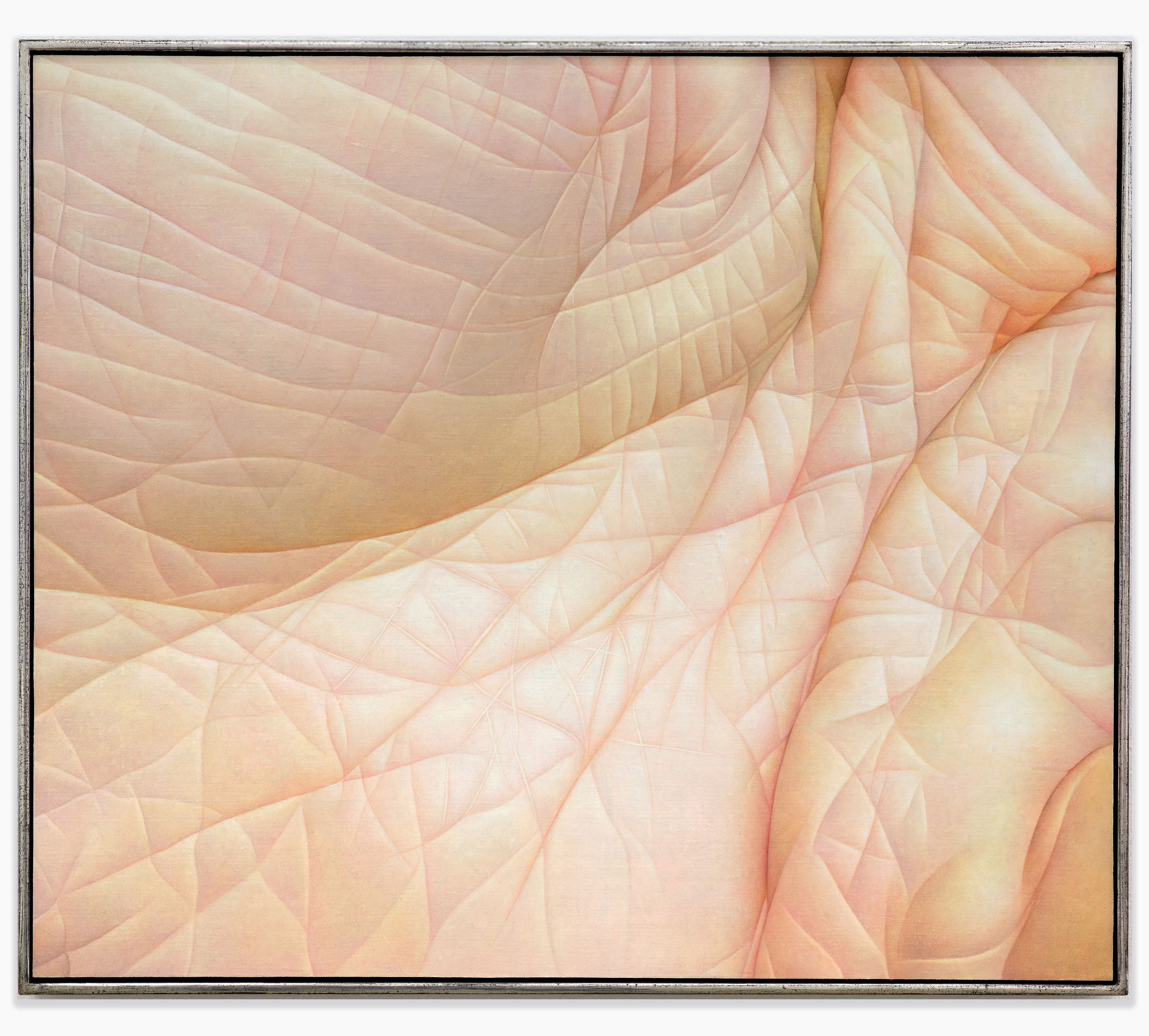
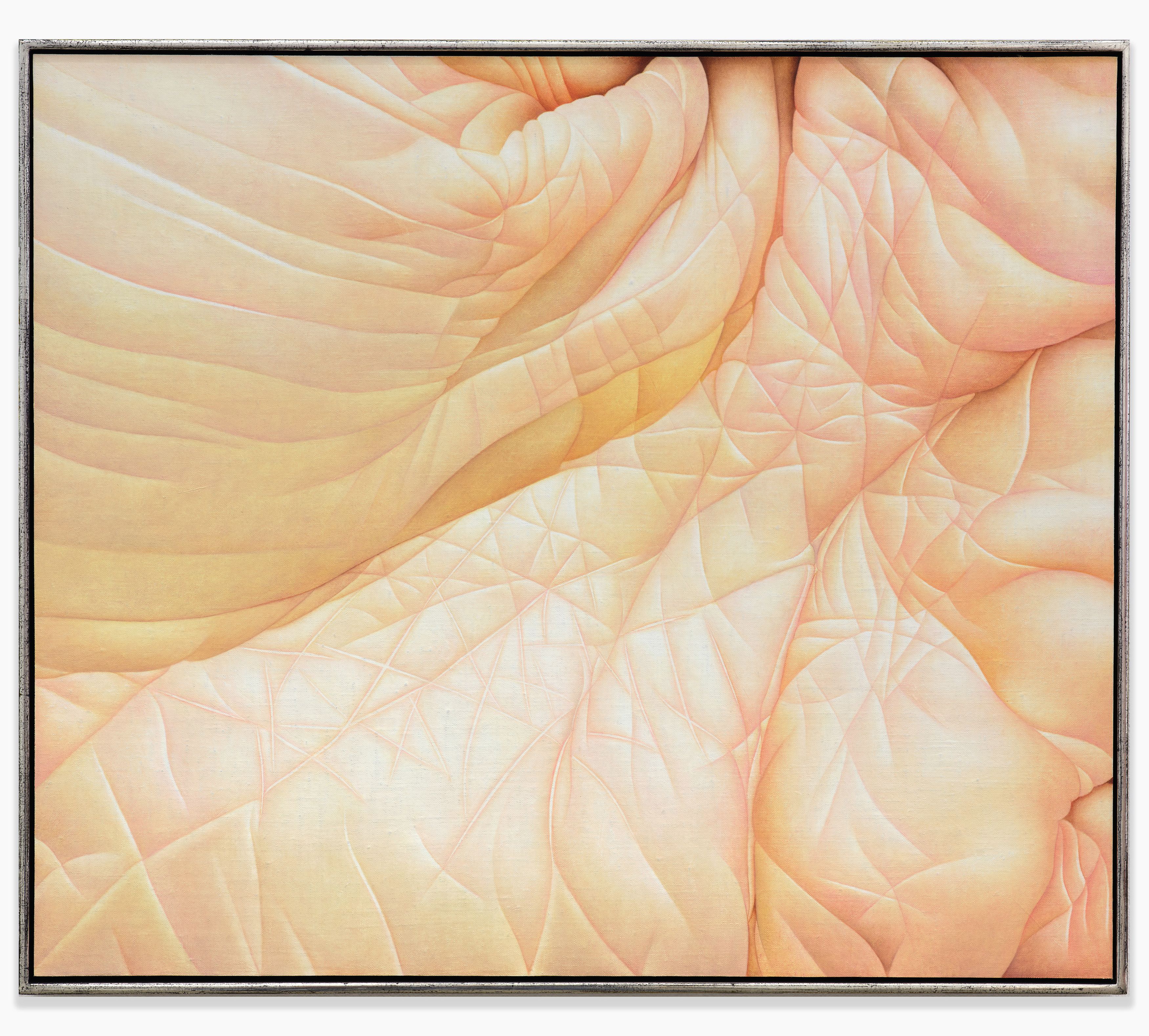
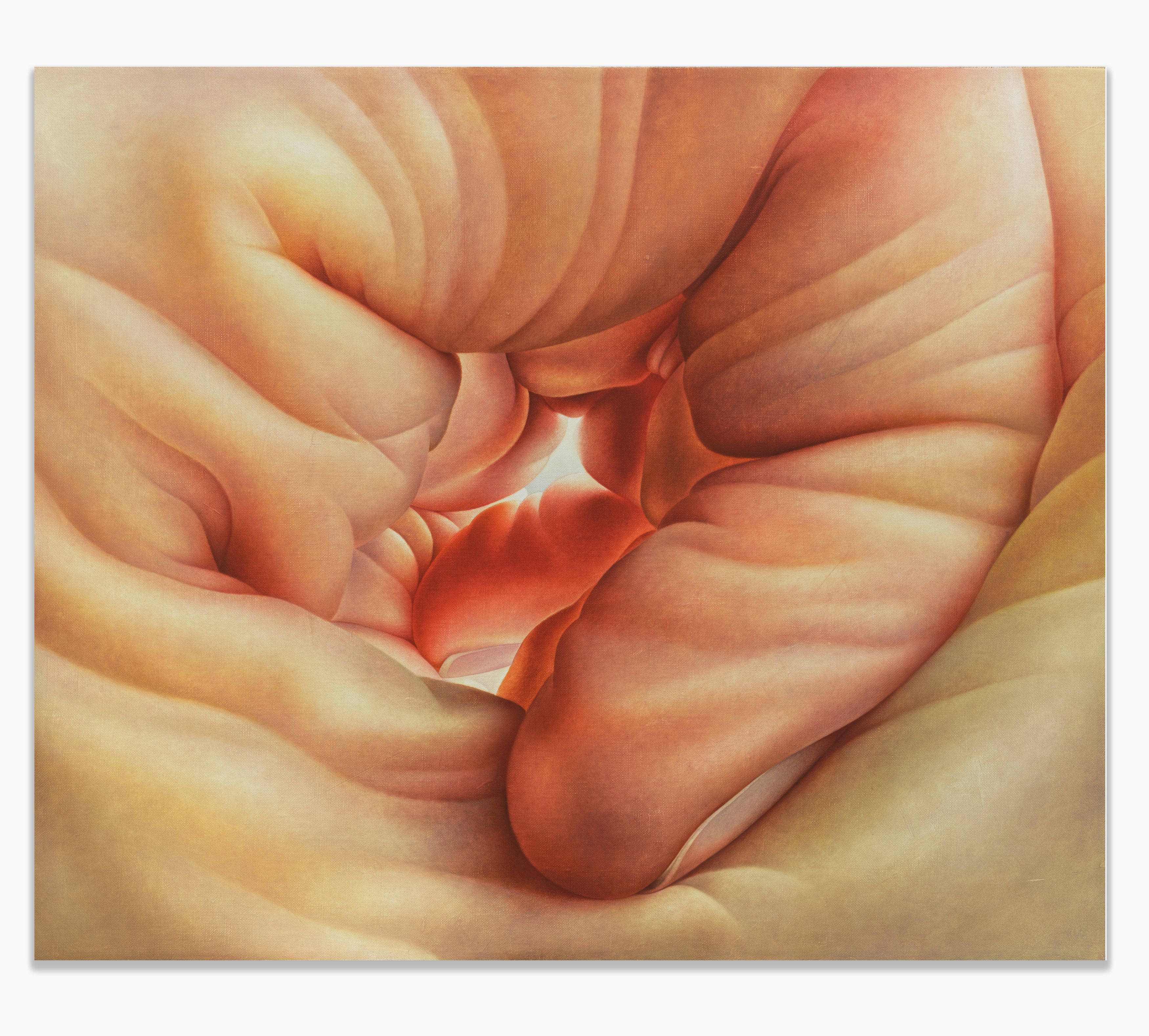
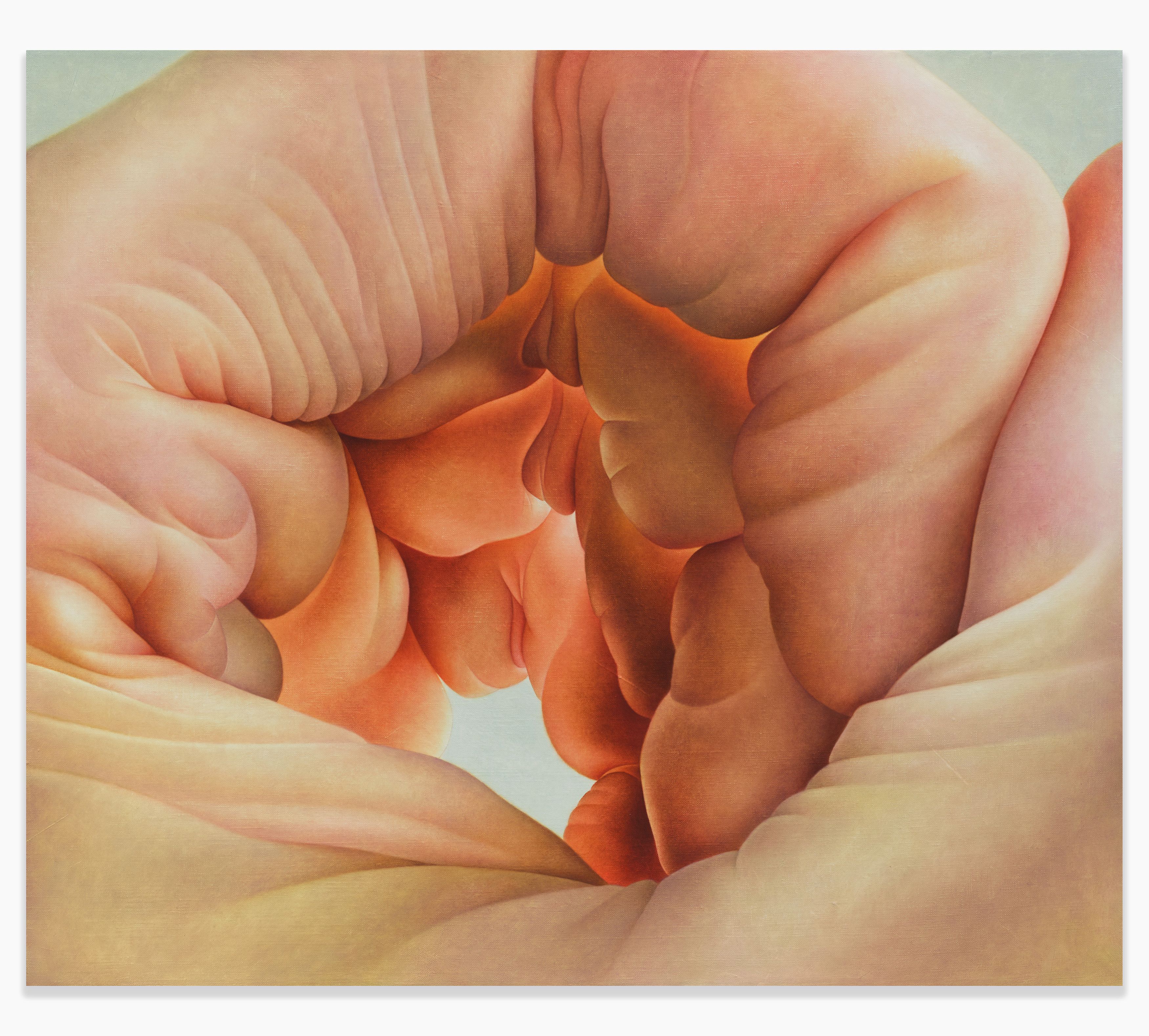
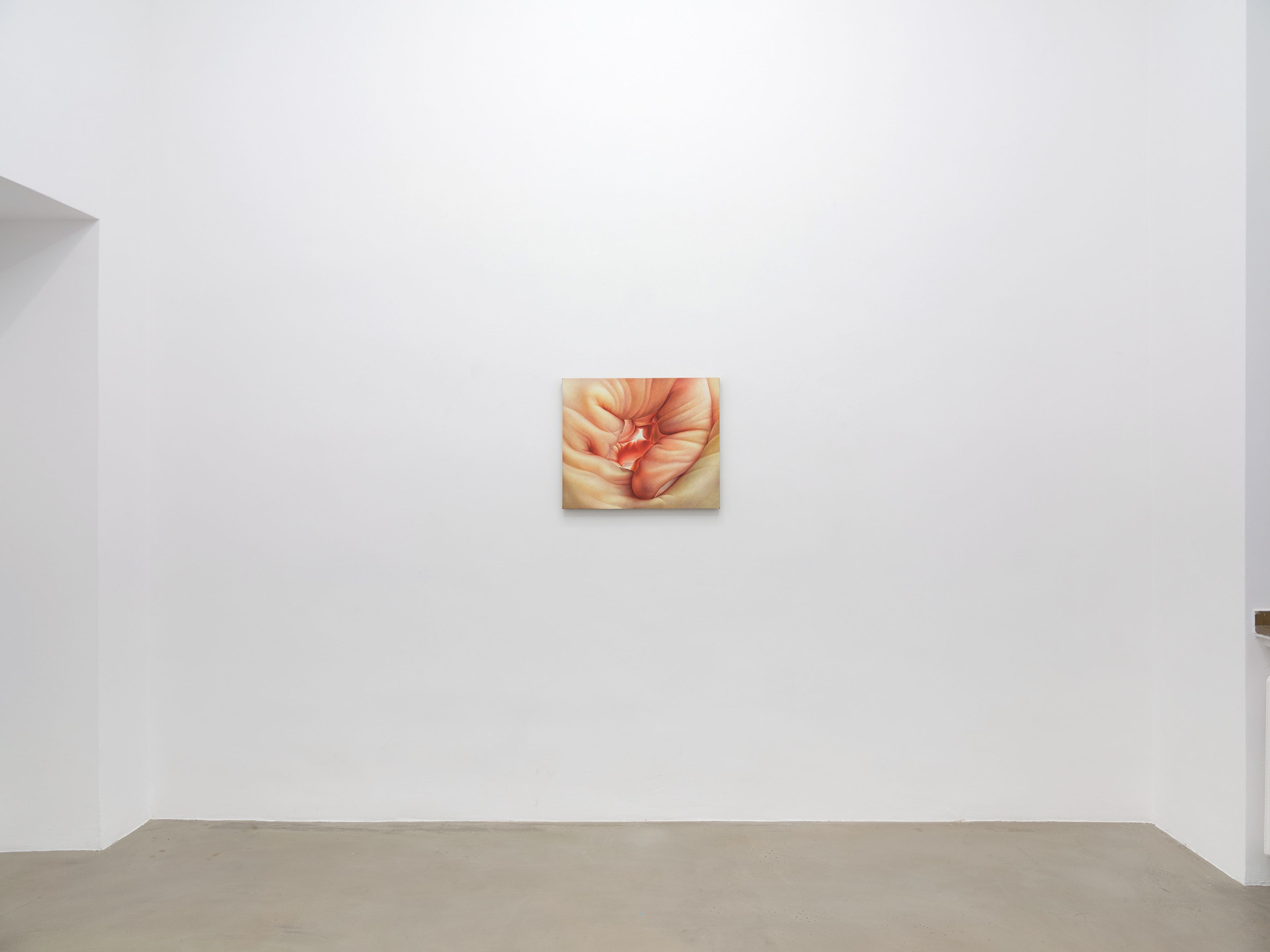
This is where seeing becomes a kind of touching. The eye does not plunge into the image; it moves across the surface, what Laura U. Marks calls haptic visuality, the eye behaving like an organ of touch, grazing rather than gazing. Bodies, meanwhile, loosen their hold on legibility. In several works hands curl inward to form a cavity that glows like a wound or an opening flower; the eye is drawn in, but the opening leads nowhere definite and becomes, finally, another surface. Close-ups of the lines of a palm turn landscape-like; in the most recent works those lines scatter, kaleidoscopic, a surface fragmenting and breaking open.
It is the structure Clarice Lispector describes in The Passion According to G.H. — a woman alone in a room who crushes a cockroach and brings the pale insides to her mouth, until closeness to raw, indifferent matter dissolves her sense of self rather than consolidating it. The nearer Leichtle‘s painting pushes toward the body, the stranger that body grows — a hand that works like an organ, a fingernail surfacing from soft flesh like something metallic, almost alien. He paints toward the moment the familiar perforates, and trusts the viewer to carry it out of the room: looking first at their own hands, then at a stranger‘s on the tram, no longer quite sure where one body ends and another begins.