Michael Williams
Painting Reasons
Works
Press Release
Michael Williams Painting Reasons November 03, 2026 – January 23, 2027
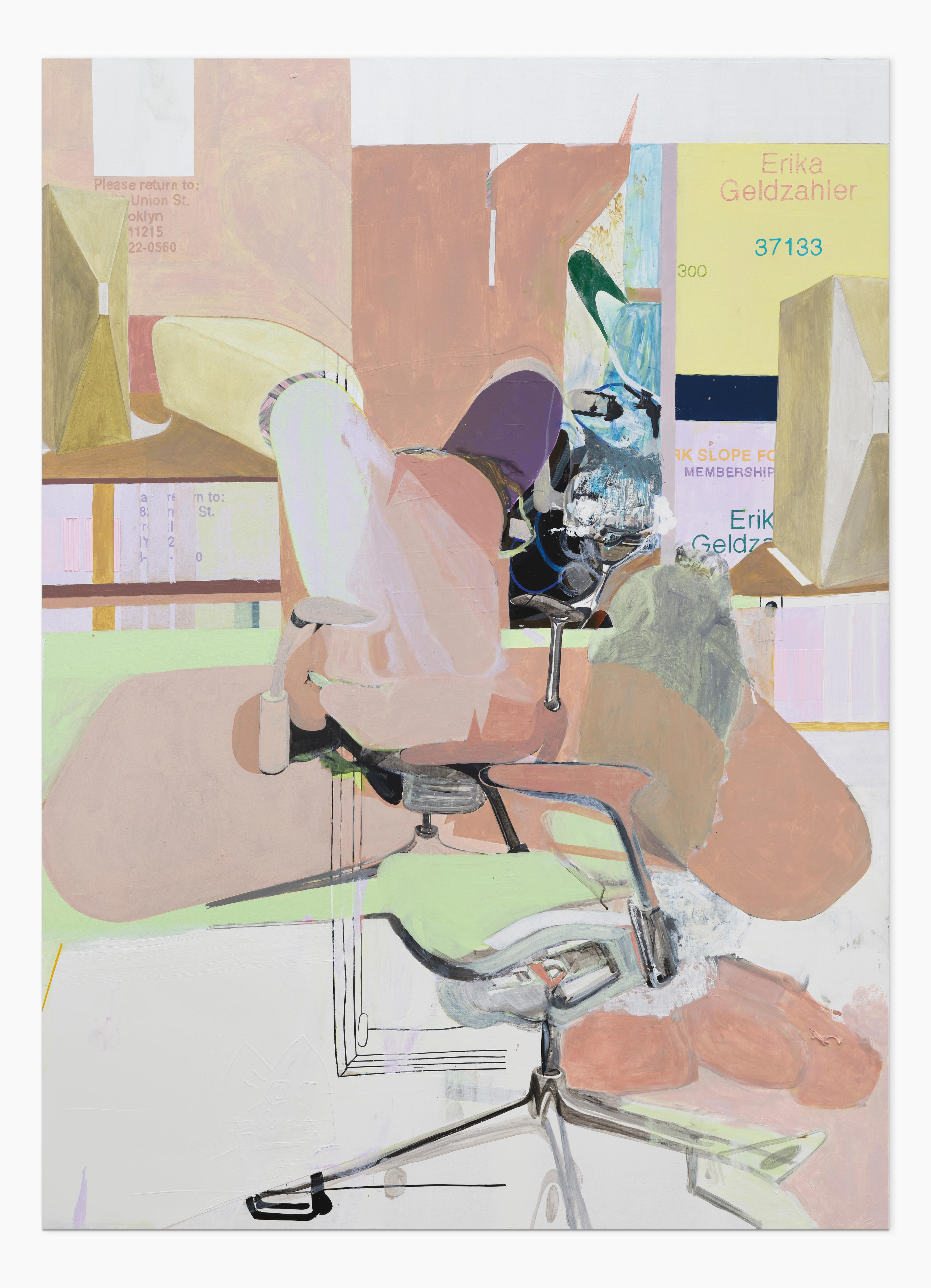
All objects have their own qualities, which either interest us or do not. Many of them are extensions of ourselves—things we have explicitly shaped to serve our own needs. Tools. They are supposed to be subordinate to our will. And most of the time, we don’t even think about our tools; they are simply there. But when a tool—or an object—fails to function as expected, its excess of being is suddenly revealed to us. Take, for example, one’s wife’s old membership card for a food co-op, which only gains significance after it has lost its function. Suddenly, the object captivates us with its colors and proportions, with the minimalist balance of typography, information, and barcode.
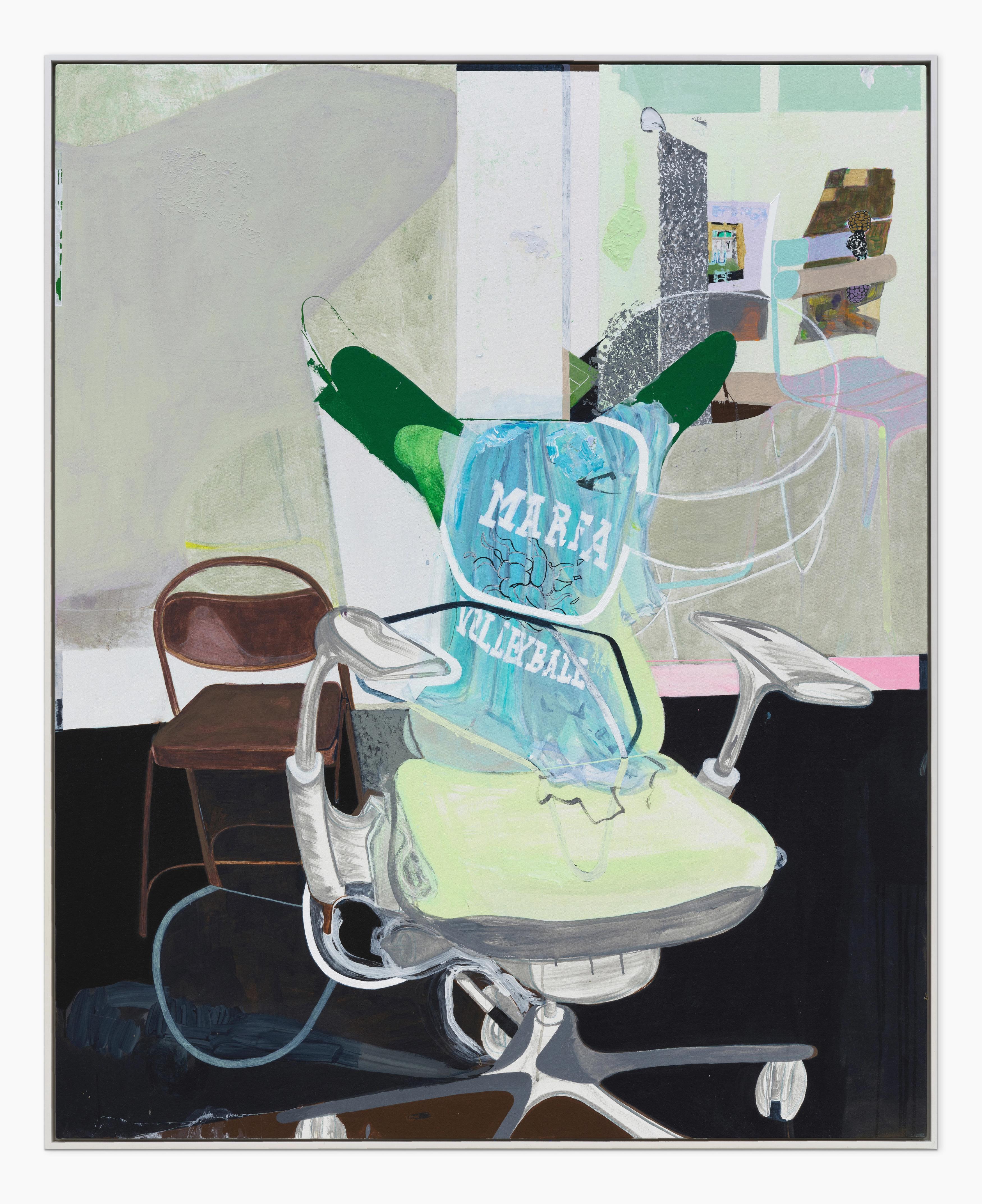
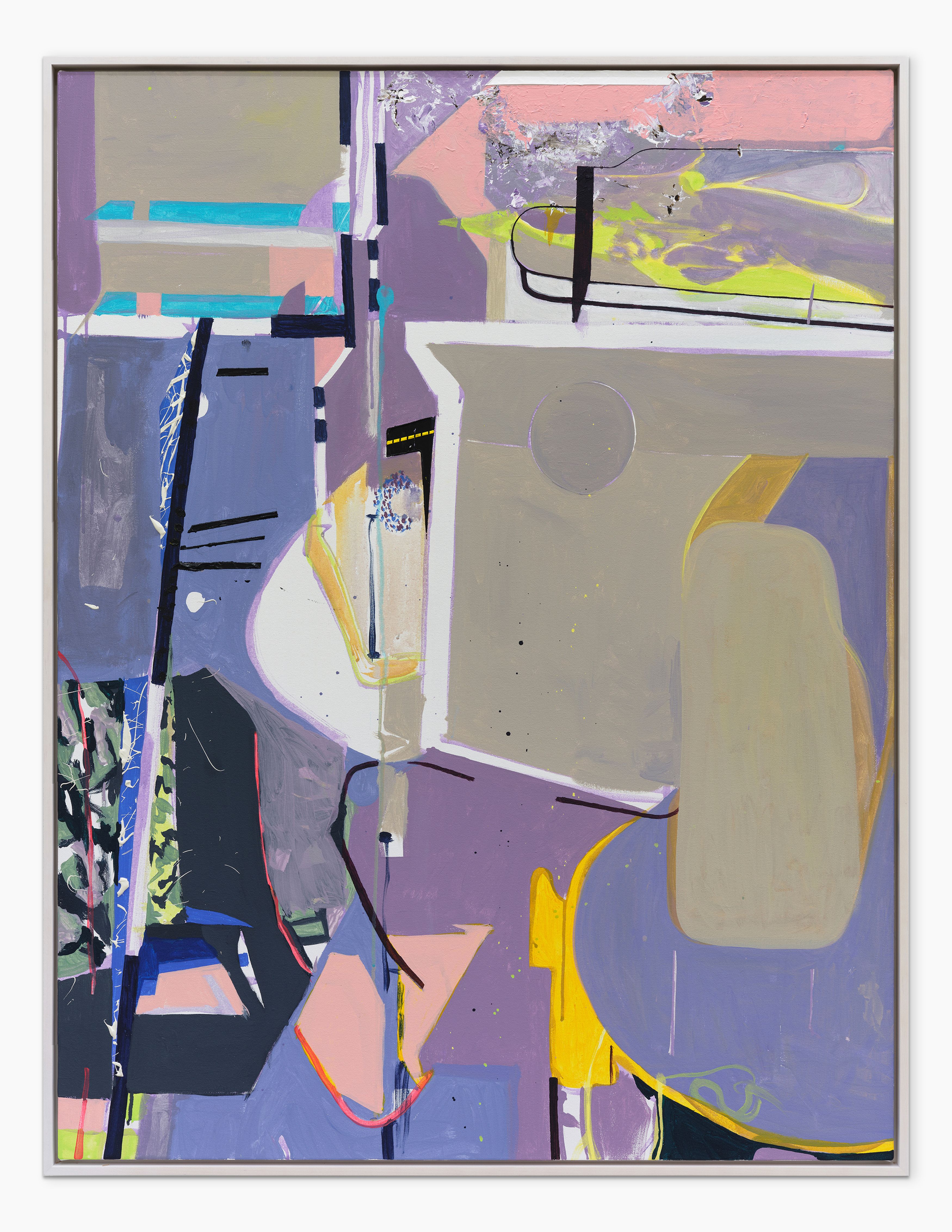
Michael Williams’s new works convey a mode of observation that is new to him—one calibrated differently—through which he openly engages with the allure of objects. The old membership card mentioned earlier first becomes a (painted) image, then the background of the next painting, which in turn migrates—in fragments—into the one after that. As with a computer screen displaying multiple open windows simultaneously, sequences blur in favor of a juxtaposition, a productive collage. Here, however, Williams stages them as a sequence, with the membership card as the beginning and the room/still-life scene featuring an office chair as the end—or vice versa. Undoubtedly, each instance depicts the same symbolic space: the personal sanctuary of the self. Interiors and still lifes often function as codified portraits anyway; here, the empty chairs are added to the mix, a device that—since Van Gogh’s portraits of Gauguin and himself—might pass as an old painter’s joke. But that is, at best, noise; the sensitivity of the images lies much more in the architecture of the interiors, which mobilize only a few objects to speak of the subject outside view.
Beyond the office chair and the Co-op card, the conspicuous display of a T-shirt bearing the inscription “Marfa Volleyball” stands out. Everything one associates with the desert town of Marfa has, in fact, little to do with volleyball. “Marfa Volleyball” sounds like a funny glitch in the Matrix, and yet a few years ago Williams brought his daughter a T-shirt with that name as a souvenir from a residency there—a shirt that now serves as an old, comfortable one for lazy Sundays. As one can see: everything is intensely tight, intimate, focused, introspective, close—nowhere is there even a hint of a horizon left behind in Marfa. The home office as the ultimate antithesis to Petrarch’s view from Mont Ventoux—what might that mean? A form of crisis in an era when image-makers are confronted with a new form of image-generating intelligence? A return to observation (chair!) as the foundation of the act of painting? Who knows.
What’s noteworthy about these new works, though, is how Williams plays with the reduction to himself and his own perception of objects which, almost in passing, carry before them—as if in a vendor’s tray—the broader contexts into which they and all of us are embedded: community, nurture, family, space—even something less profound like the art world is tacked on. It’s almost as if the task were to squeeze as much of the world as possible into the interior. Each of the few objects opens up other avenues into the picture—or out of it. It almost seems as if, under these conditions, the interior must necessarily abandon the confinement it otherwise provides. It fails to function as expected, just like a broken tool. And just like such a defunct tool, it opens up entirely new excesses when viewed from a different perspective.
– Moritz Scheper