Mohit Shelare
Drinking Outwards
Works
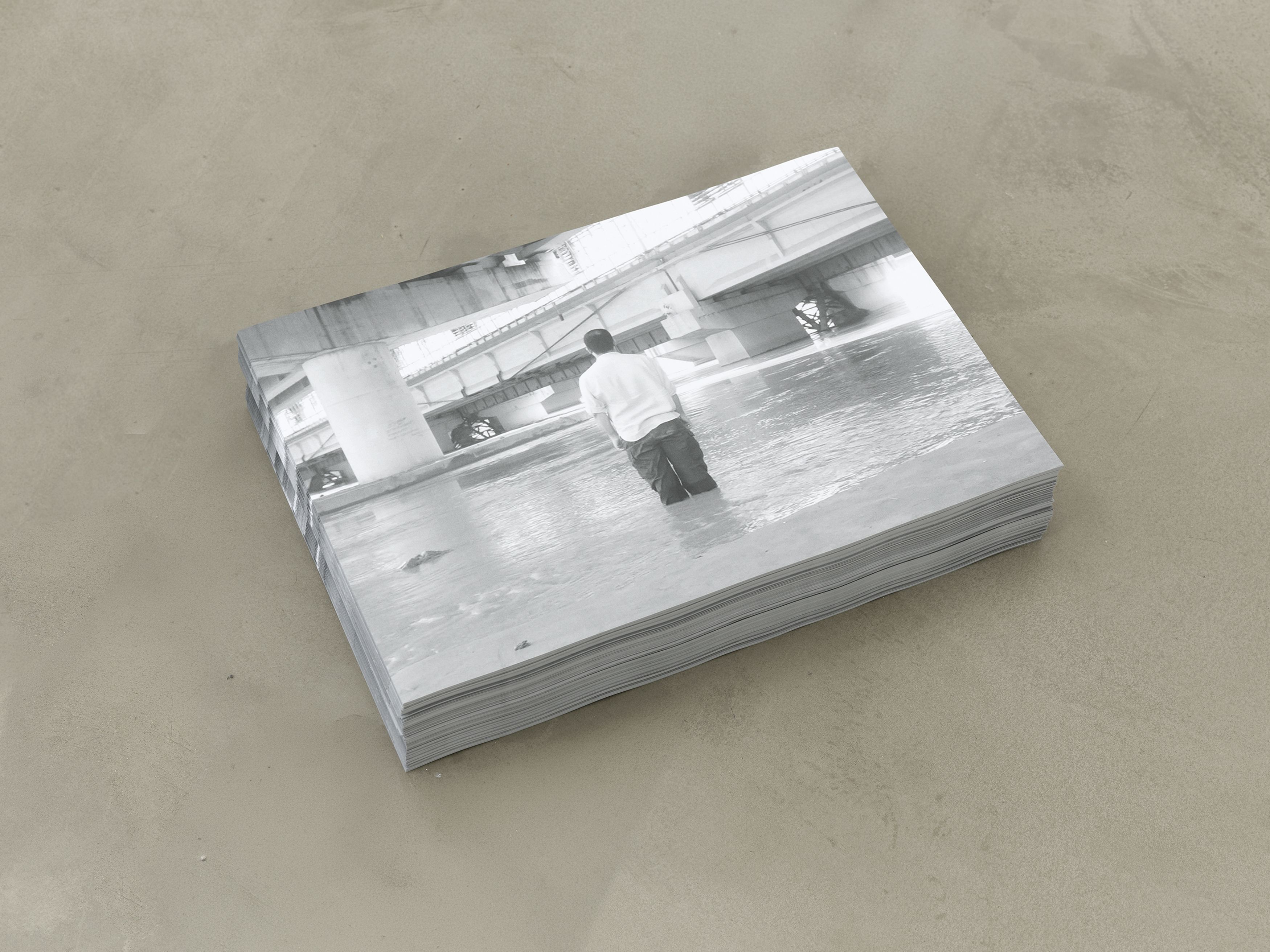
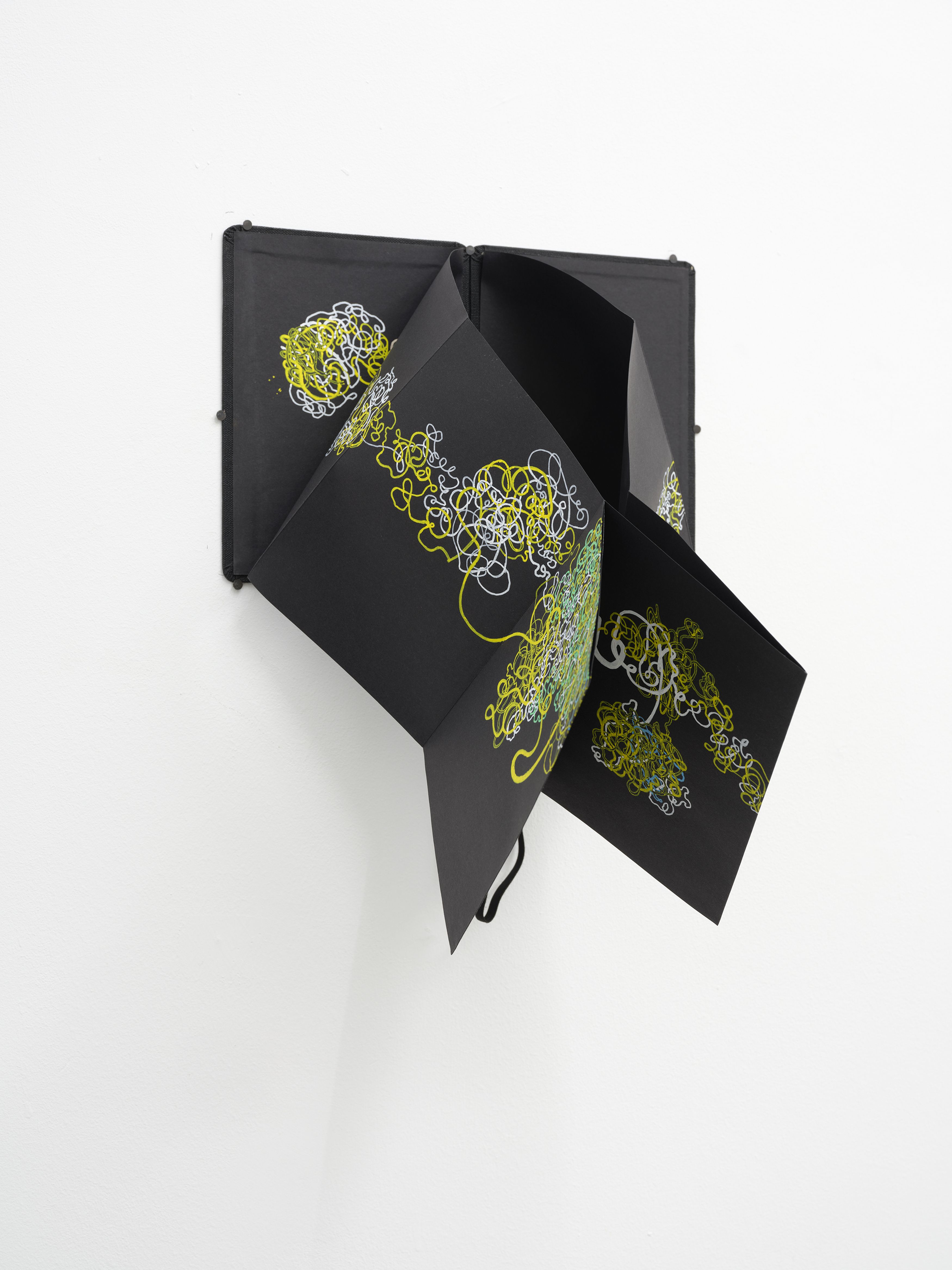
Installation Views

Press Release
Mohit Shelare Drinking Outwards Sept 4 – Oct 24, 2026 Jan Kaps, Cologne
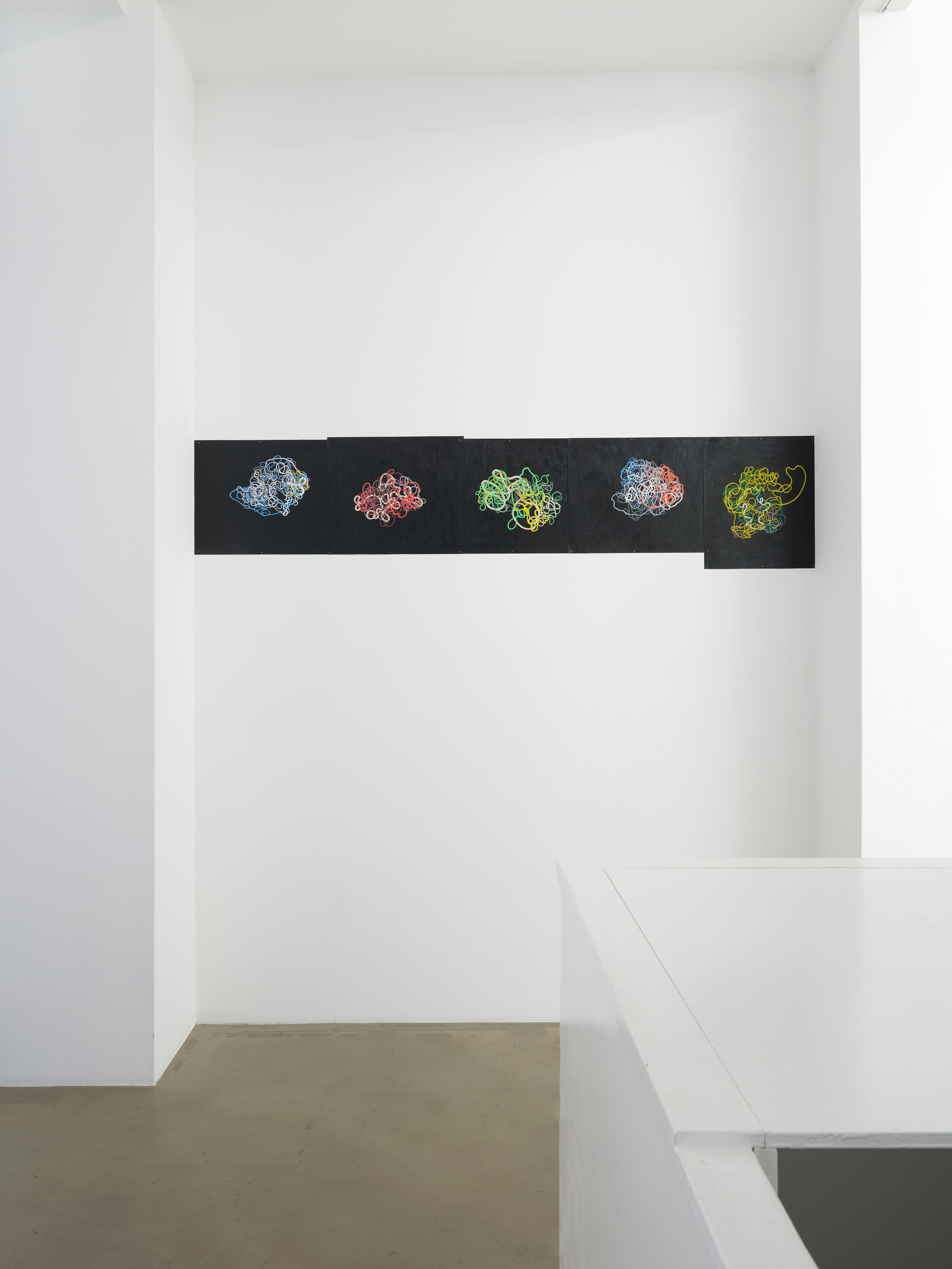
We have an odd relationship to inside and outside, to what we let into ourselves, and to what we want to keep around us. The Indian artist Mohit Shelare, who lives and works between Delhi and Amravati, is interested in this relationship, and in where the human stands within it. Drinking Outwards, his first solo exhibition at Jan Kaps gallery, takes its title as an analogy for exactly this: drinking, what we let in, and outwards, what surrounds us, what we release, the unknown. Through painting, sculpture, and performance, Shelare negotiates this question, not only in relation to himself, to India, or to the caste system, but as a stance of openness toward what cannot yet be described.
Open yourself up towards the unknown. This could stand as the show's central proposition.
Shelare traces this openness back to a specific inheritance. He was born into the Mahar caste, part of what colonial and Brahminical India named "untouchable," a designation historically bound to forms of labor associated with toxins, waste, death, and the maintenance of the social world, while the people who performed that labor were kept physically and socially at a distance from it: work with sewage, with carcasses, with whatever a caste system needed handled and then removed from view. What is notable in Shelare's work is that he does not treat this as subject matter to illustrate. He treats it as a position from which to look, a filter one cannot simply remove, because it was never optional in the first place. We consume constantly. We rarely understand what we are consuming, or what looking through a system of exclusion does to what we think we see.
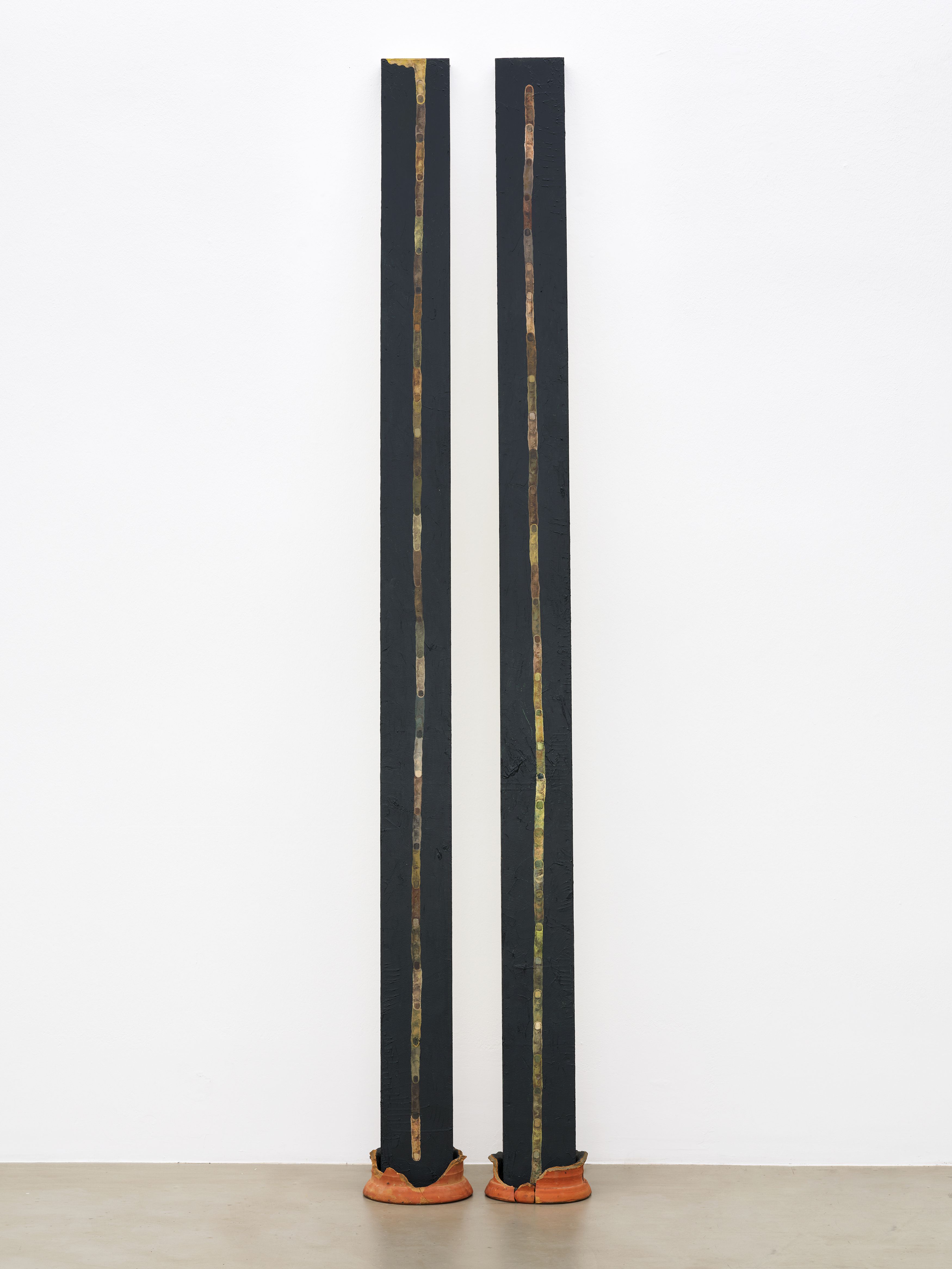
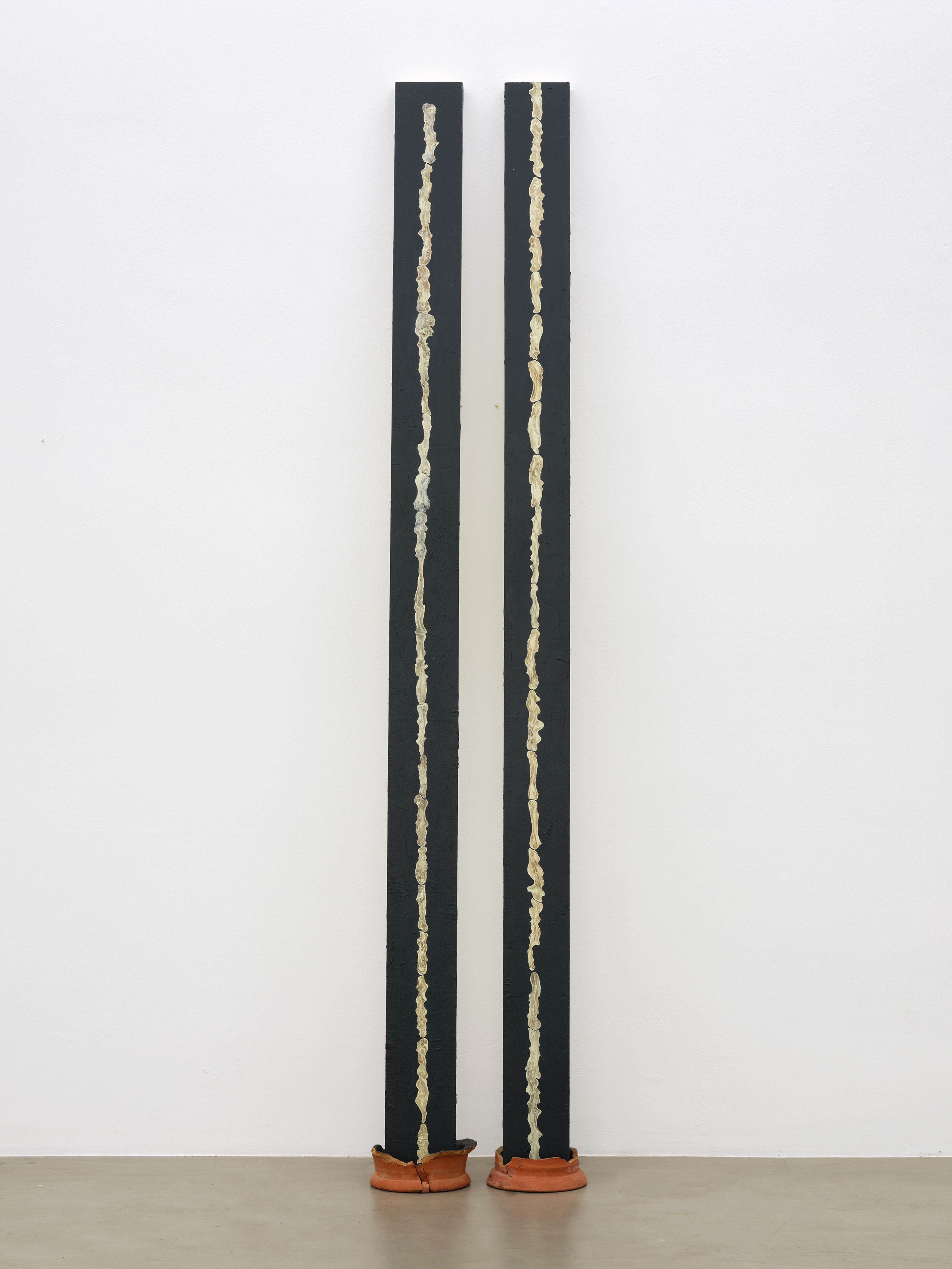
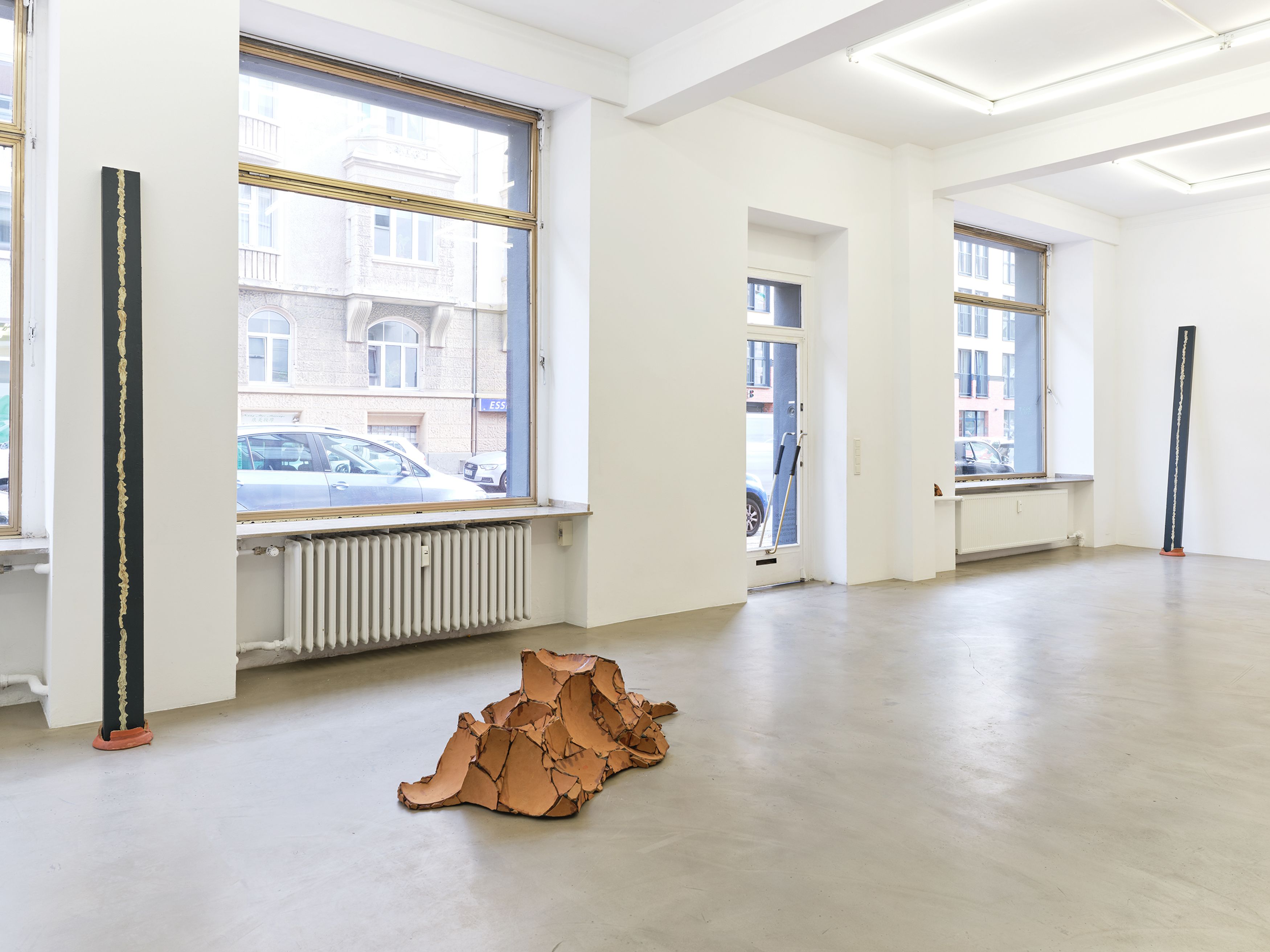
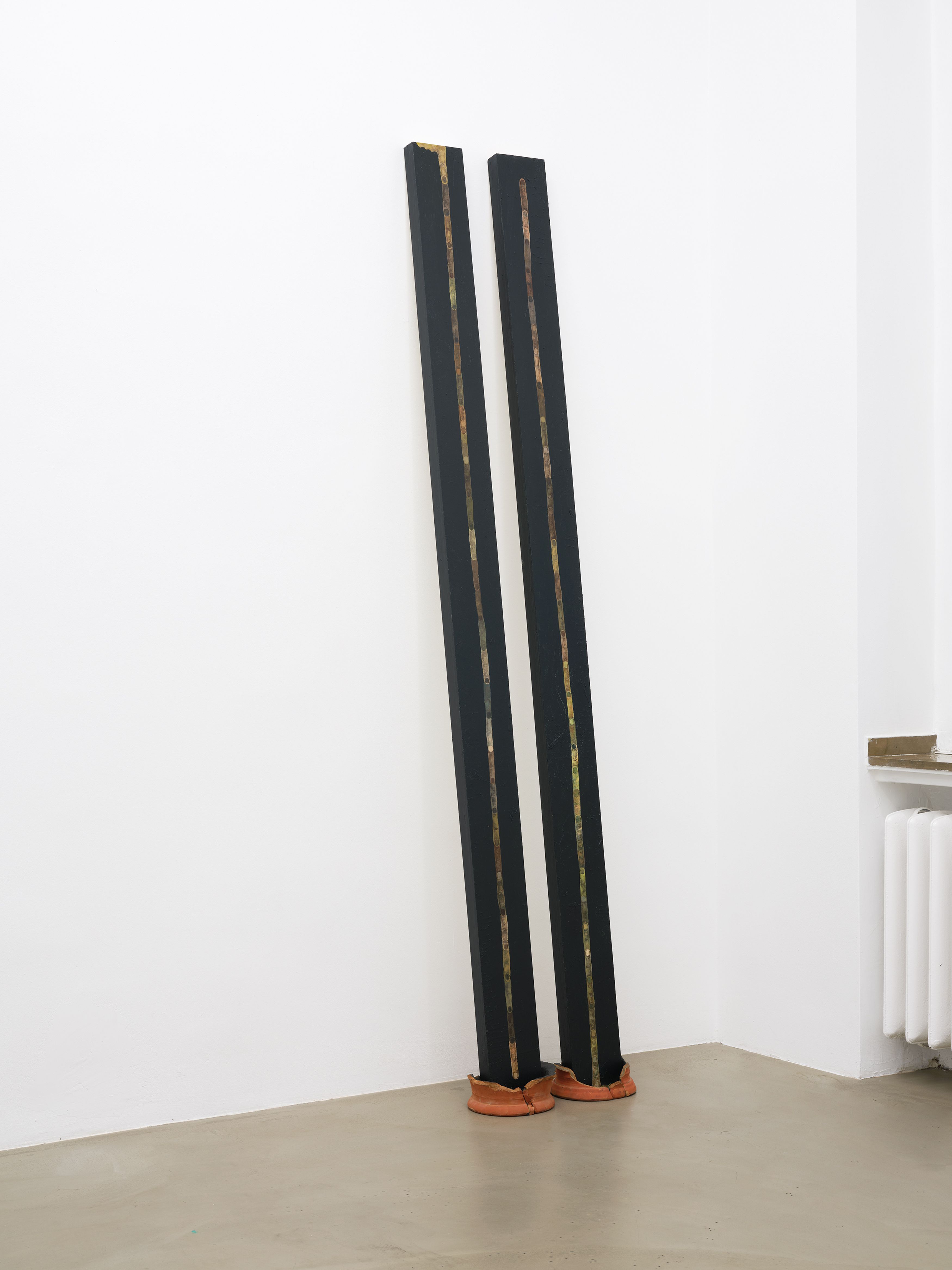
Behind this stands B. R. Ambedkar, the jurist and revolutionary who wrote India's Constitution and led the movement to abolish caste from within, having been born into an untouchable family himself. Shelare's family converted to Buddhism three generations ago, following the mass conversion Ambedkar led in 1956. While his portrait circulates widely in protests across India, Shelare instead takes a single gesture: Ambedkar's raised hand, pointing neither at the sky nor at the horizon, but somewhere between them. Shelare reads this as a direction rather than a destination, toward the unknown, toward what a person has not yet been allowed to reach. Two works in the exhibition, each paintings on long, narrow blanks of plywood and recalling a ladder one might climb down into the ground with, pick up exactly this gesture.
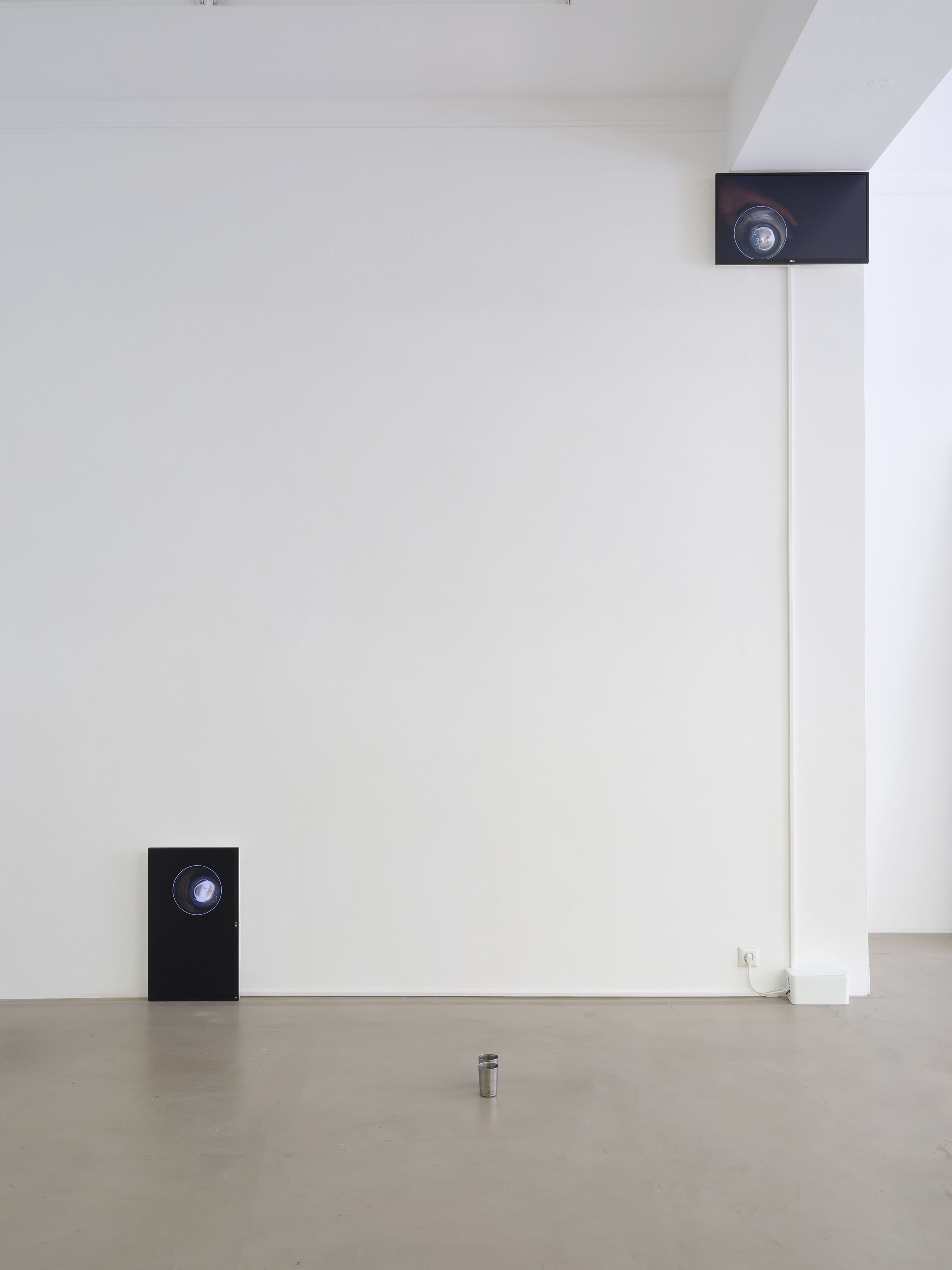
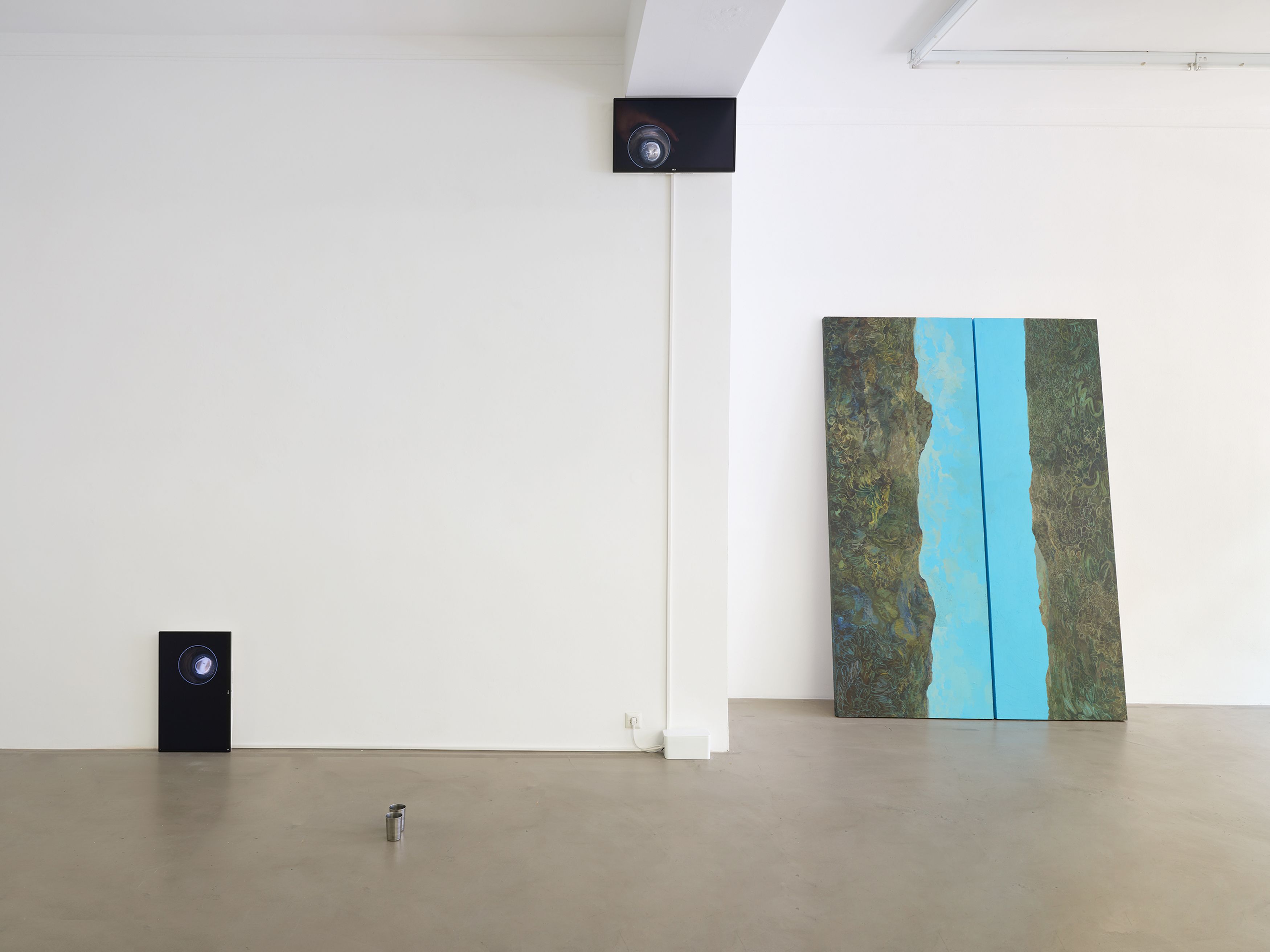
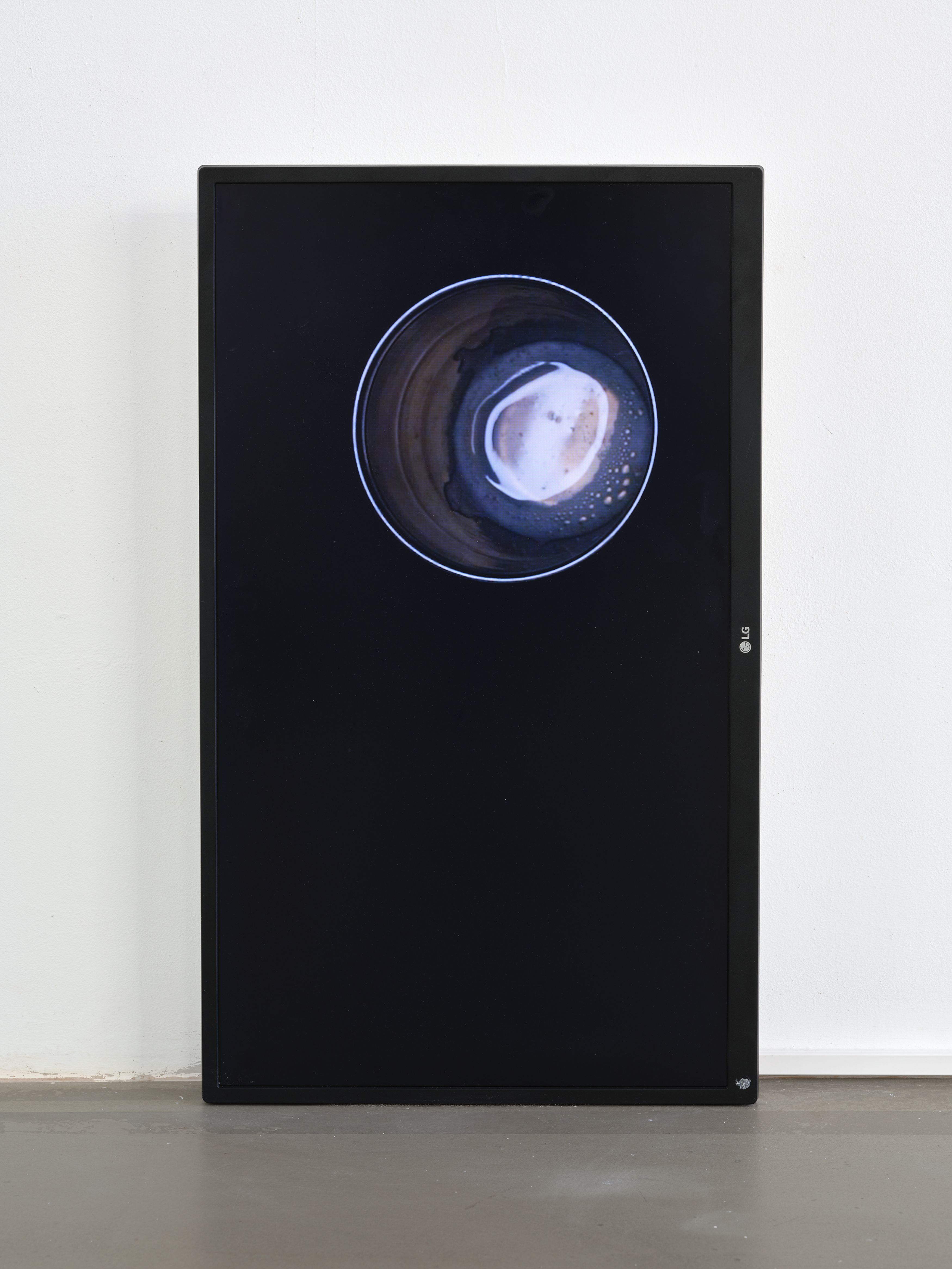
A related work turns the same gesture toward drinking itself. Mouthwatering (2025) is shown across two screens: one frames a full glass of water, the other an empty one. A hand reaches into view, takes a sip from the full glass, and spits it into the empty one, again and again. With each exchange the water changes. It clouds, thickens, stops being simply water. At the same time it disappears, sip by sip, until almost nothing is left in either glass. What was drinkable becomes undrinkable through nothing but repetition and the artist's own mouth, the glass that was full slowly emptying itself into an act of not quite drinking.
The political theorist Jane Bennett has argued that discarded matter is never simply inert, that a landfill, a sewer, a heap of rubbish retains a kind of vitality, an afterlife that keeps acting on the world once we've stopped looking at it. Shelare's work agrees with this, but pushes past it. In his account, this vitality is never evenly distributed. Someone lives closer to the toxins than someone else, and that division is not incidental. It is old, inherited, and structured into who does the touching. Living in toxins, for Shelare, is not a general ecological condition. It is a position some bodies are born into and others are not.
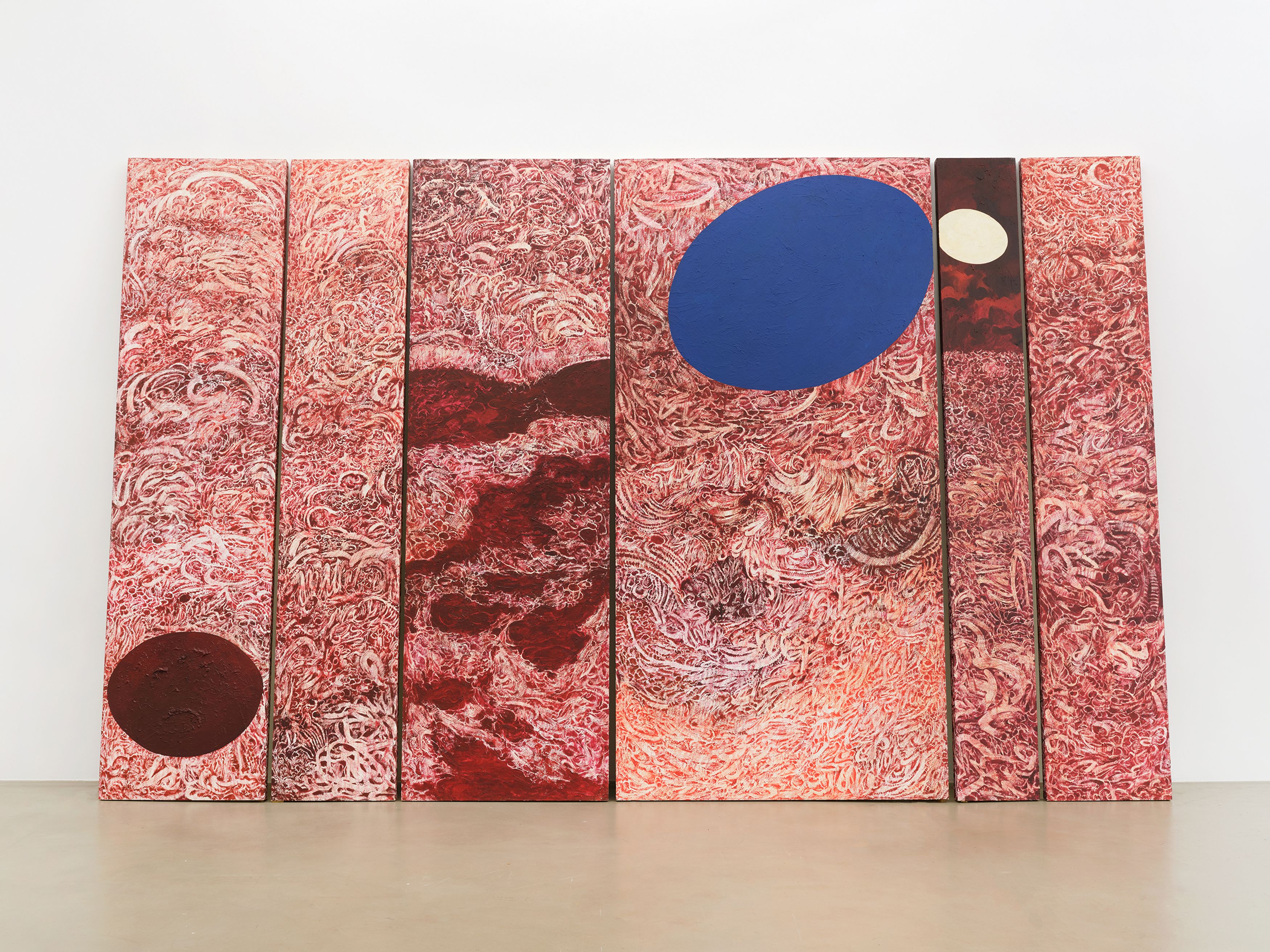
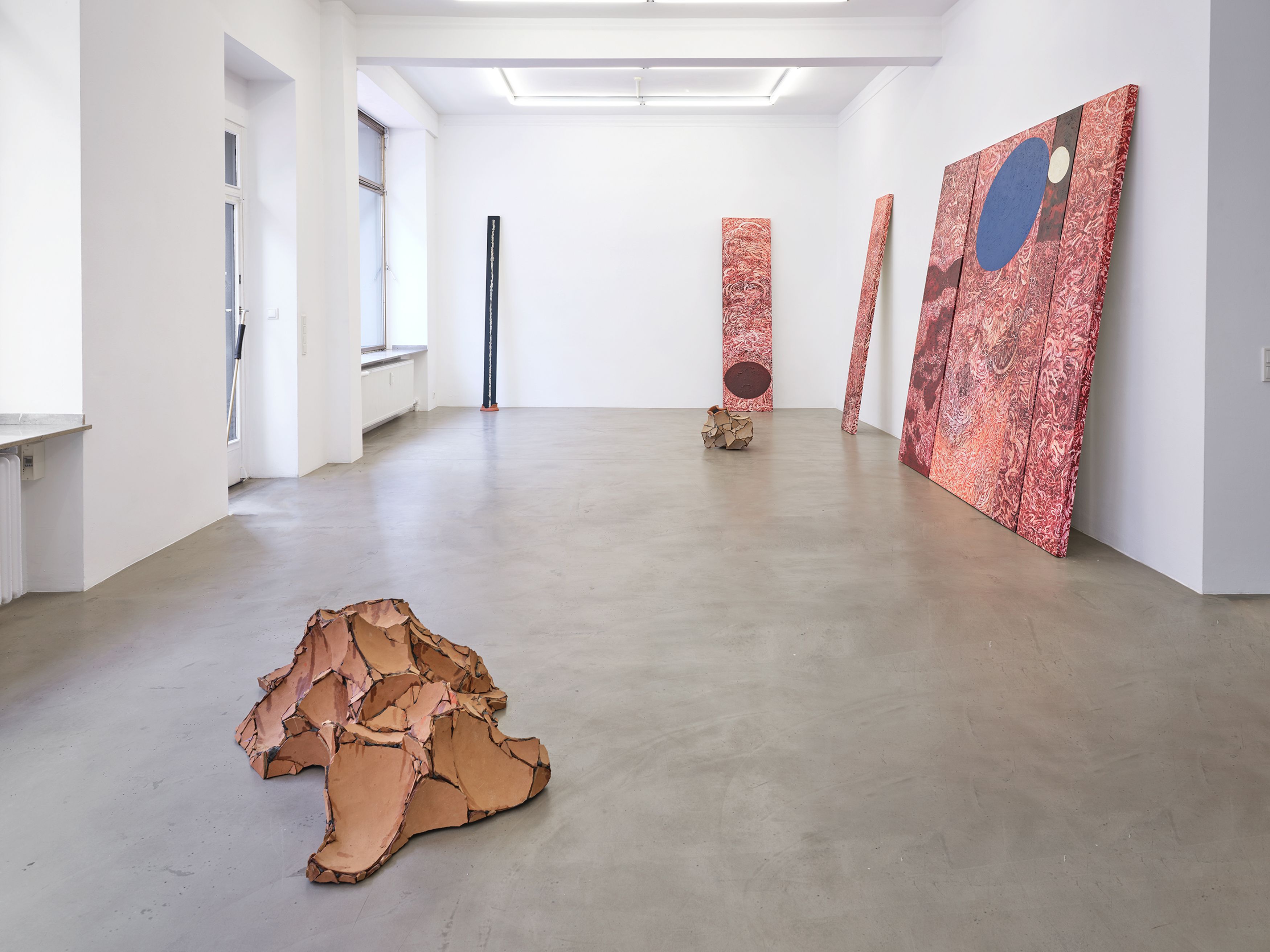
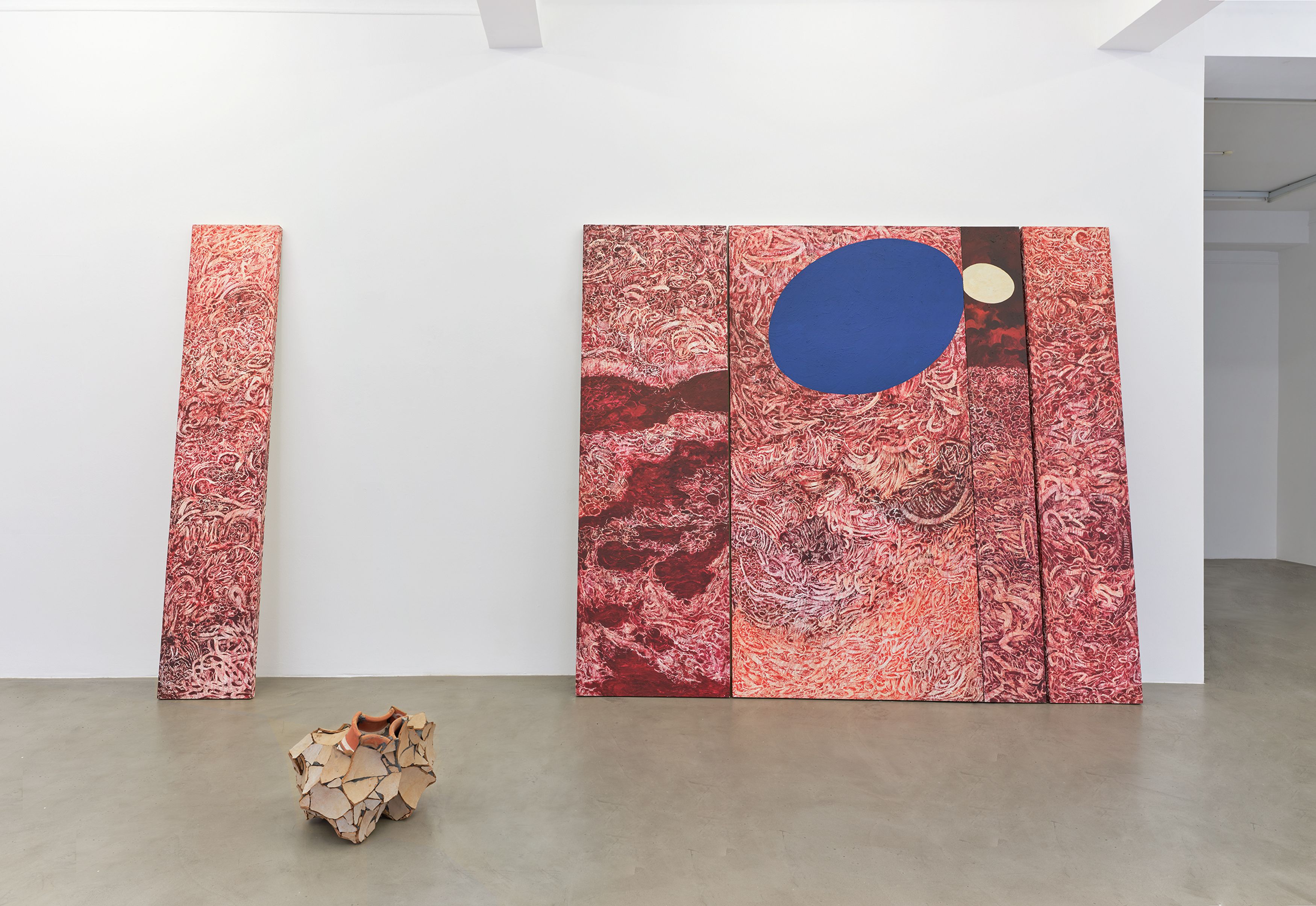
Manhole Eclipse (2026) carries this into paint. Six panels, worked almost entirely in dark red, close to two and a half by three and a half meters across. It is difficult to say what is being depicted, the surface could be plant matter, could be intestines, and the painting doesn't resolve the question. Three geometric eclipses hover above the ground of the canvas, hard edged against the loose red field around them, alien to their own surroundings. It is not a picture of hell. But it would be easy to mistake it for one. It's worth a small detour here to Mark Rothko, whose murals for the Seagram Building were commissioned for the Four Seasons restaurant in New York, a room built for people to eat, drink, and be seen doing so. Rothko visited the restaurant, decided he did not want his paintings serving as backdrop to that kind of consumption, and withdrew the commission before it opened, returning the money. He wanted the paintings to stop a viewer, not accompany a meal. Manhole Eclipse, painted in that same near-illegible dark red, makes a similar demand: don't consume the image, stay with the fact that you can't.
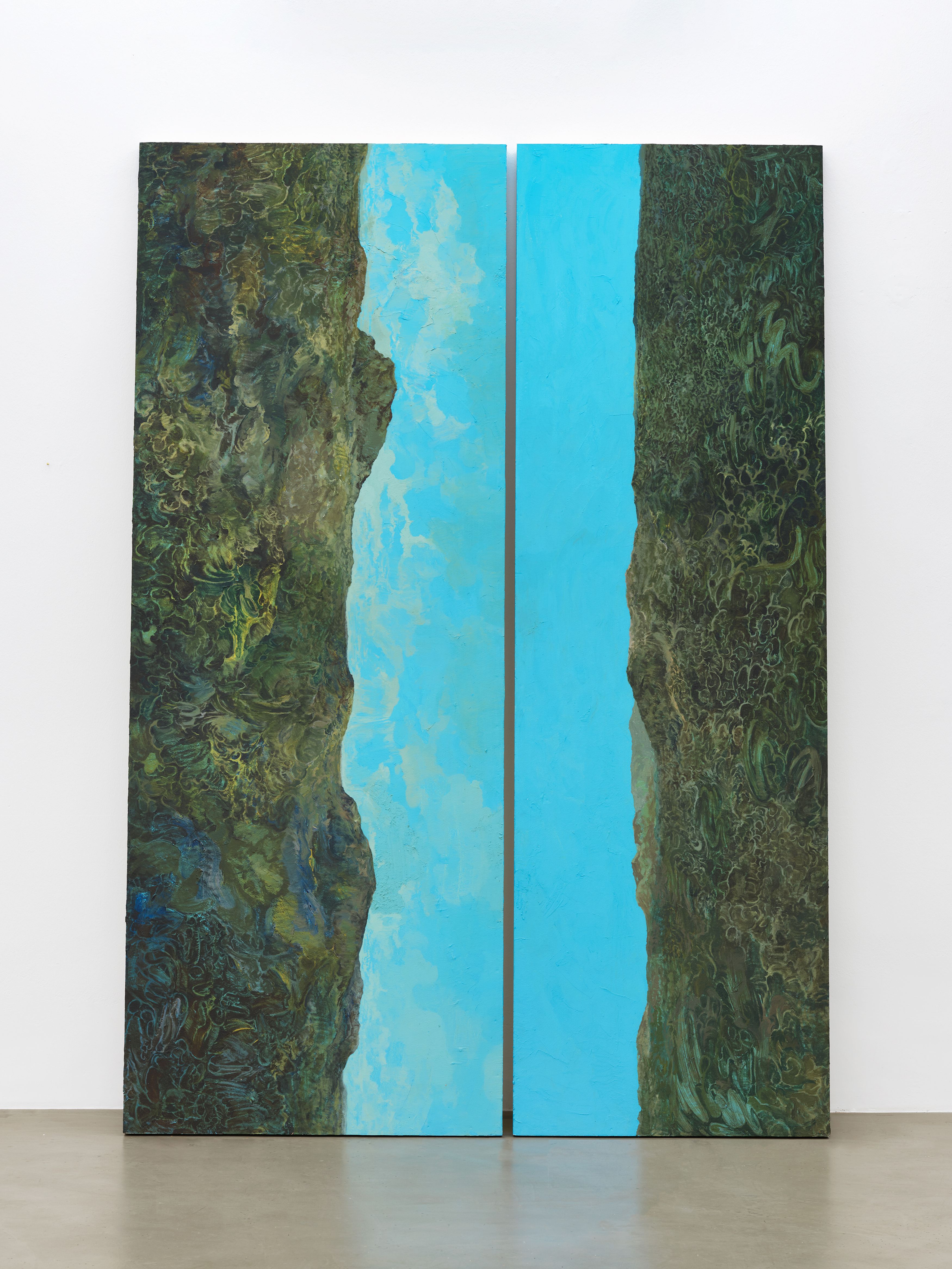
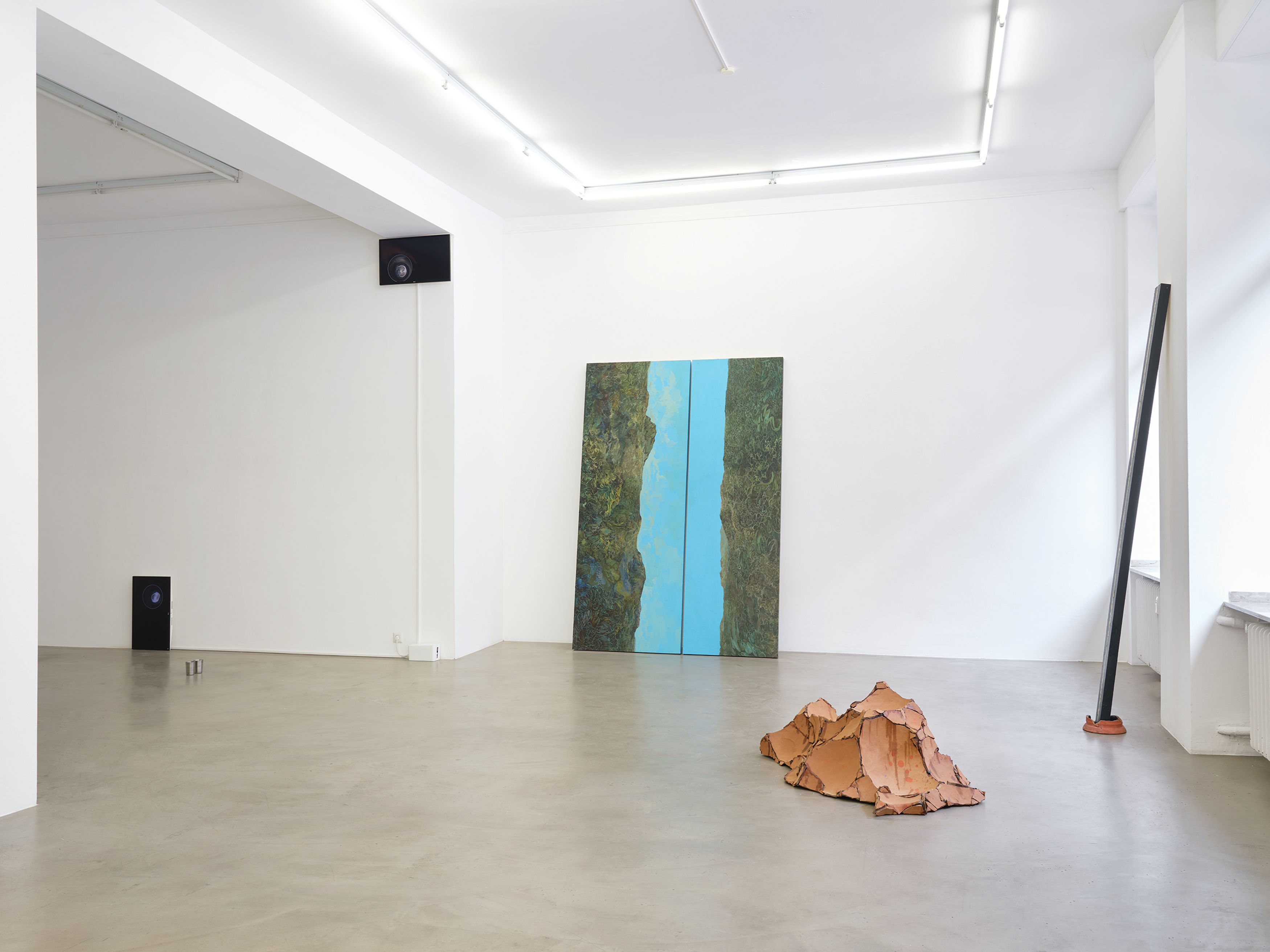
Fall (2026), another painting, turns the landscape on its side, two panels, a horizon line pulled vertical. The gesture places the work inside a much older tradition, the landscape as a genre built around longing, around a horizon promising something beyond the frame. Here the sky is blue, close to cloudless. The ground beneath it is sparse: reliefs, stone-like forms, scattered vegetation. Anyone familiar with Shelare's practice will recognize the site before the painting says so, a dumping ground in India, one of the country's mountains of trash, painted with the same formal patience usually reserved for mountains of a different kind.
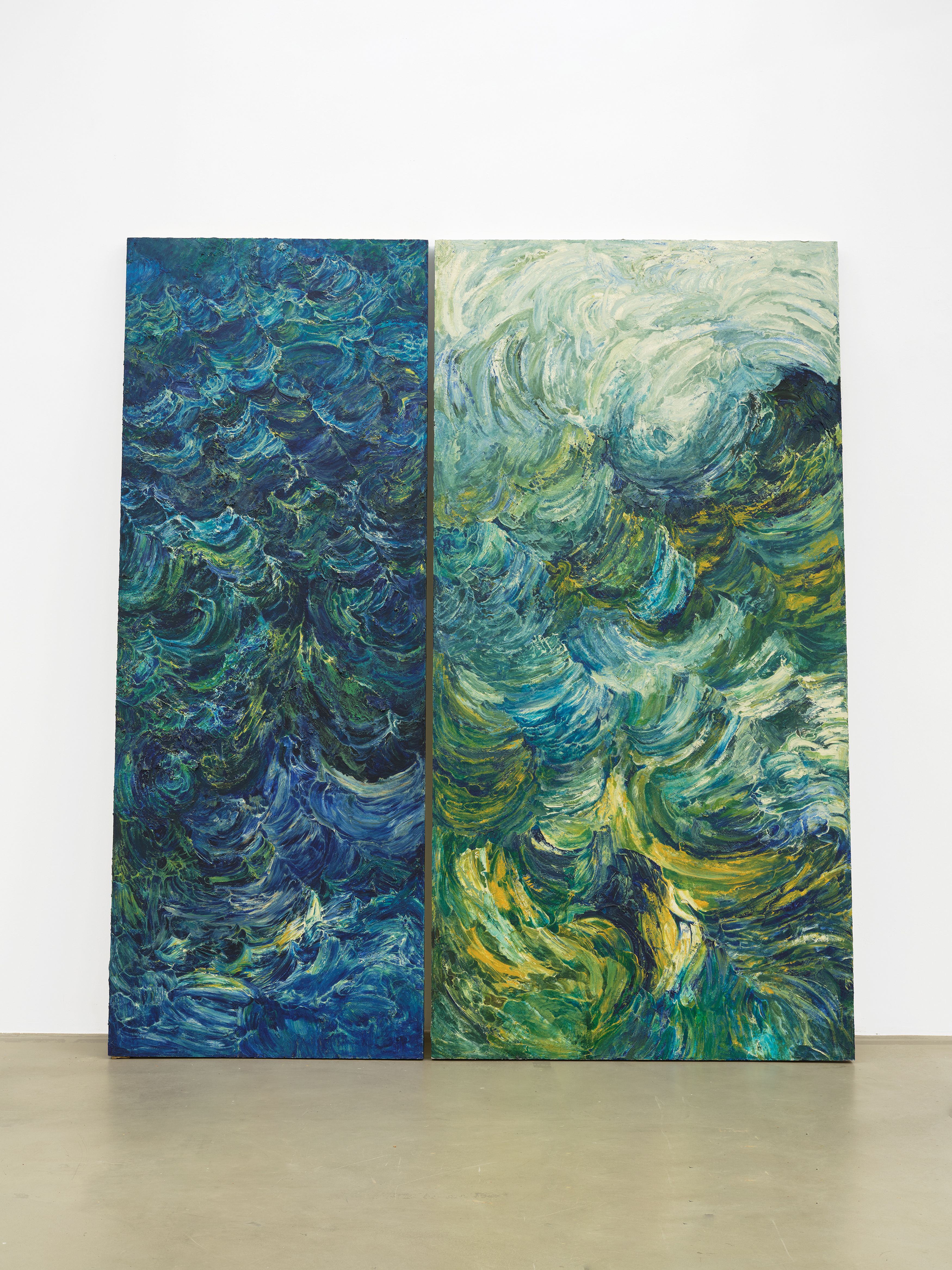
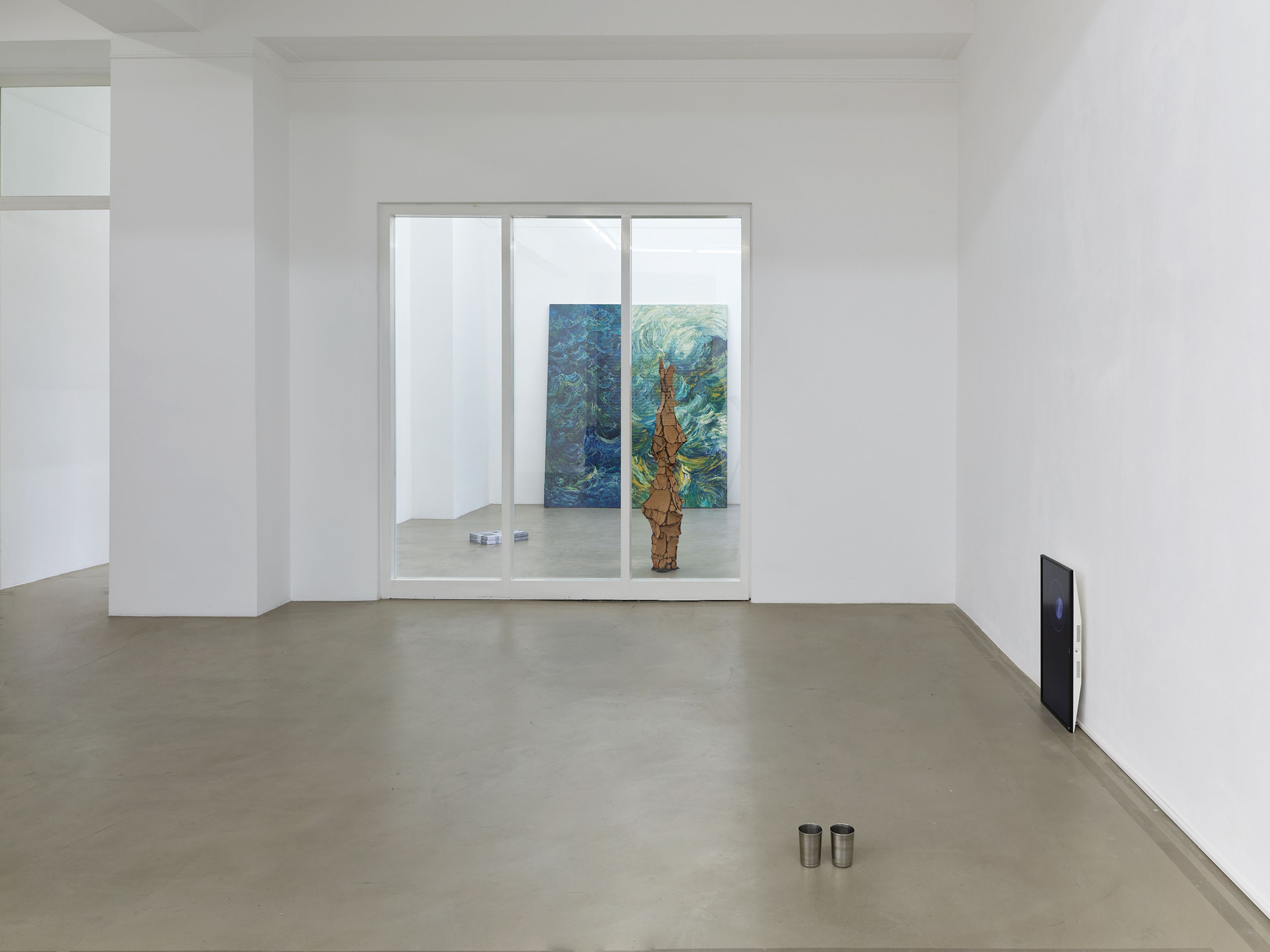
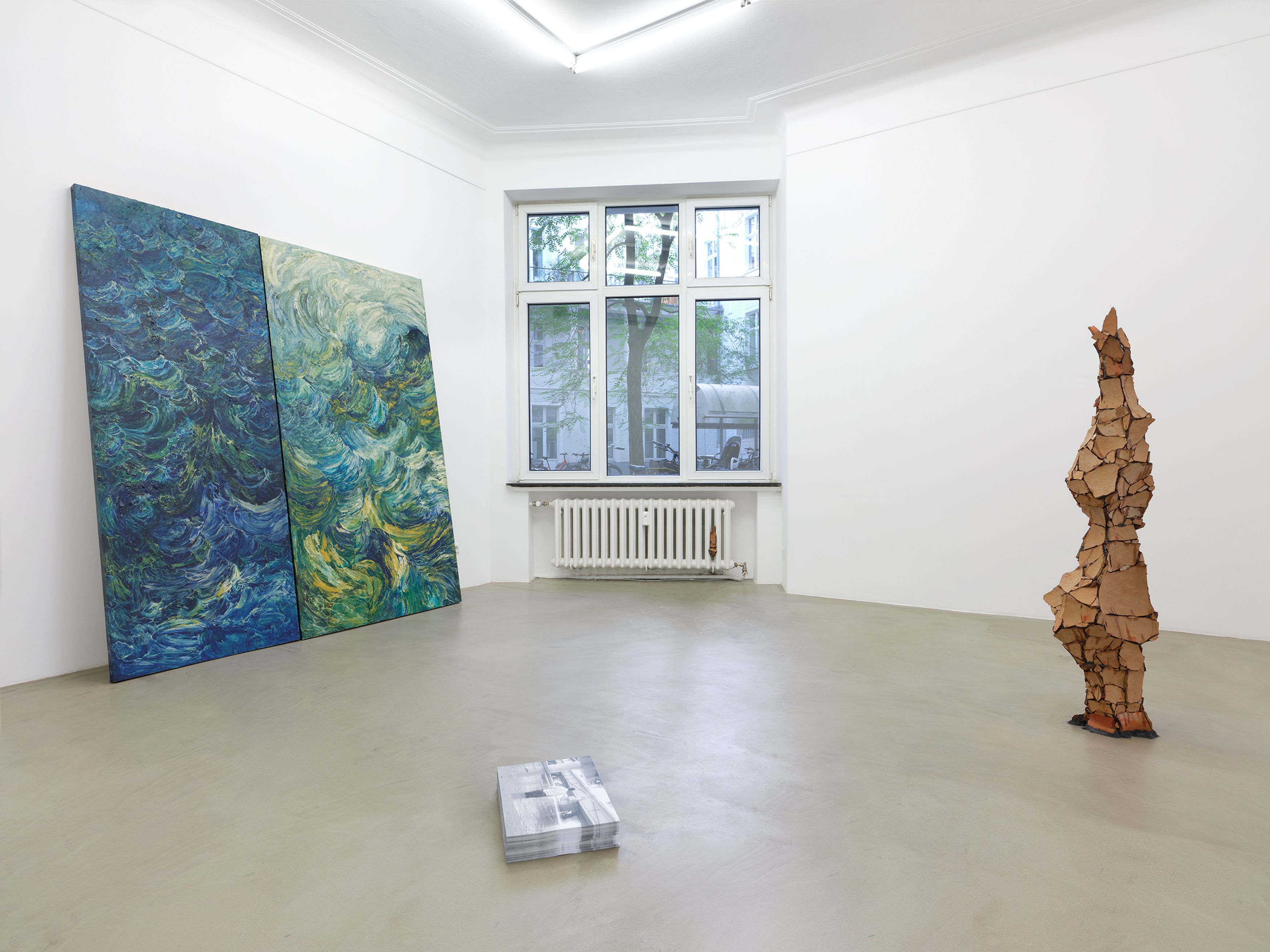
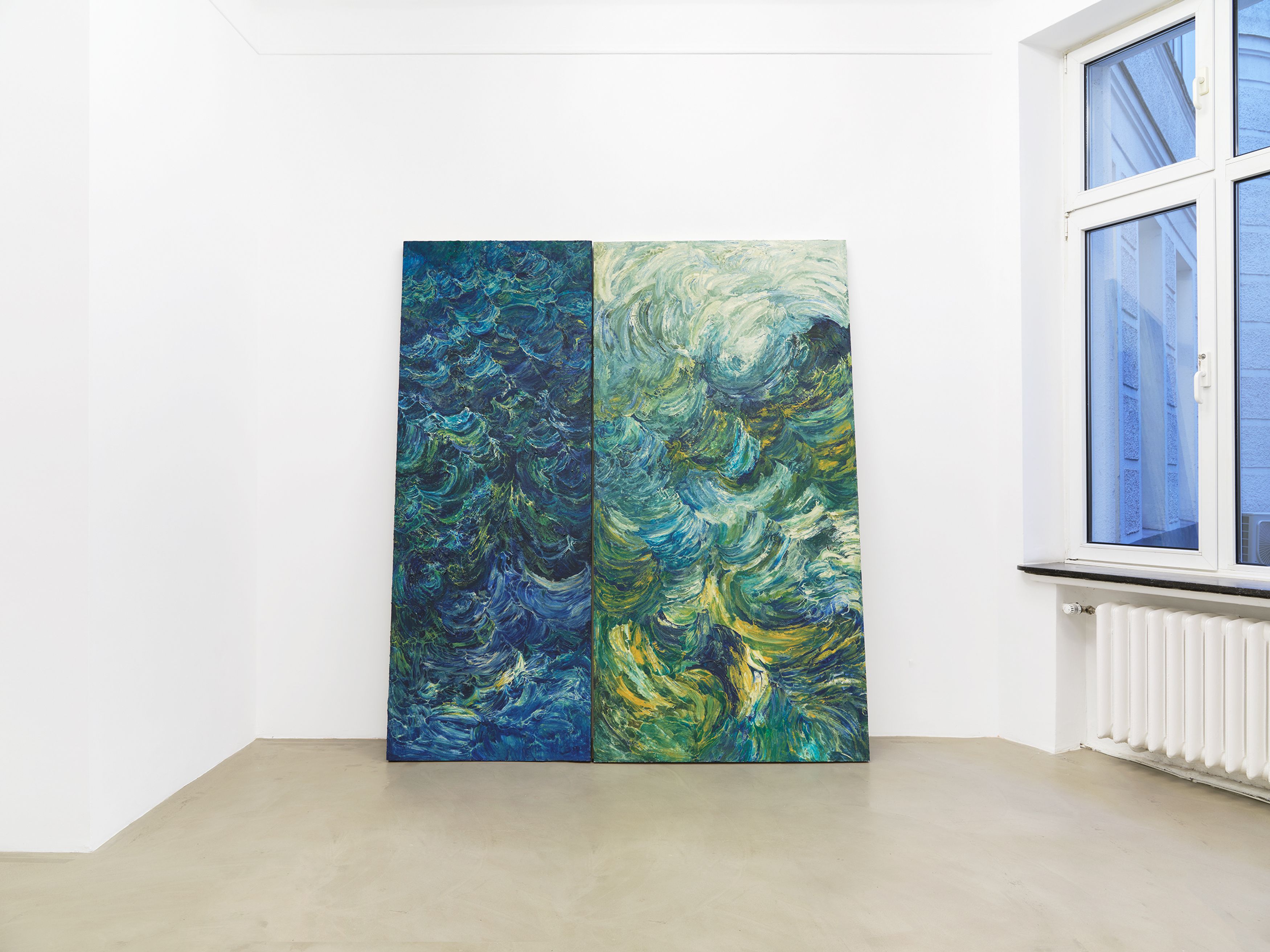
A third painting, Mouthwatering (2026), also in two panels, closes in on the surface of water. The left panel in darker blue, the right lightening toward blue-green. Talking about the work, Shelare brought up J. M. W. Turner, one of the first painters to register, in paint, a world being altered by industry: the steam of engines, the fog thickening over rivers and coastlines. Shelare's paintings pick up that lineage from the other end. Where Turner painted the visible exhaust of a new machine age, Shelare paints what that age has been quietly producing ever since and putting out of sight.
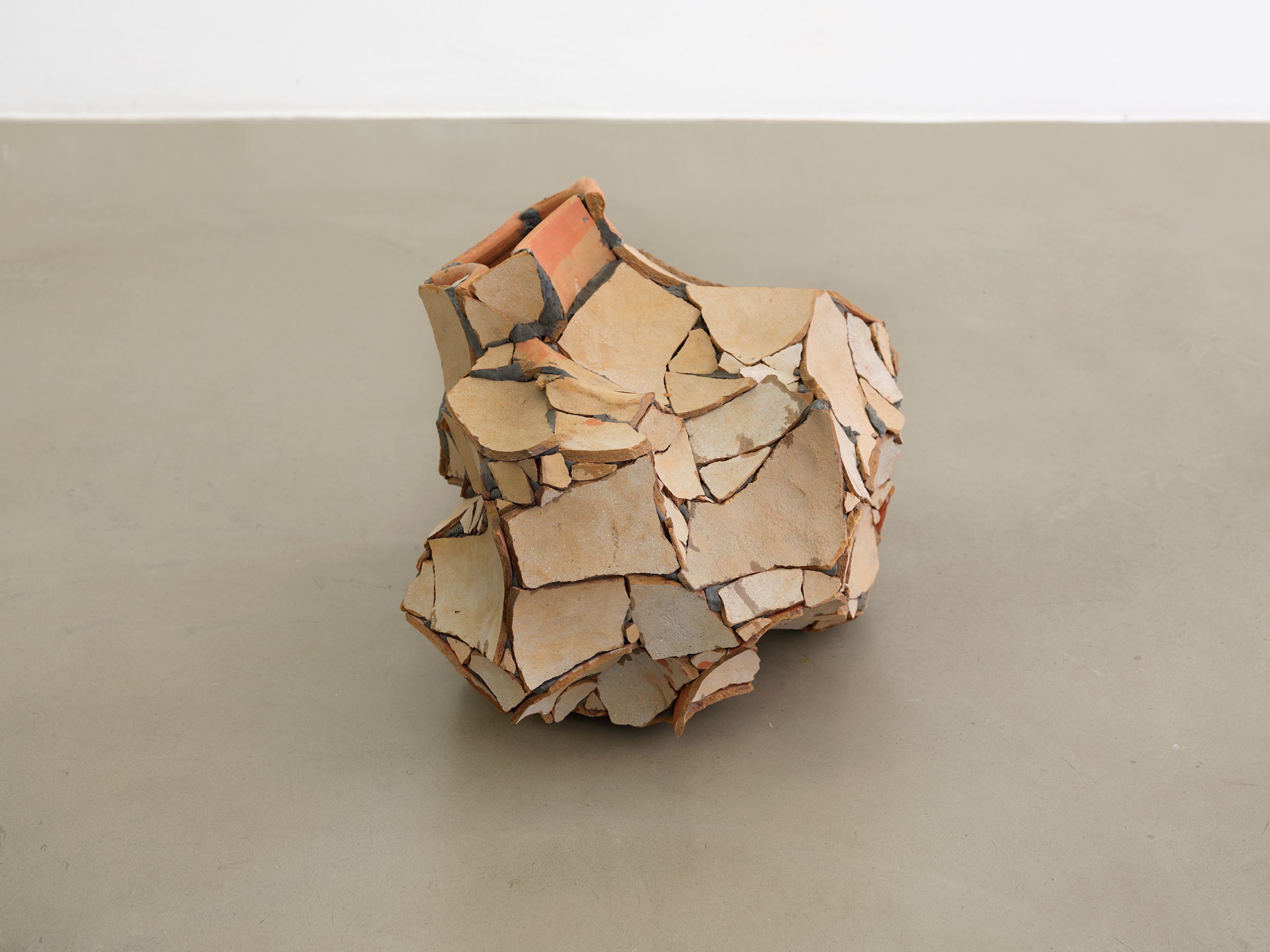
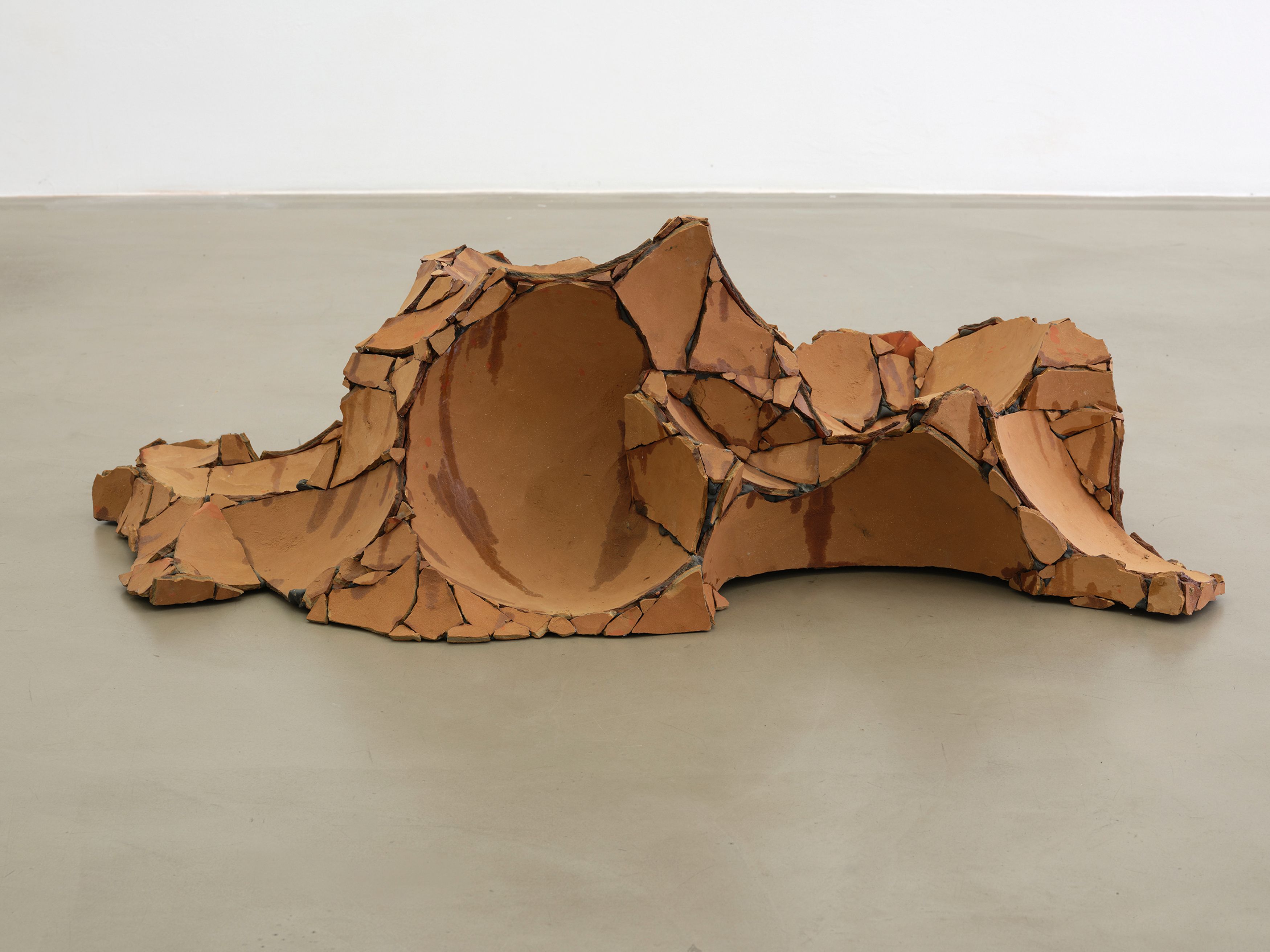
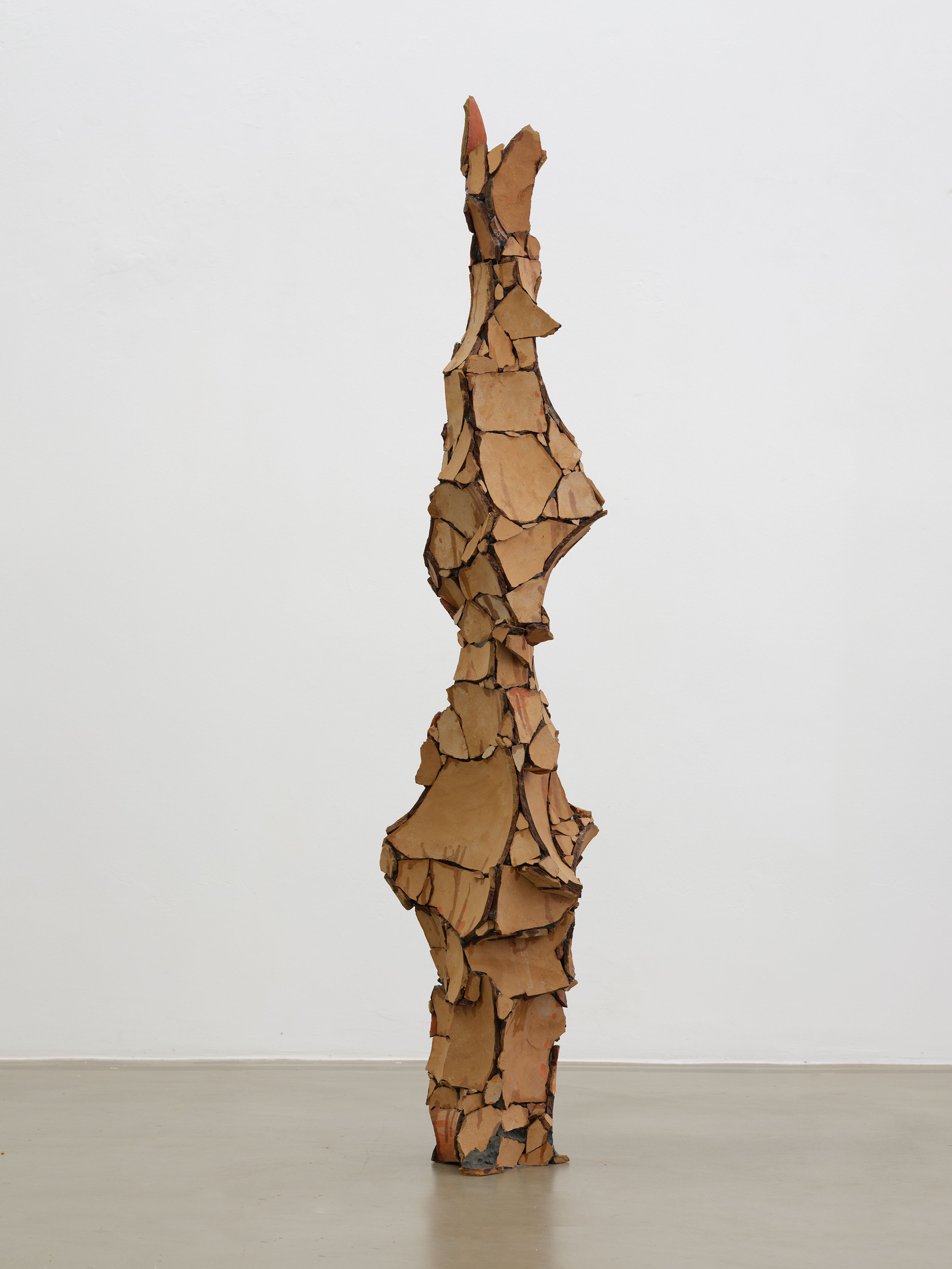
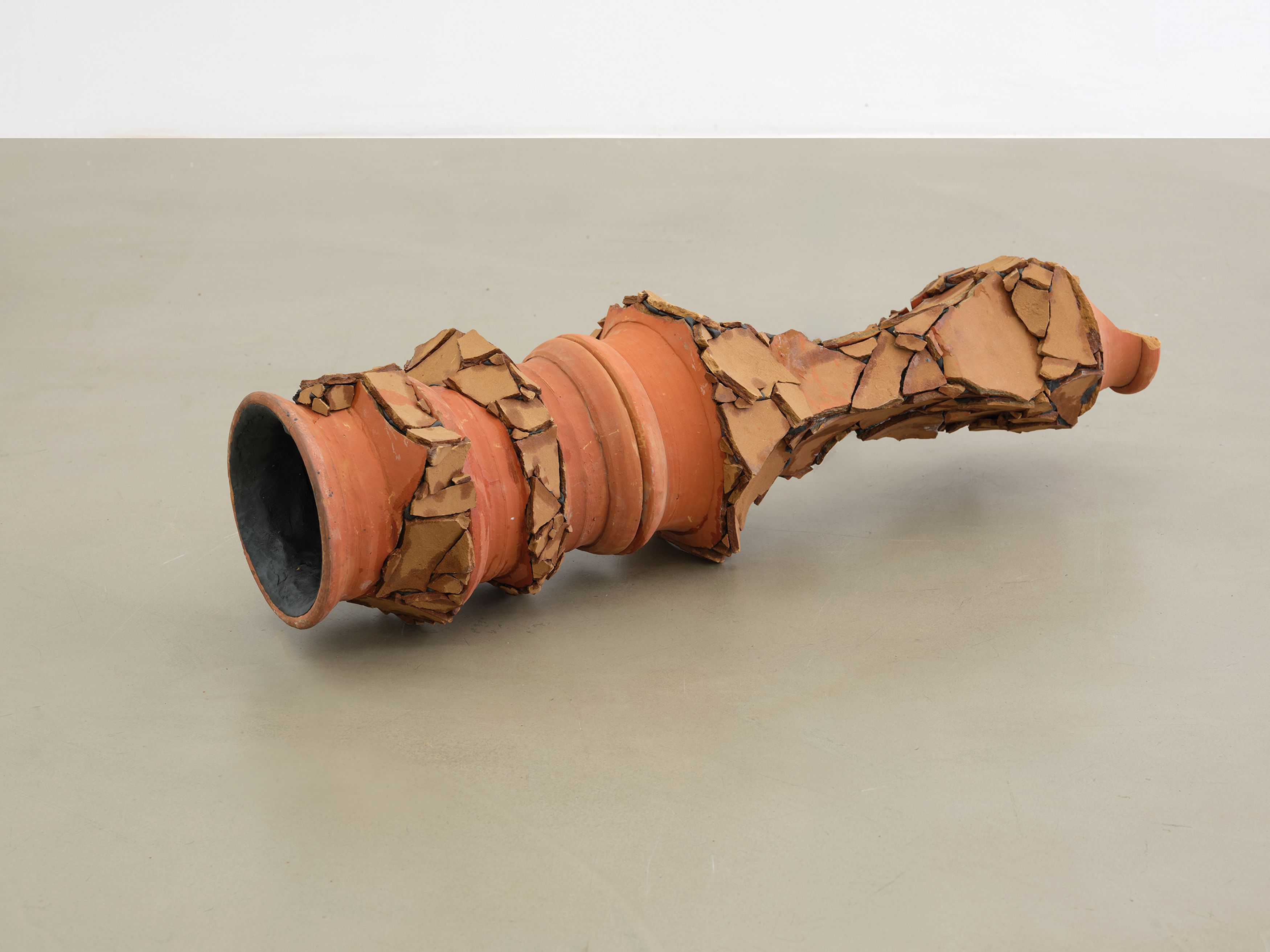
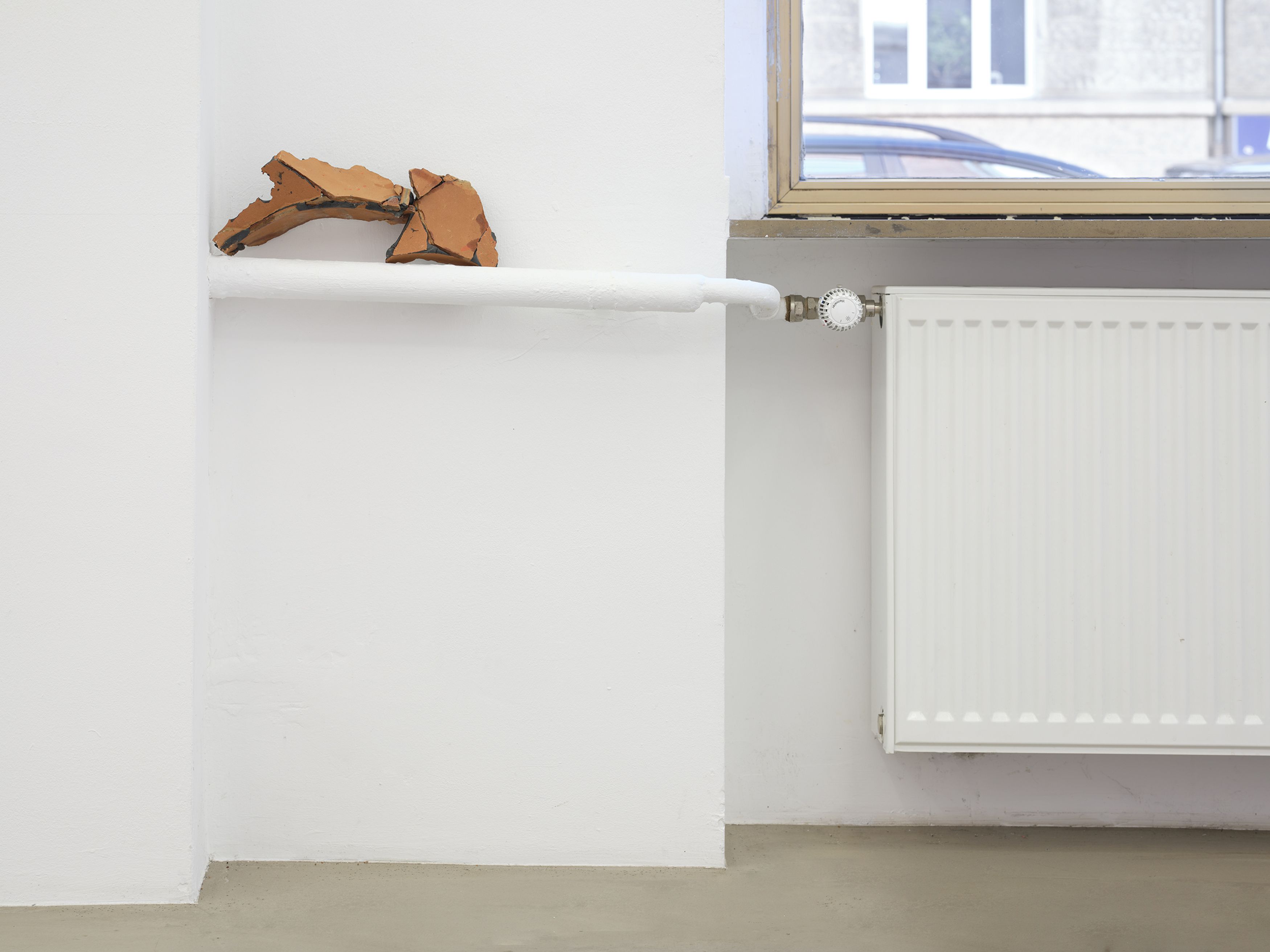
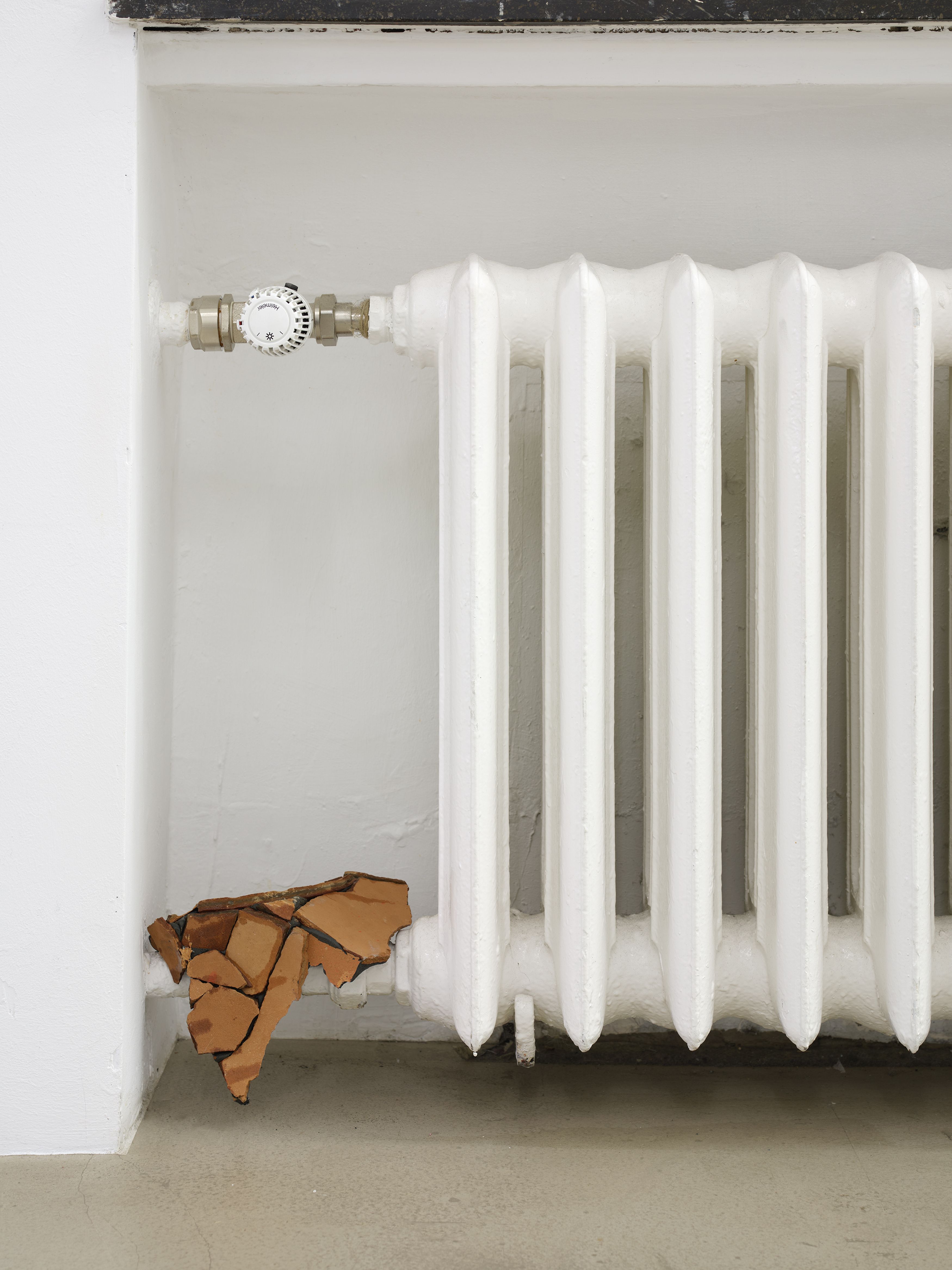
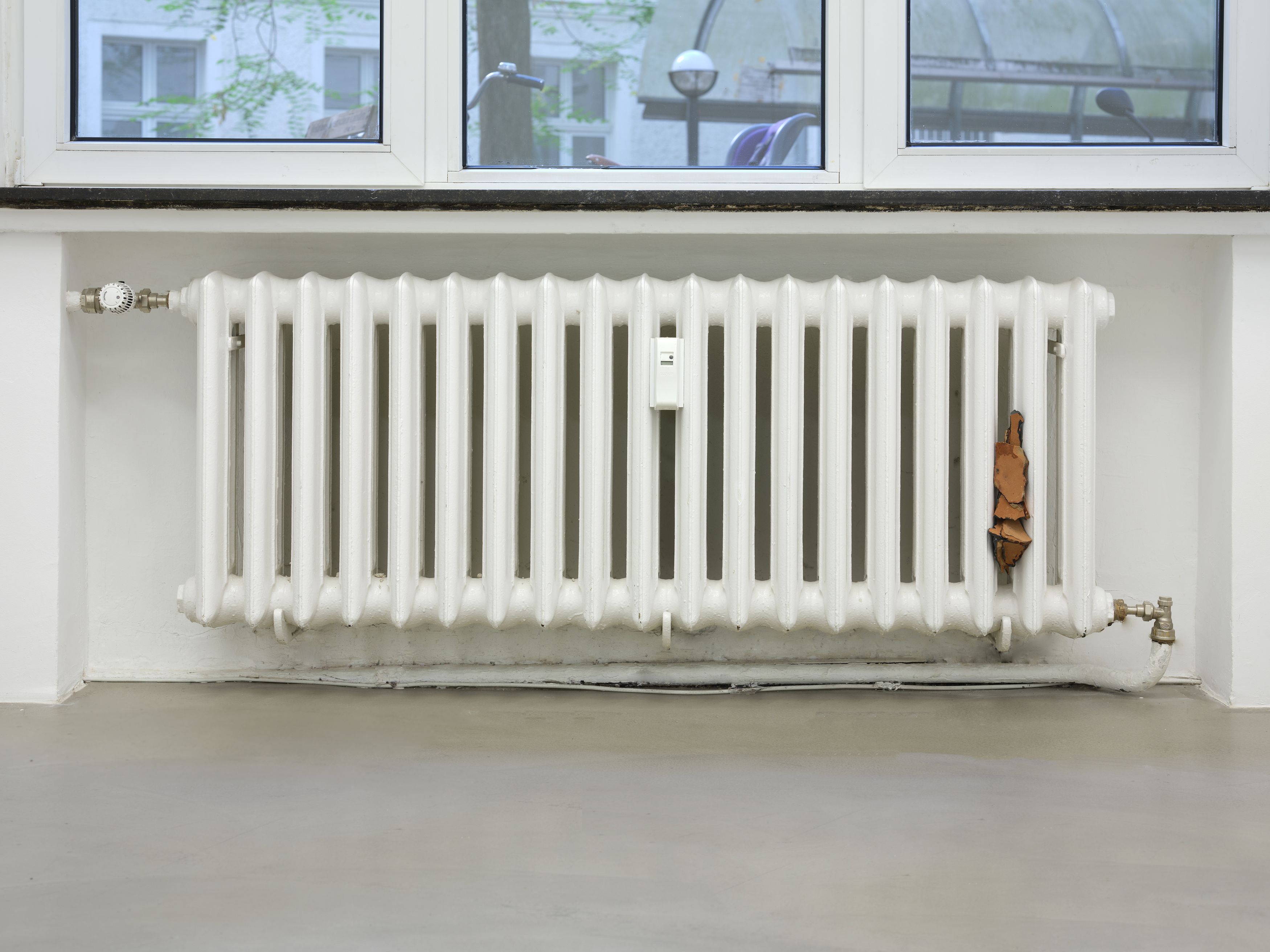
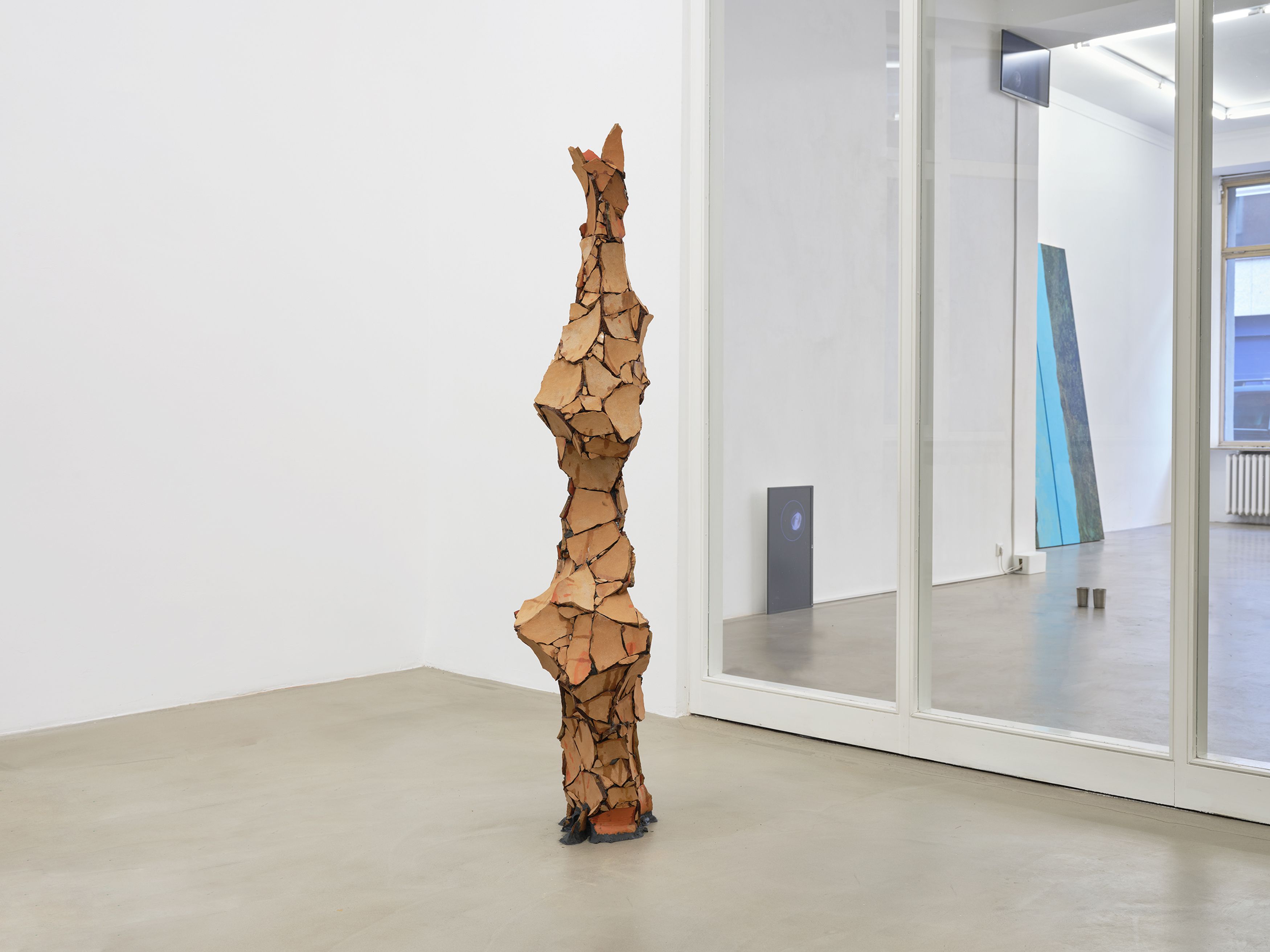
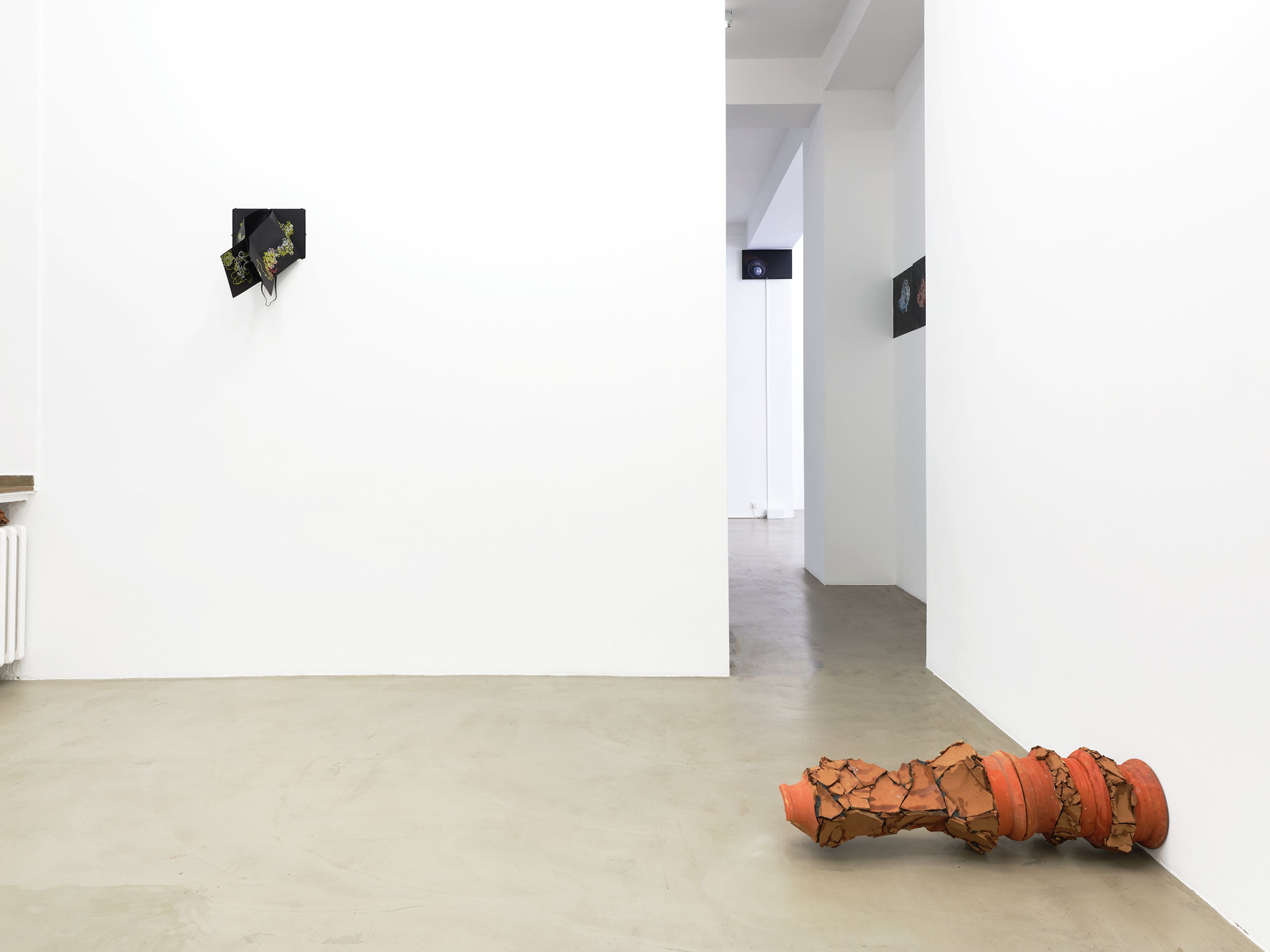
A new series of vessels, Outdoors (2026), extends this into three dimensions. They begin as industrially produced earthenware containers, ordinary storage vessels, made to hold something. Shelare smashes them, then reassembles them by hand, but not back into their original form. He turns them inside out. What returns is a vessel that can no longer hold anything, a container that has lost the one function containers are for. It has become an Ungestalt (a non-shape, a form that has come undone), something that no longer does, or should, or could do what it was once made to do.
In this sense, one could argue Shelare has already done, inside his own work, what caste was built to prevent: he has abolished the position from which one is only ever the observer, or only ever the observed. What his practice offers instead is something closer to total, simultaneous attention, a way of seeing in which nothing is kept safely outside. Time, in this work, does not move forward along a line toward some resolution. It behaves more like an eclipse: two bodies overlapping, breathing in and breathing out at once, consuming and releasing without one ever fully finishing before the other begins. This is why the eclipse also appears as the shape floating above the ground in Manhole Eclipse: three hard forms held inside a field that refuses to become either plant or intestine, sewage or sky. Drinking outwards, in the end, describes a single continuous gesture, not two separate ones. To take something in and to release it are, for Shelare, the same motion, seen from two different sides.
– Fabian Schöneich
Mohit Shelare (b. 1992, Nagpur, India) lives and works between Delhi and Amravati. Trained as a painter and performer, he works across drawing, performance, moving image, sculpture, sound, and text. His practice explores impurity, contamination, and waste as spaces where social, political, and material relations are negotiated. Shelare is particularly interested in the lives, forms of knowledge, and relationships that emerge within systems of disposal, infrastructural leftovers, and social exclusion.
„Things always come back form where they have been discarded, finding and shaping new kind of relations“ – Mohit Shelare
His work has been presented at the 59th Carnegie International, Pittsburgh; Chemould Prescott Road, Mumbai, and the Watermans Art Centre, London, among others.