Installation Views
Press Release
Minh Lan Tran Opening 23 April
24 April – 17 July 2026
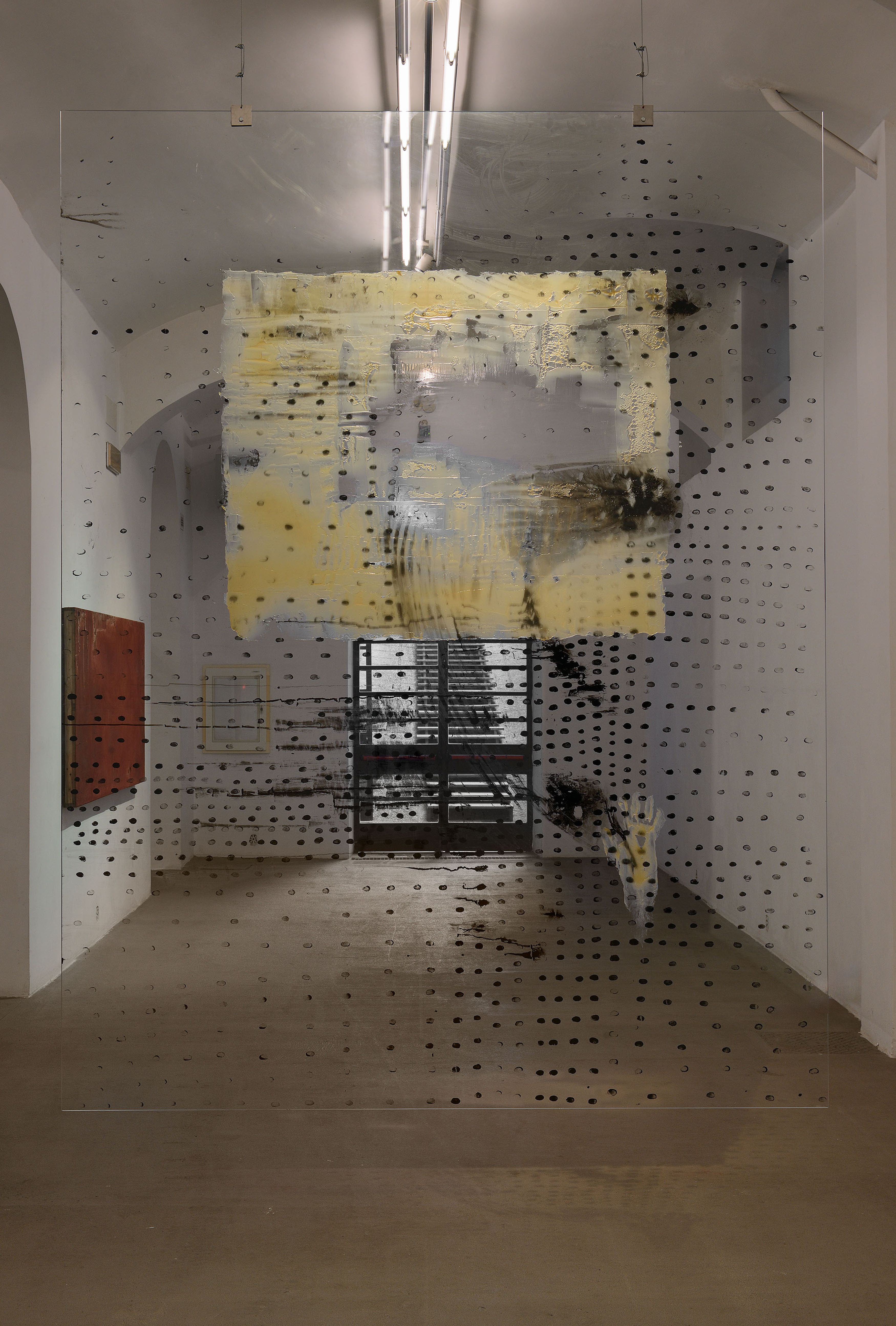
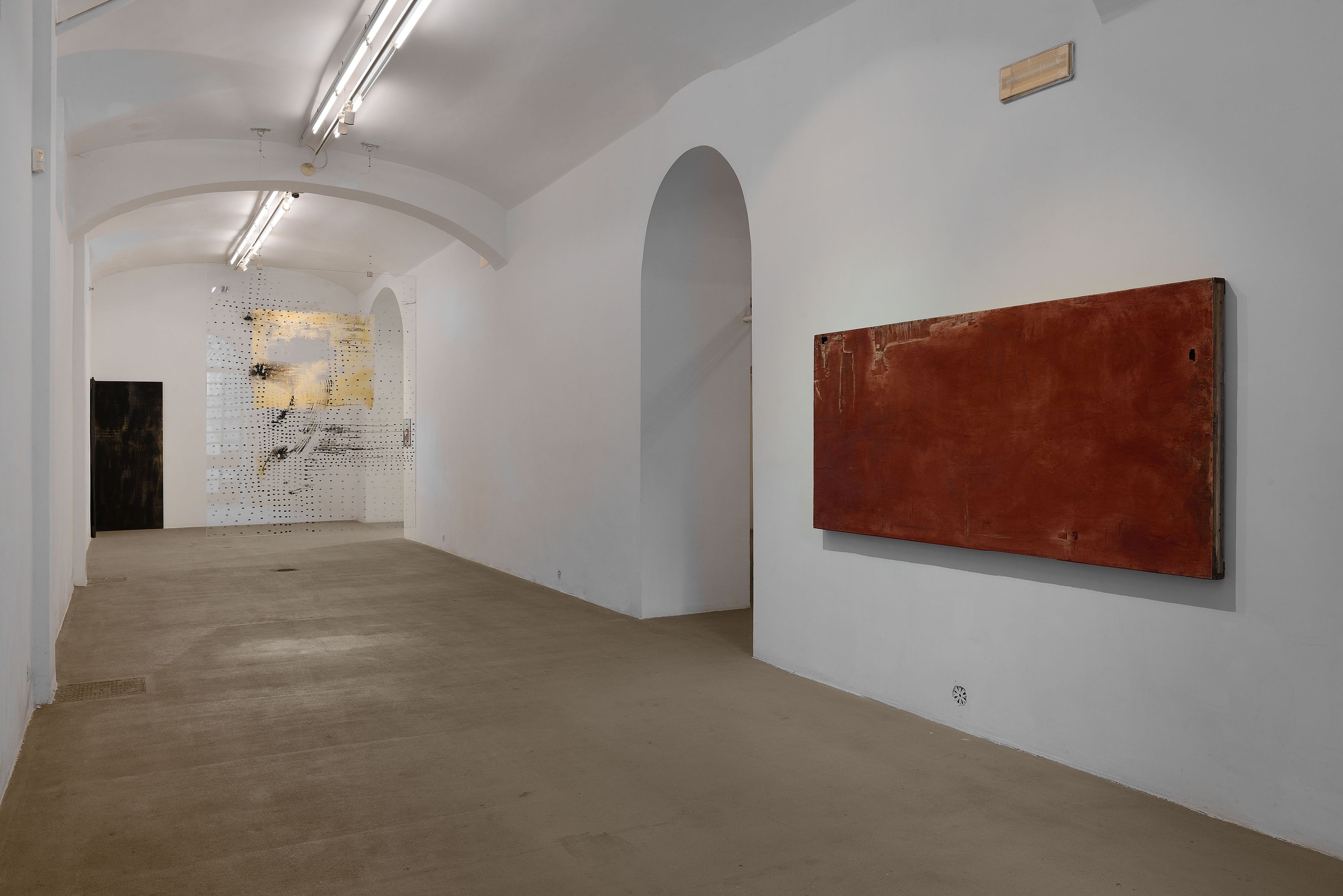
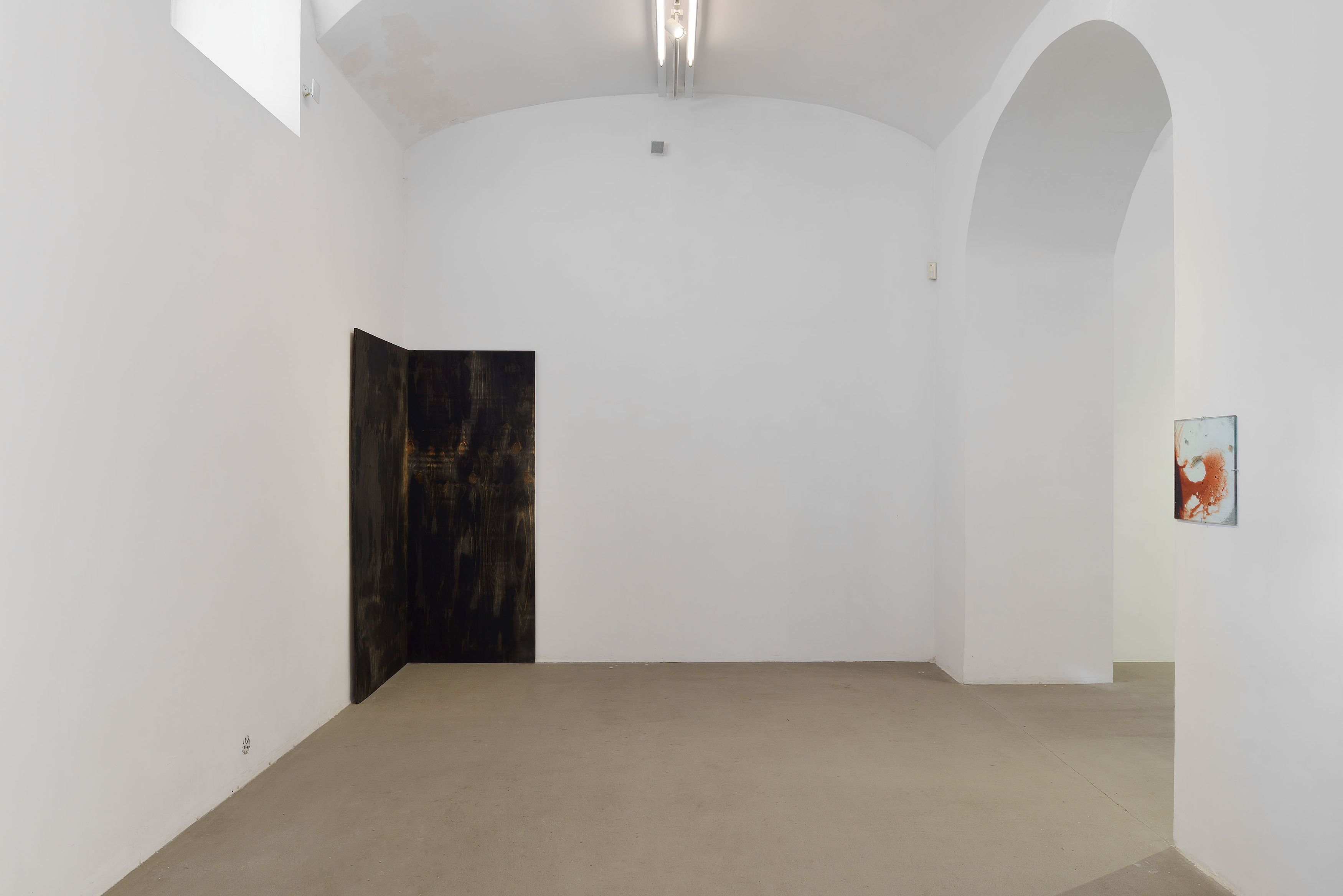
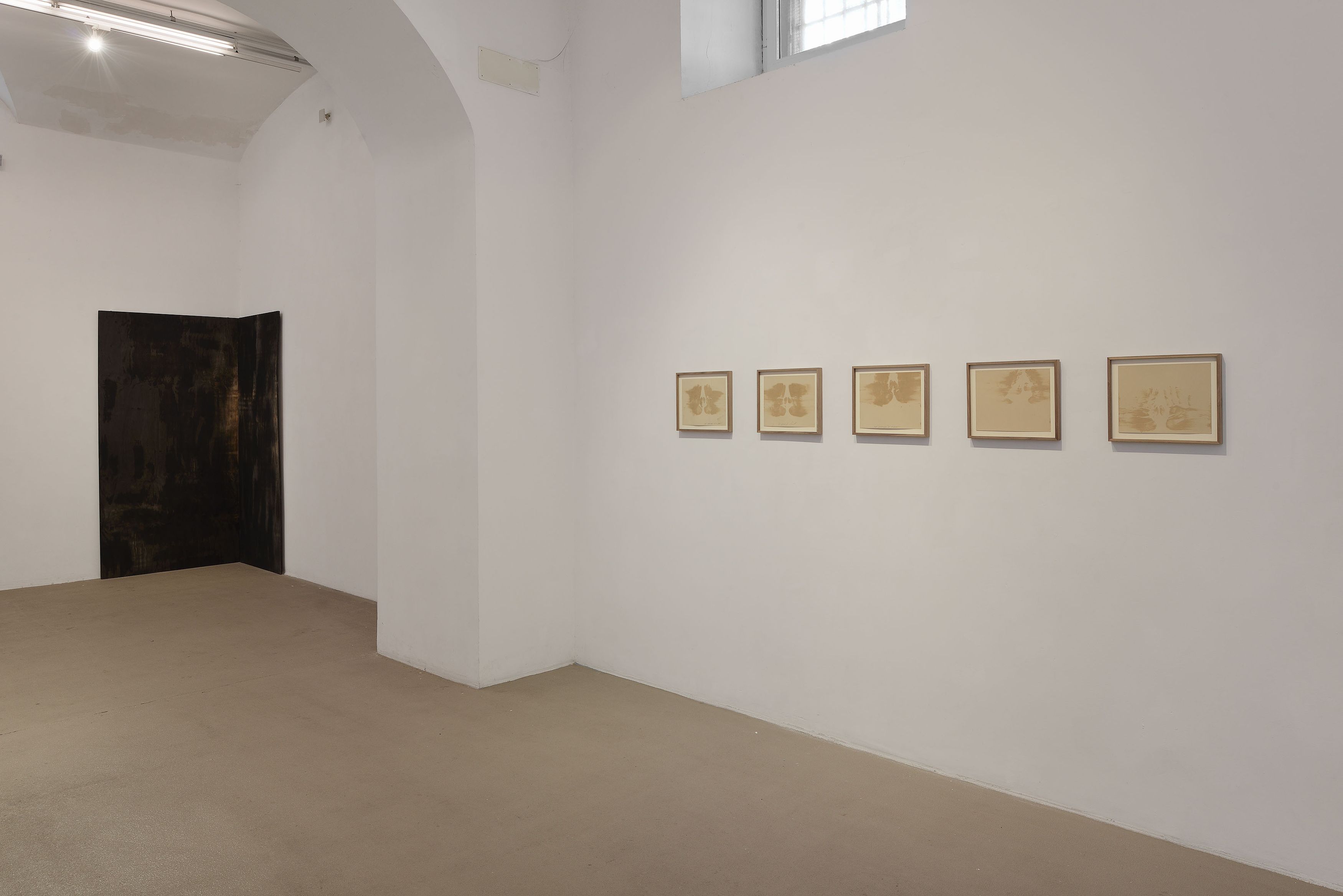
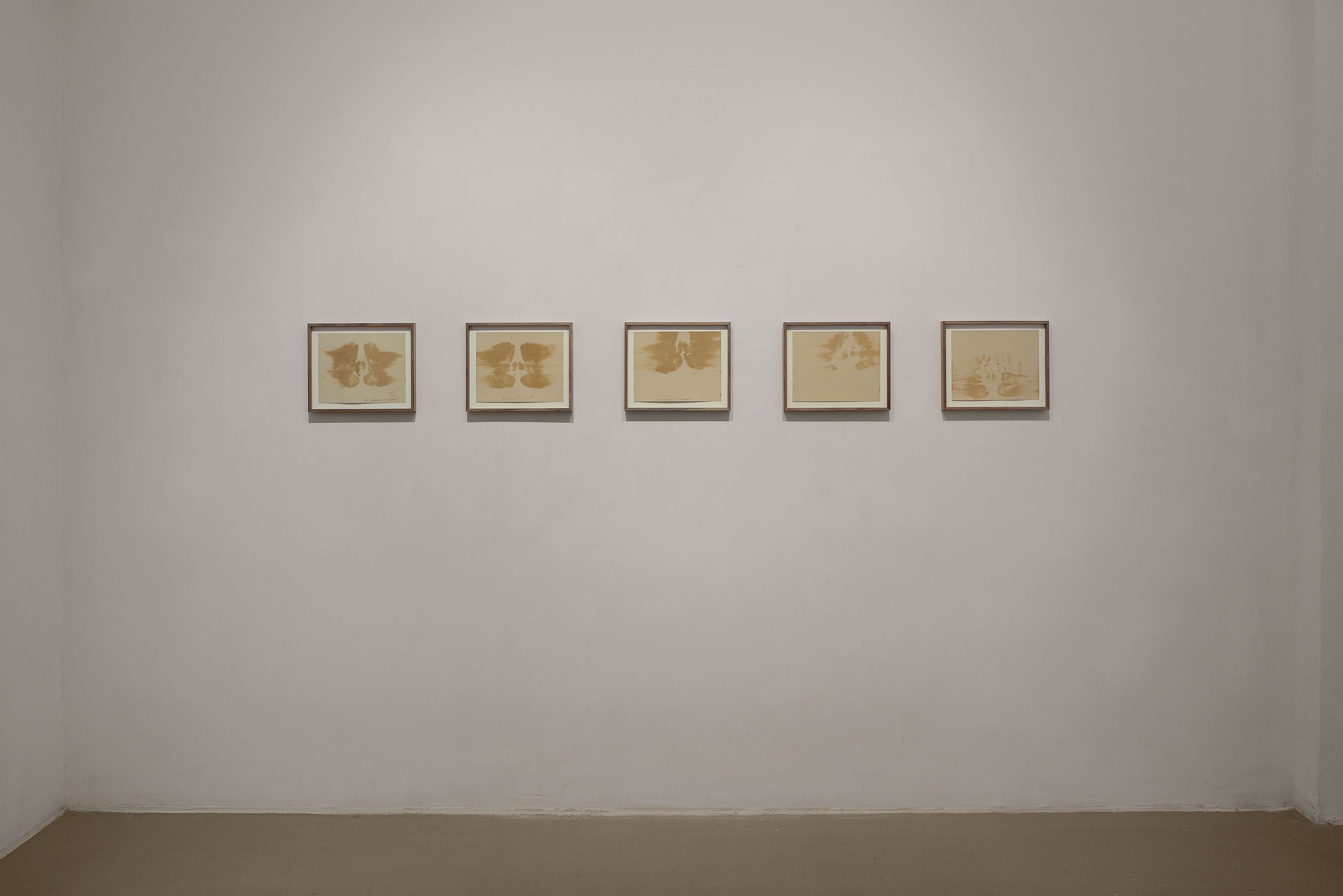
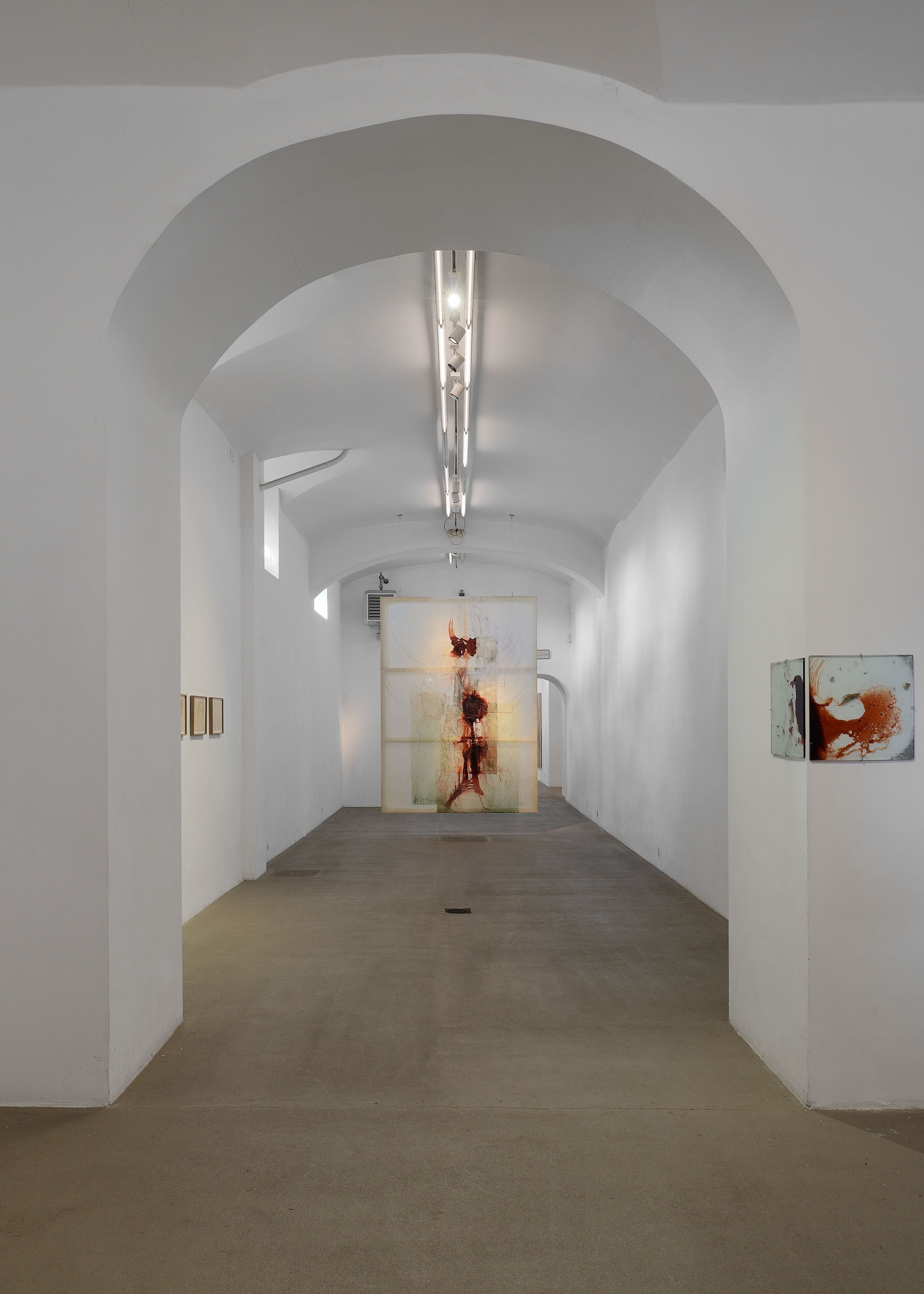
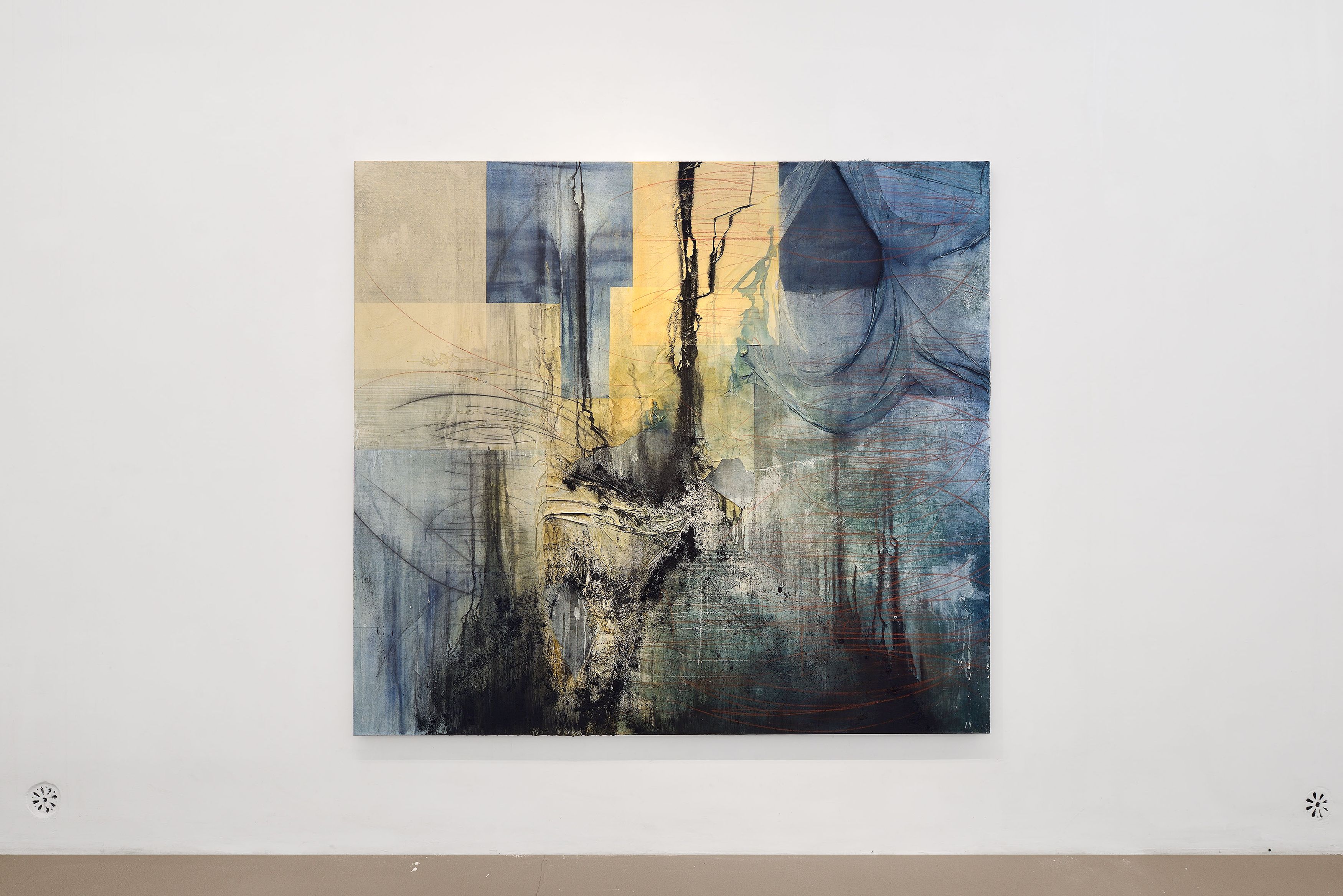
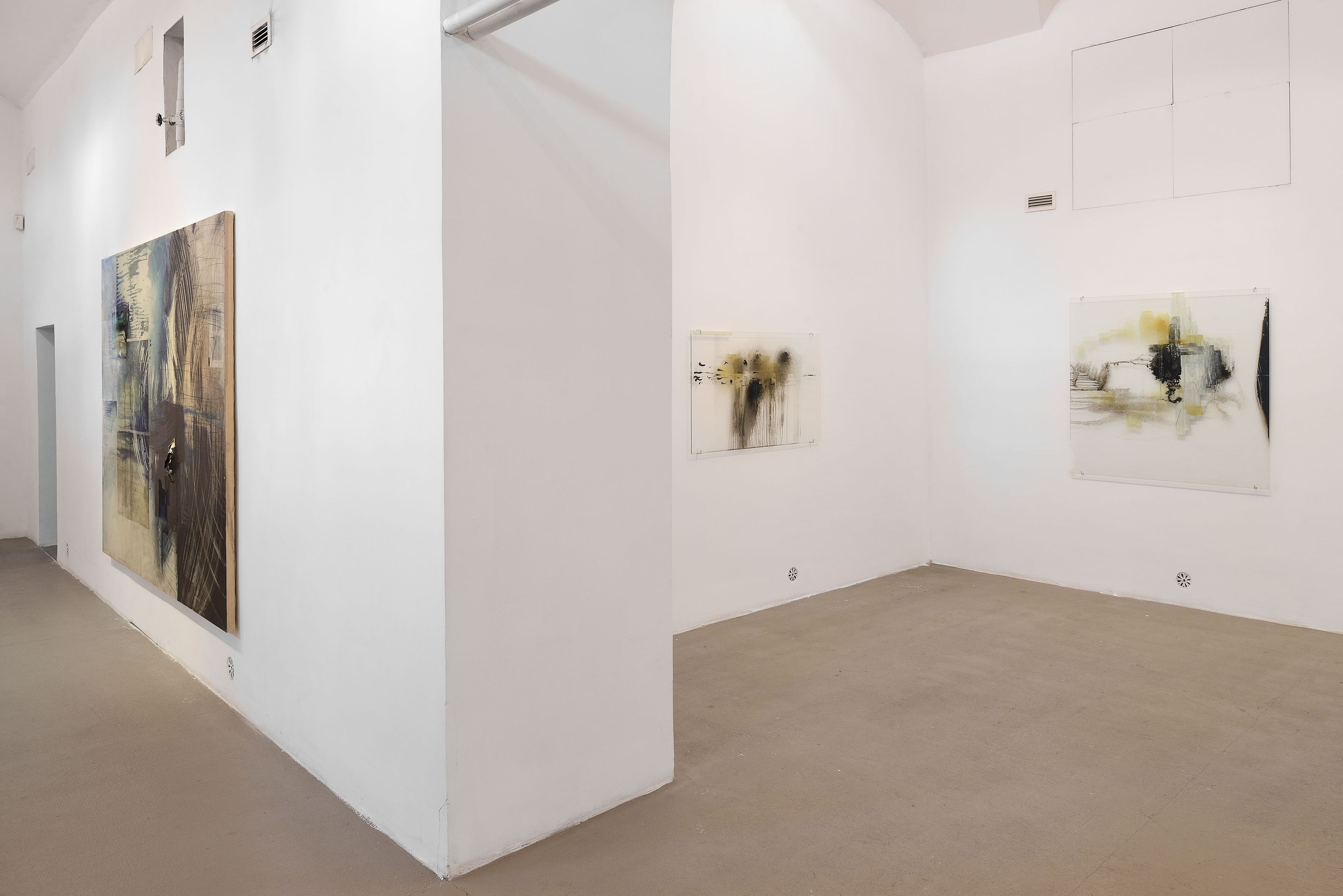
Fondazione Giuliani is pleased to present Choreodrome, the first presentation of Minh Lan Tran’s work in an Italian institution. Bringing together painting, drawing, and the moving image, the exhibition unfolds as a sustained exploration of material and affect. Conceived as a constellation of completed works, on-site interventions and choreographic elements, Choreodrome extends across the Foundation’s spaces as a dynamic environment in which processes of making, staging and perception remain in flux.
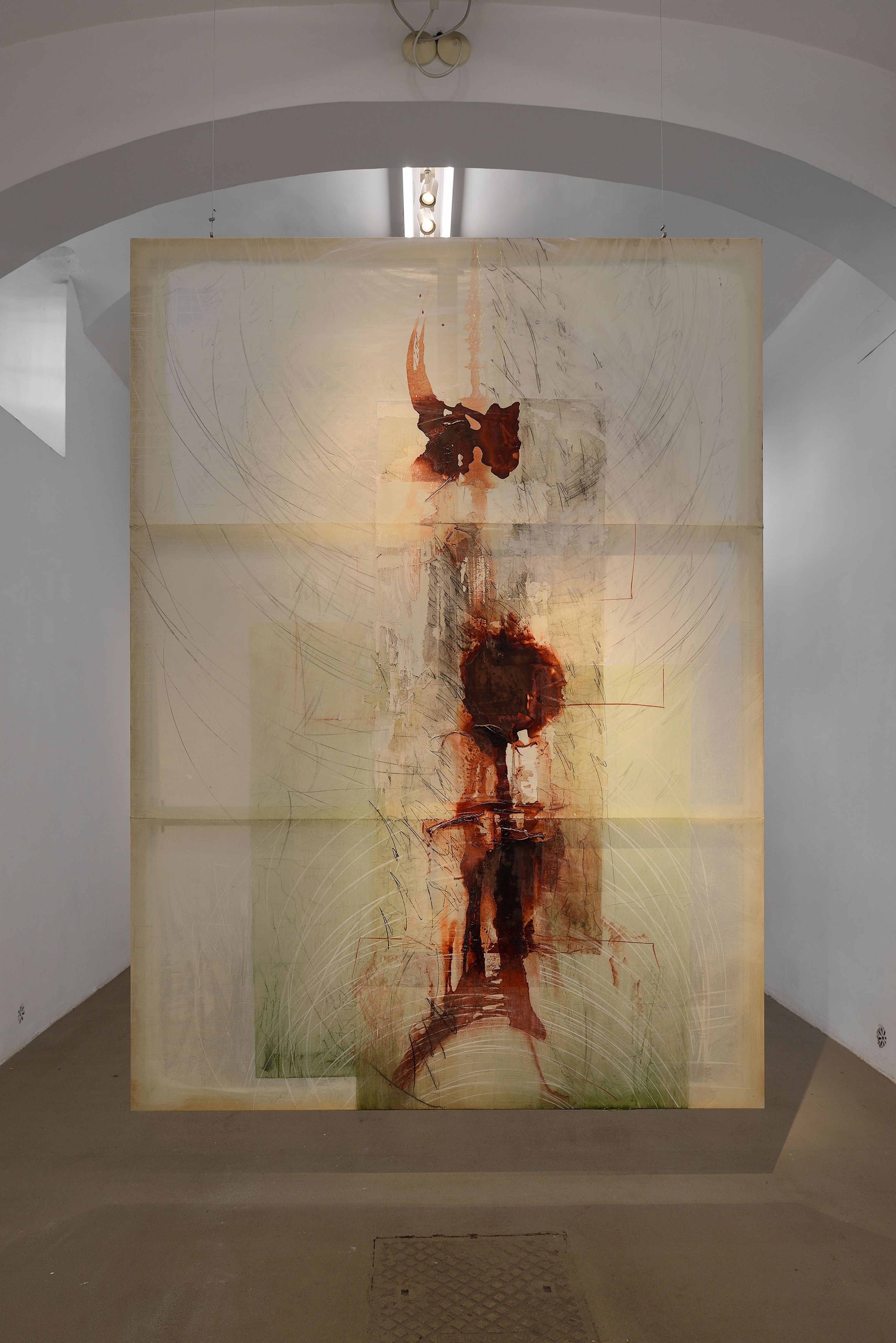
At the core of Tran’s practice is painting, understood as an active site where layers of matter and meaning accumulate, dissolve and reconfigure. Her works are composed through a stratification of materials including natural latex, pigment, paper, chalk, ink and charcoal. Built up and scraped away, inscribed and obscured, these surfaces register a continuous negotiation between mark-making and erasure, concealment and revelation. Within this process, the material itself becomes both subject and agent of transformation. The use of latex—derived from rubber—introduces a subtle reference to histories of colonial exploitation in Vietnam, while its translucent quality lends the paintings a shifting, unstable presence. Light penetrates their surfaces, complicating legibility and reinforcing a sense of fragility bound to resilience.
This attention to layering extends into language, which plays a fundamental role in Tran’s work. Her paintings often originate in writing, with words appearing as both visual marks and semantic fragments. Neither fully legible nor entirely abstract, these textual elements function as a code to evoke and disrupt meaning, while expanding the limits of language itself. As such, meaning remains unfixed, continually deferred and rearticulated through the act of looking.
From this interplay between material and language, the exhibition opens onto an engagement with theatre as both structure and metaphor. Tran conceives of painting as a stage—an arena in which energies gather and gestures unfold. This sense of anticipation is echoed in the spatial configuration of the exhibition, which incorporates elements from the workshop of theatre designer Riccardo Buzzanca. Fragments of stage sets, both intact and dismantled, appear as suspended forms, suggesting both remnants of past actions and propositions for future enactments. Within this theatrical framework, Choreodrome centres on the notion of the “fourth wall”—the threshold separating fiction from reality. Tran approaches this boundary not as an abstract concept, but as a material condition: a permeable membrane through which images, bodies and temporalities may pass. Glass surfaces coated with lithium grease extend this inquiry, foregrounding transparency and opacity as coexisting states. Here, the grease becomes a metaphor for the mediated experience of contemporary reality, particularly in relation to images of violence that circulate without resolution or catharsis.
Choreodrome ultimately proposes painting and exhibition-making as spaces of potentiality: processes shaped by intention yet open to contingency. In this oscillation between control and surrender, Tran’s work approaches the conditions of life itself—its fragility, its unpredictability, and the responsibility inherent in every act of making.
Minh Lan Tran (born in 1997, Hong Kong) lives and works in Paris. Recent solo exhibitions include at the Museum of Modern Art in Warsaw (2026); Balice Hertling, Paris; Francis Irv, New York (2025); Parliament, Paris (2024); Jan Kaps, Cologne; Harlesden High Street, London (2023). Her work has been included in group exhibitions at the Stiftung St. Matthäus, Berlin (2025); Château Lacoste, Aix-en-Provence (2024); Museum of The Home, London; and House Berlin (2023). She studied Art History at the Ecole du Louvre, Paris and the University of Oxford. She holds an MA in Byzantine Studies and Visual Theology from the Courtauld Institute of Art, London (2020) and an MA in Painting from The Royal College of Art, London (2023).
A very special thanks to the French Academy in Rome – Villa Medici for its kind support of this exhibition.