Installation Views
Press Release
36th Bienal de São Paulo
Not All Travellers Walk Roads — Of Humanity as Practice
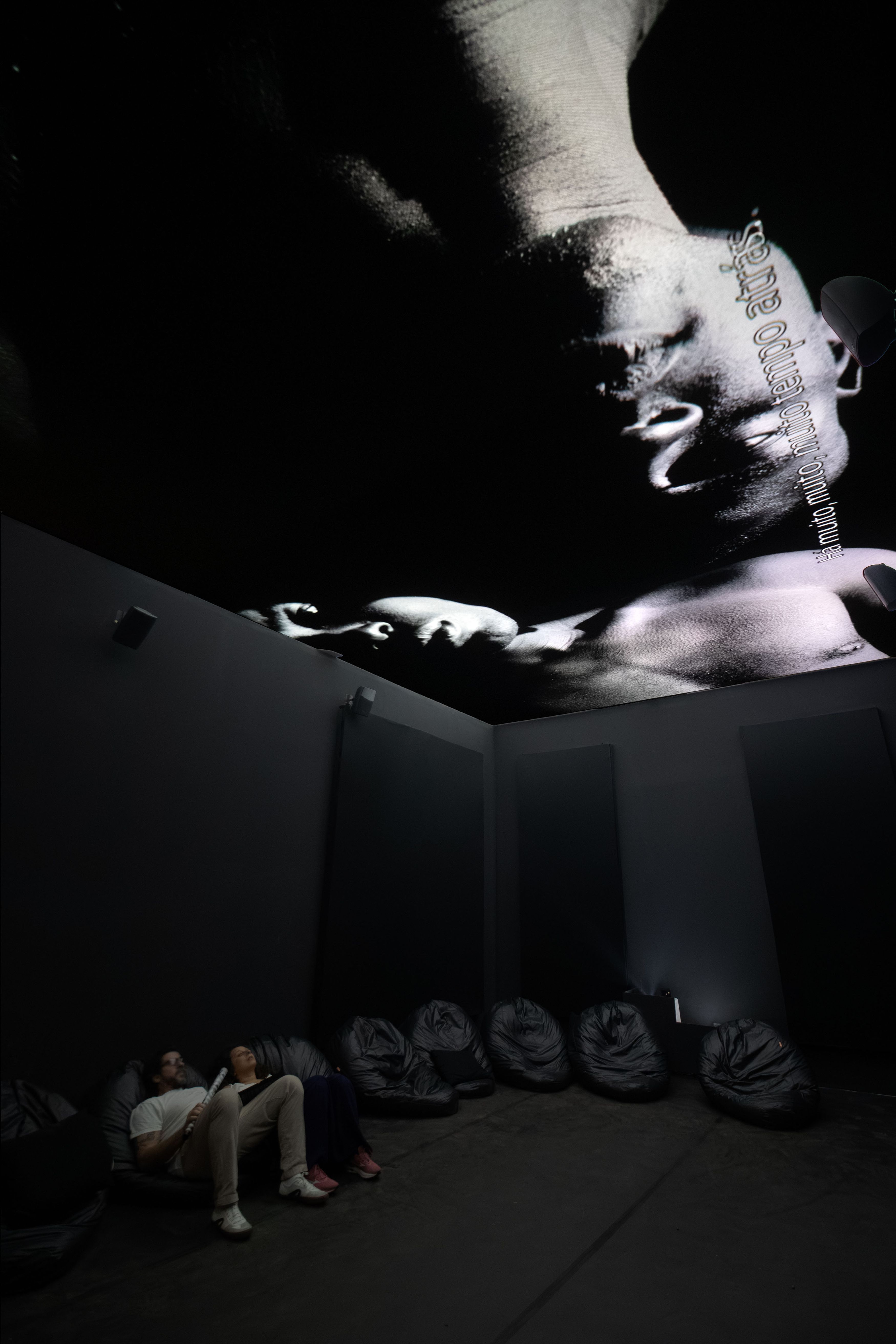
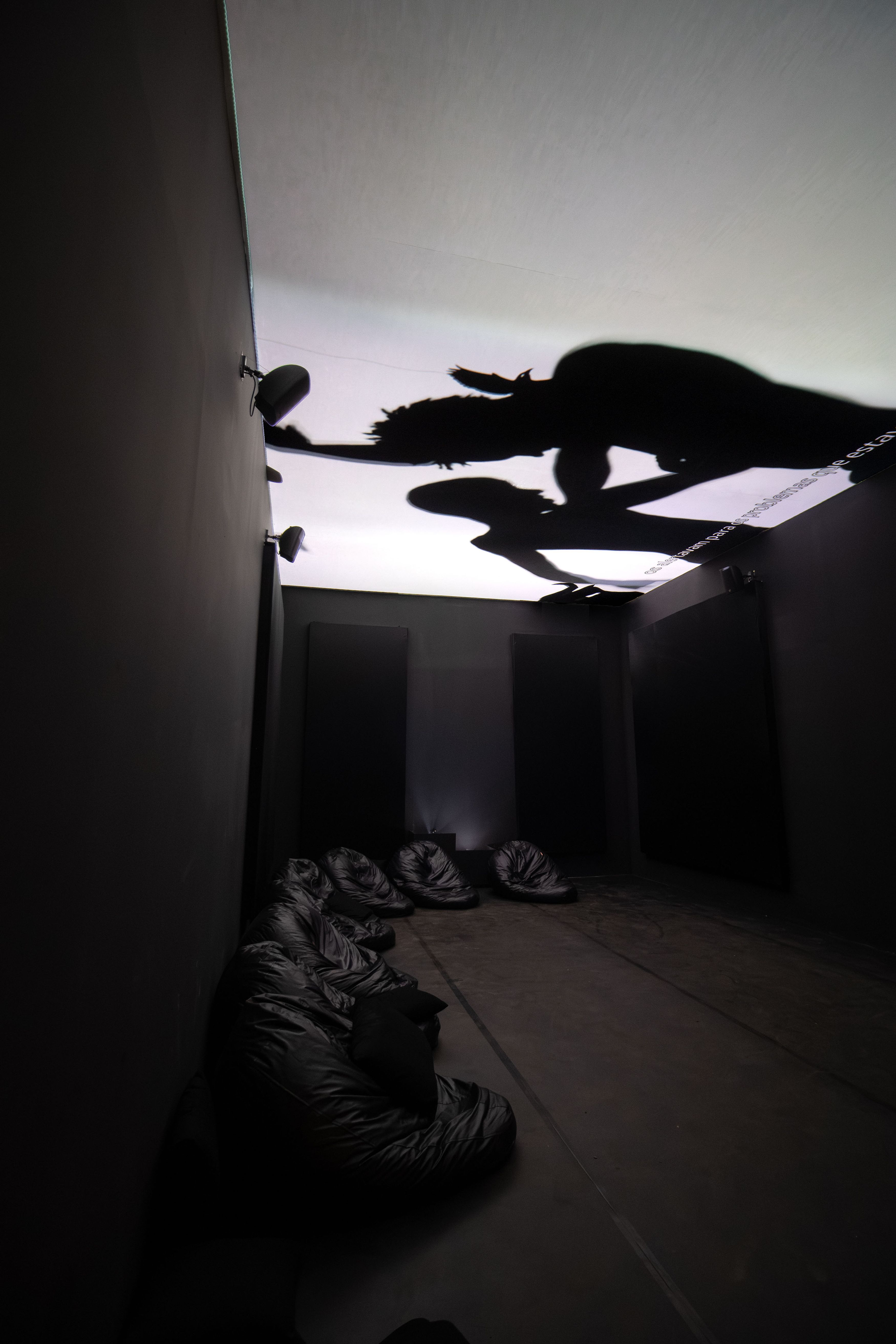
In Long Long Long Ago (2025), Helena Uambembe imagines the catastrophic disruption of a long-forgotten time of equilibrium, harmony, and the occult. This is the split of two parallel entities, two equals and opposites – nemeses – in this instance twin giant brothers locked in constant battle despite their similarities. Their violent rivalry, which splits the earth, overshadows those who suffer the most from this fracture – the small creatures who live amongst them, their toil almost invisible. Their warnings of the trouble caused by the giants go unheard and ignored.
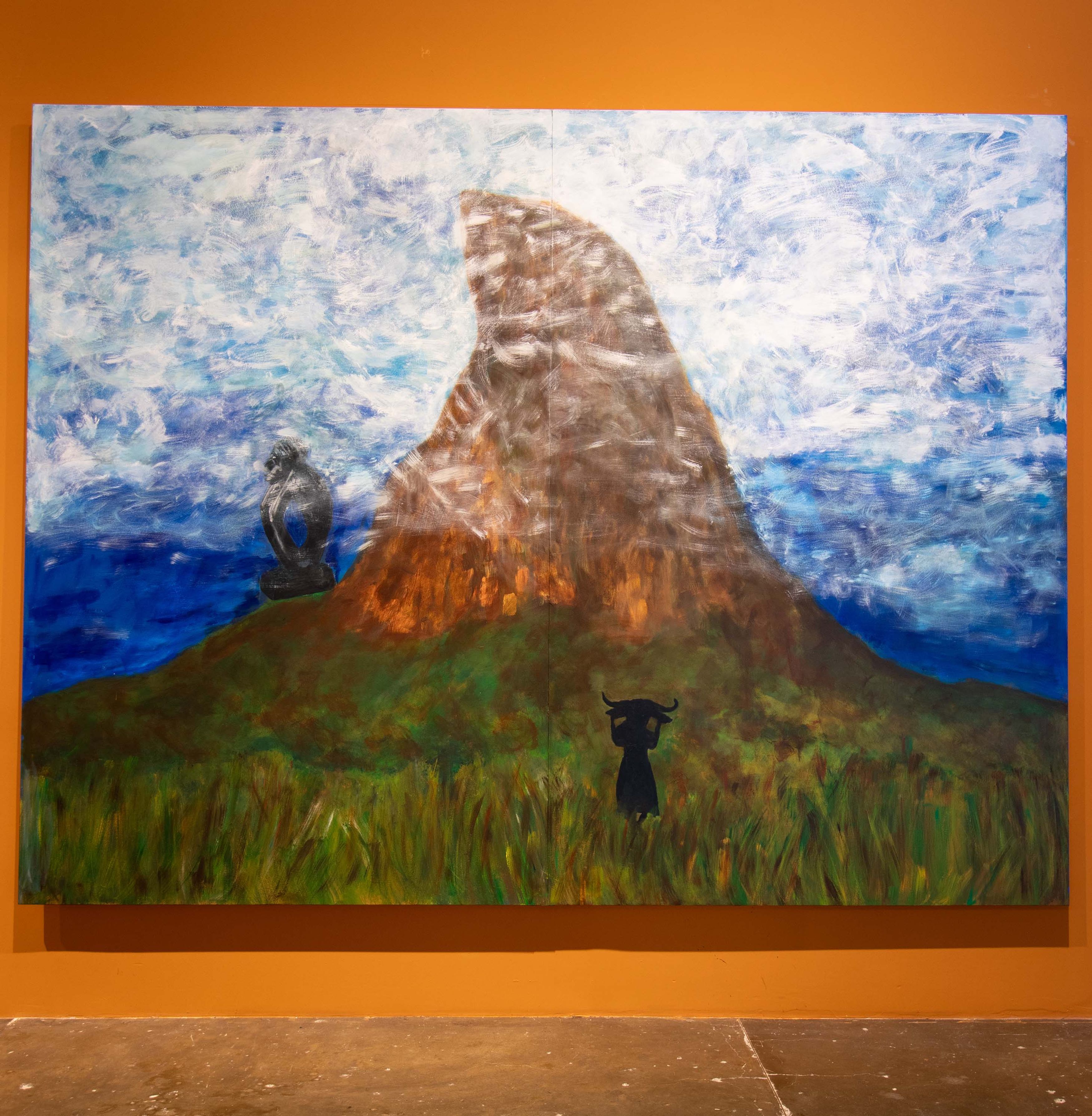
Commissioned for the 36th Bienal de São Paulo, Uambembe’s work returns to the familiar medium of video, where shadow and light interplay with the artist’s own transfixing narration. The work is introduced through a newer dimension of her practice: a painted mural at the entrance to the film booth. This medium has become an evolving part of Uambembe’s visual language, marked by portrayals of spectral presences and sites of polarity, expressed through a skilful combination of muted and acidic colors, and the integration of repetition and archival re-rendering.
Beyond the concept of continental drift, Long Long Long Ago retells the dramatic split between two mirrored landscapes: Pão de Açúcar in Rio de Janeiro and Morro do Moco in Huambo, Angola – the country where Uambembe’s parents were born and from which they f led during civil war, not to safety, but to a new traumatic reality. Her father was among the Angolan men in Namibian refugee camps conscripted into South Africa’s apartheid-era 32 Battalion; her mother was one of the women forced to marry and start a family within weeks. After the Cold War, the battalion was transferred to Pomfret, South Africa, where residents were later made to mine asbestos and left in a decaying town marked by political shame and collapse. That community – Portuguese-speaking, isolated, and stigmatized – has shaped Uambembe’s practice through a complex inheritance of forced migration and generational trauma.
Uambembe’s narration, embedded within moving image and introduced by a mural that acts as a threshold, retells Greek mythology and African folklore. But this is not only mythmaking – the evocation of a long-forgotten equilibrium speaks to an ongoing condition: cycles of trauma rooted in a conflict between forces bound by a dangerous sameness. The ruins of their struggle are inherited and relived – while those who suffer most remain the least seen, heard, or acknowledged.
Lara Kosef